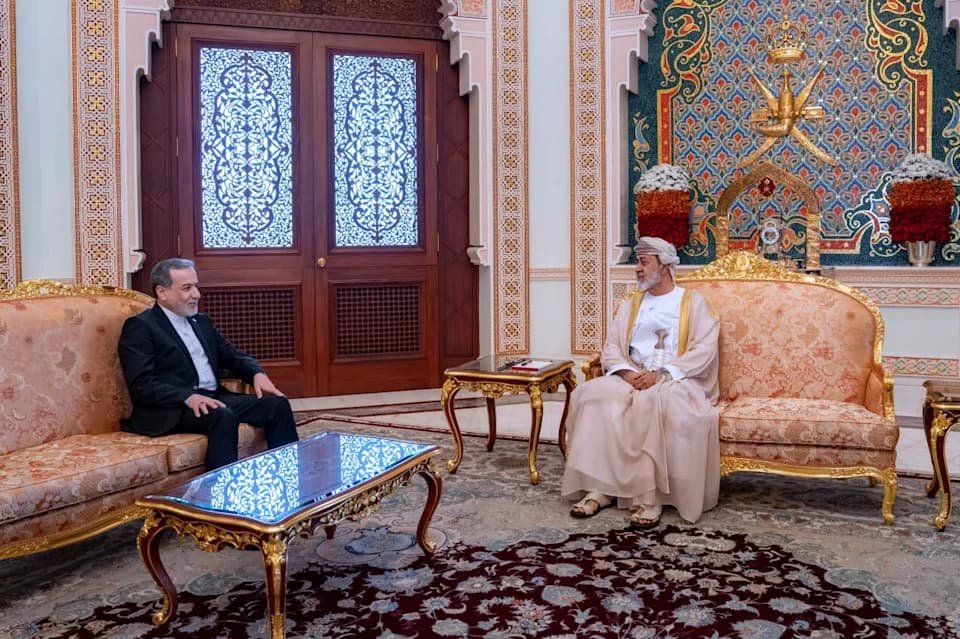

WASHINGTON / MUSCAT, May 6, 2026 —
Iran is actively reviewing a formal U.S. peace proposal and both sides are moving toward a memorandum of understanding to end the war, according to sources familiar with the negotiations who spoke to multiple outlets Wednesday morning. The White House received positive feedback from Pakistani and Omani mediators indicating Iran is progressing toward a compromise — a characterization that represents the most optimistic diplomatic signal since the conflict began 68 days ago.
The development comes four days after Secretary of State Marco Rubio and Iranian Foreign Minister Abbas Araghchi held their first direct telephone conversation, and two days after Trump paused Project Freedom — the Strait of Hormuz ship escort operation — specifically to give Iran time to finalize a deal. Friday remains the date Iran’s foreign ministry set for its ceasefire review. The gap between where the two sides stand today and what a signed agreement would require has not closed fully. But for the first time in the war’s history, the gap is narrowing in real time.
What the U.S. Proposal Contains
The framework that has been conveyed to Iran through Pakistani and Omani intermediaries — and that Iran is now formally reviewing — contains the same three-phase structure that emerged from Sunday’s Rubio-Araghchi call. Phase One addresses the immediate military situation: Iran suspends toll collection on Strait of Hormuz shipping, provides safe passage guarantees for commercial vessels, and the United States suspends but does not lift the naval blockade of Iranian ports while allowing Iranian commercial shipping to resume. Phase Two formalizes the ceasefire with a signed agreement and monitoring provisions. Phase Three, with a 90-day negotiating timeline, addresses the nuclear program, frozen assets, and the Strait’s permanent legal status.
The nuclear question — which Rubio described as “the reason we’re in this” — is not resolved in Phase One or Two. Iran has consistently refused to accept any deal that treats nuclear concessions as a precondition for ceasefire. The U.S. has consistently said nuclear concessions must be part of any comprehensive agreement. The three-phase structure is the diplomatic architecture that allows both positions to coexist long enough to get signatures on paper.
What “Reviewing” Means — and What It Doesn’t
| Diplomatic Signal | What It Means | What It Doesn’t Mean |
|---|---|---|
| Iran “reviewing” US proposal | Formal consideration underway | Acceptance — no agreement yet |
| “Moving toward memo” | Framework structure accepted in principle | Terms finalized — not yet |
| Positive mediator feedback | Iran not rejecting — engaged | Iran has said yes — it has not |
| Rubio-Araghchi call “constructive” | Channel open at highest level | Deal imminent — it is not |
| Trump pausing Project Freedom | De-escalation to create space | Blockade lifted — it is not |
| Friday ceasefire review | Iran reassesses its position | Iran will extend — unclear |
The language being used by sources on both sides — “reviewing,” “moving toward,” “positive feedback” — reflects genuine diplomatic progress while preserving the ability of either party to walk away before anything is signed. Iran’s supreme leader Mojtaba Khamenei has not publicly endorsed any deal structure. The IRGC, which controls the fast-attack boats and much of the military posture in the Strait, has been notably silent this week — its silence after Monday’s gunfire exchange could indicate acceptance of the diplomatic track or preparation for the next escalation.
Oil Markets — Pricing In a Deal That Hasn’t Happened
Brent crude fell to approximately $105 a barrel Wednesday morning — down nearly $10 from Monday’s peak of $114.40 — as traders priced in an increasing probability that a Phase One deal gets signed before or shortly after Friday’s ceasefire review. Goldman Sachs has re-engaged its $85 target, framing it as a 4 to 6 week scenario if Phase One is signed and Strait traffic begins normalizing.
The market is not pricing a deal as certain. It is pricing it as probable — a different and still fragile assessment. A single negative development — the IRGC attacking an escorted vessel, Iran’s parliament rejecting the proposal, or Khamenei issuing a statement that contradicts the foreign ministry’s diplomatic track — would reverse the price drop immediately.
For American drivers watching gasoline approach $4.46 a gallon nationally, the most direct path to relief is the same path that runs through Friday’s ceasefire review. A Phase One deal signed this week would begin reducing Brent crude prices within days and gasoline prices within two to three weeks. The math is simple. The diplomacy is not.
Trump’s Message to Iran Wednesday
Trump posted Wednesday morning: “Iran — MAKE THE DEAL! Your country is being destroyed. Lots of people are dying. Come to the table and we can end this very quickly and very beautifully. I am waiting!!!”
The post was Trump at his most characteristic — urgent, personal, borderline theatrical. Whether it helps or hurts the diplomatic process depends on how Iran’s decision-makers read it. Rubio’s more measured language — describing the talks as moving toward a memo — is designed to give Iranian officials room to maneuver domestically without appearing to capitulate to public American pressure. Trump’s post does the opposite. Both communications are real. Both are happening simultaneously.
Friday will determine which tone Iran responds to.