
WASHINGTON, May 6, 2026 —
Twenty-four hours after launching Project Freedom — the U.S. military operation to escort commercial vessels through the Strait of Hormuz — President Trump announced Tuesday evening that he was pausing the operation to give Iran time to finalize a peace deal. The same night, Secretary of State Marco Rubio told reporters that Operation Epic Fury, the U.S.-Israeli military campaign that began the war on February 28, is “over.” Oil prices fell $6 in overnight trading. And Friday’s ceasefire review — set by Iran’s foreign ministry as the date when “the current situation will be reassessed” — is now the most closely watched diplomatic deadline in the world.
What is happening is clearer than what it means.
What Trump Said — and When He Said It
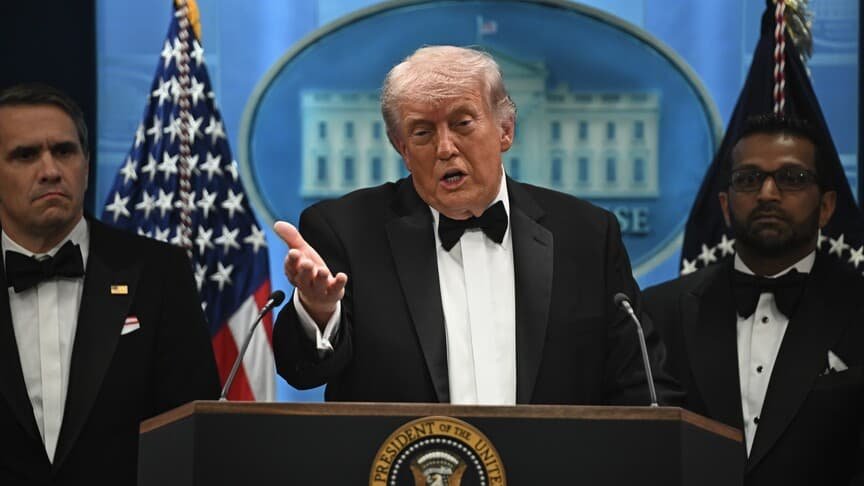
Trump announced the Project Freedom pause in a Truth Social post Tuesday evening, writing that the operation would stop “for a short period” to allow time for a deal with Tehran to be finalized. He said the naval blockade of Iranian ports would remain in place. He did not describe what specific progress toward a deal had prompted the pause, who had communicated what to whom, or what would happen if no deal materialized within the “short period” he referenced.
The pause came after a Tuesday that Defense Secretary Pete Hegseth described as “quieter” in the Strait — a relative term following a Monday in which the U.S. sank six Iranian boats, Iran fired 19 missiles and drones at the UAE, and a South Korean vessel caught fire. Tuesday’s reduced activity in the Strait, combined with the ongoing diplomatic back-channel that produced Sunday’s Rubio-Araghchi phone call, appears to have given the administration enough confidence to stand down the escort operation while talks continue.
What Rubio Said — and What “Over” Actually Means
Secretary of State Rubio told reporters Tuesday that Operation Epic Fury — the codename for the U.S.-Israeli air campaign launched February 28 that began the war — is “over.” He described the current situation as a ceasefire, not an ongoing military operation.
The statement is technically consistent with what has been the administration’s legal position since Trump’s War Powers notification to Congress on April 28. But it creates a vocabulary problem. The naval blockade of Iranian ports is not over. The U.S. military presence in the Gulf is not over. The Strait of Hormuz remains effectively closed. Iran’s IRGC has attacked U.S. forces more than ten times since the ceasefire took effect on April 13.
What Rubio appears to mean is that the active air campaign component of the war — the strikes on Iranian military facilities, nuclear sites, and leadership that defined the first weeks of the conflict — has concluded. The economic pressure campaign, the naval blockade, the diplomatic standoff, and the contested Strait are all continuing. Whether those ongoing elements constitute a war or a ceasefire depends entirely on who is defining the terms.
The Oil Market’s Reaction — and What It Tells Us
| Market Indicator | Monday Close | After Tuesday Announcements | Change |
|---|---|---|---|
| Brent crude | $114.40 | ~$108 | -$6.40 |
| WTI crude | ~$106 | ~$101 | -$5 |
| US gasoline futures | Elevated | Pulling back | Modest decline |
| Goldman Sachs $85 target | Suspended | Under review | Contingent on deal |
| $5 gallon probability | ~50% | Lower — but still live | Depends on Friday |
The $6 drop in Brent crude following Tuesday’s announcements reflects the market’s interpretation that the pause in Project Freedom reduces the near-term risk of a catastrophic military escalation that would push oil above $130. It does not reflect confidence that a deal has been reached or that the Strait is reopening. Goldman Sachs’s $85 Brent forecast — contingent on a Phase One agreement — remains suspended pending Friday’s ceasefire review.
The critical question oil traders are pricing is whether the pause in Project Freedom signals that both sides are close enough to a deal that they are willing to de-escalate in the final days before Friday’s review, or whether the pause is simply buying time before the next confrontation in the Strait when no deal materializes.
Ohio Primaries Today — The First Electoral Test of the Iran War
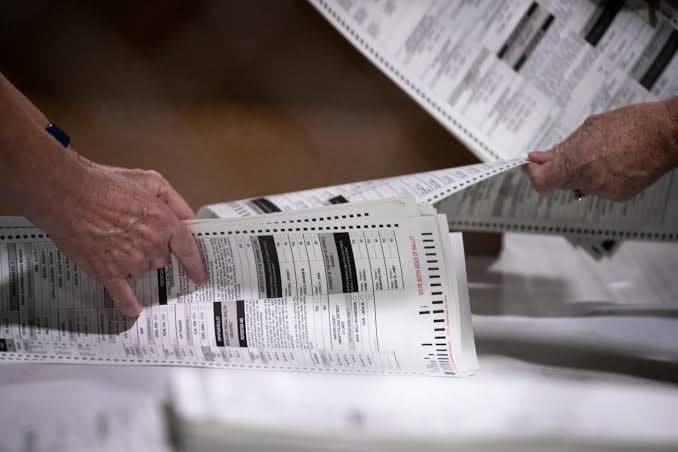
Ohio voters are heading to the polls today in state primary elections that represent the first direct electoral test of the Iran war’s political impact. The races are not nationally prominent — state legislative seats, county offices, a handful of congressional primaries — but the turnout patterns and the messaging that resonated in campaigns will be watched closely by both parties as a leading indicator of November’s midterm dynamics.
Ohio has been hit harder than most states by the combination of manufacturing disruption from tariffs and energy cost increases from the Iran war. The northern industrial corridor — Cleveland, Akron, Youngstown, Toledo — has seen factory output decline as supply chain costs have risen and export markets have softened. Gas stations in these communities are charging above the national average of $4.46.
Candidates who ran explicitly on the war’s economic consequences in competitive primaries are being watched as a test of whether that message moves voters. The results will begin coming in tonight Eastern time.
Friday Is Everything
Iran’s foreign ministry announced that May 8 — this Friday — is the date when “the current situation will be reassessed” to determine whether to extend the ceasefire period. That date, set before Project Freedom launched and before the gunfire exchange on Monday, now carries the weight of every development since — the sinking of six Iranian boats, the missile strikes on the UAE, the Rubio-Araghchi phone call framework, the Project Freedom pause, and Rubio’s “over” declaration.
Three outcomes are possible on Friday. Iran extends the ceasefire, providing a window for the Phase One deal framework to be formalized. Iran lets the ceasefire expire without renewal, returning the conflict to its pre-April 13 status. Or — most likely given the complexity of what both sides are managing — Friday passes with ambiguous statements from both parties that neither confirm nor end the ceasefire, extending the current state of armed uncertainty into next week.
The Trump-Xi summit on May 14 sits six days after Friday’s review. If the ceasefire survives until May 14, the Beijing meeting becomes the next critical window. If it does not, the summit’s agenda shifts dramatically. The sequence of those two dates — Friday’s review, May 14’s summit — is the diplomatic calendar that will determine whether the Iran war ends in May or continues into the summer with oil at or above $100 and gasoline approaching $5.