
WASHINGTON, APRIL 19, 2026 —
The fragile diplomatic momentum of Friday collapsed Saturday into a new round of threats and counterclaims, as Iran’s Revolutionary Guard Corps declared the Strait of Hormuz would remain closed until the United States lifts its blockade of Iranian ports — and President Trump responded by accusing Tehran of a “serious violation” of the ceasefire while insisting a peace deal would happen “one way or another — the nice way or the hard way.”
The ceasefire between the U.S. and Iran expires Wednesday, April 21. Three days remain.
What Happened Between Friday and Saturday
Friday had produced the most hopeful sequence of the war’s seven-week run — Iran formally declared the Strait of Hormuz open to commercial vessels, Pakistan’s foreign minister announced the peace deal was more than 80% complete, stocks hit a third consecutive record high, and oil prices collapsed. The diplomatic temperature was the warmest since the ceasefire began on April 8.
By Saturday, the optimism had curdled. Iran’s Islamic Revolutionary Guard Corps issued a statement declaring the Strait would remain closed to international traffic as long as the U.S. port blockade continued against Iranian oil exports. Iranian state media reacted with deep skepticism to Friday’s Strait opening, characterizing it as a miscommunication rather than a policy. Senior IRGC figures restated that the Strait is under Iranian “management and control” and that no commercial traffic would pass without Iranian authorization — which, in practice, amounts to the Strait remaining closed.
Iran’s chief negotiator compounded the concern, stating publicly Saturday that while progress had been made, both sides were “still a long way from a deal.” That assessment directly contradicted Pakistan’s 80% complete declaration from Friday, and introduced a new layer of uncertainty into a process that had seemed — at least briefly — to be accelerating toward resolution.
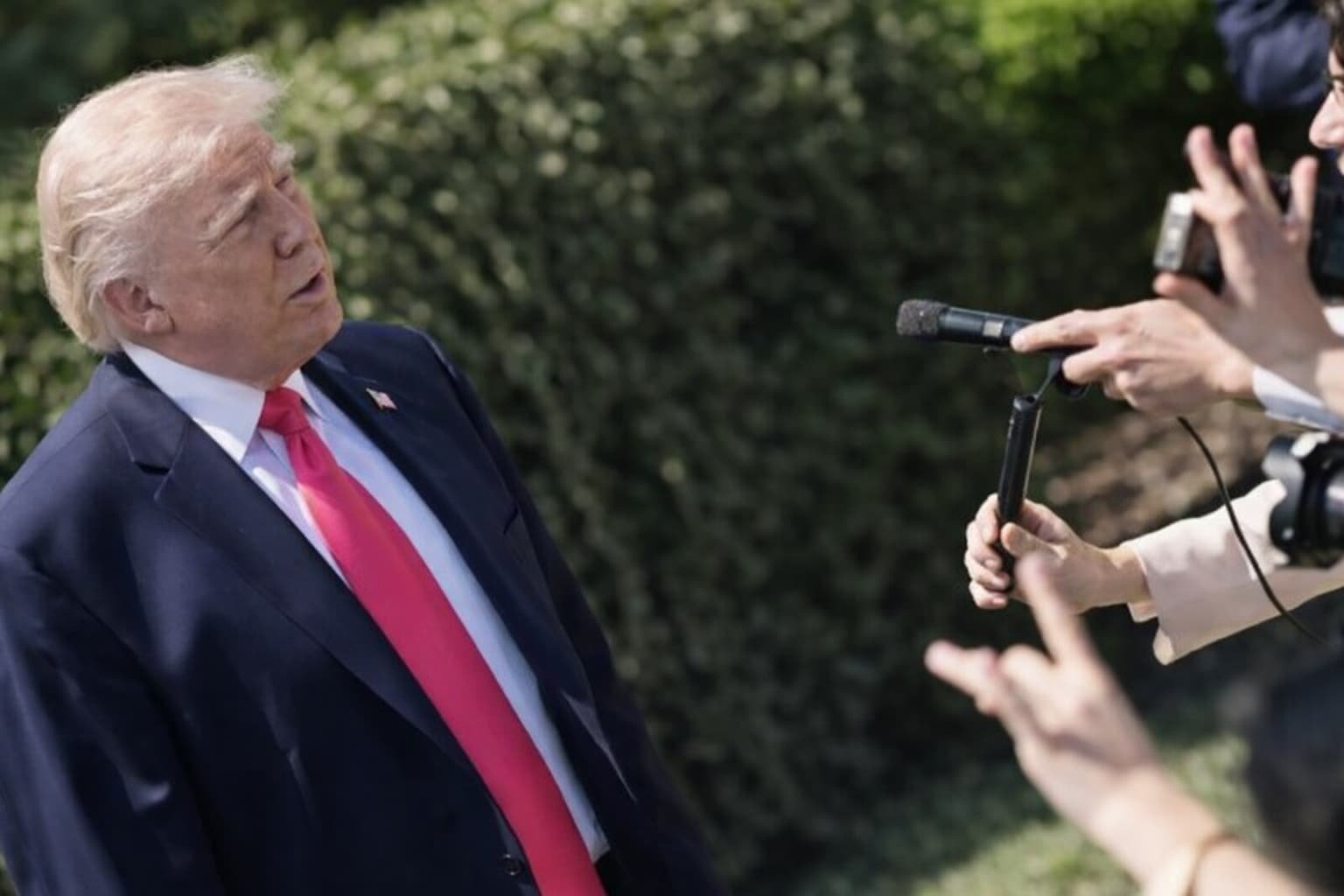
Trump’s response came via Truth Social and in remarks to reporters: Iran had committed a “serious violation” of the ceasefire. He did not elaborate on which specific action constituted the violation. He also left open the possibility of a deal, framing the outcome as binary — a diplomatic agreement or resumed military action. “This will happen one way or another — the nice way or the hard way,” he said.
The Fundamental Problem: The Blockade Loop
The dynamic that broke the weekend’s momentum is a self-reinforcing standoff. Iran says it will not fully reopen the Strait until the U.S. lifts its naval blockade of Iranian ports. The U.S. says it will not lift the port blockade until a permanent peace agreement is signed. Iran says it will not sign a permanent agreement until the port blockade is lifted. And the ceasefire that is supposed to give both sides space to negotiate expires in three days.
Mediators — primarily Pakistan, with support from Qatar, Saudi Arabia, and Turkey — are working to break this loop by sequencing confidence-building measures that allow both sides to take partial steps simultaneously rather than requiring one side to move fully before the other responds. The most discussed formula: the U.S. eases the port blockade on non-energy Iranian vessels in exchange for Iran issuing formal passage guarantees for commercial shipping through the Strait, with full blockade lifting tied to a final signed agreement.
Whether Iran’s new Supreme Leader Mojtaba Khamenei — who has been largely absent from public view since taking power in March — will authorize that kind of partial concession is the central unknown in the negotiations. The IRGC, which controls the Strait militarily, answers to Khamenei. And Khamenei has not publicly endorsed any deal framework.
A Second Round of Talks Is Still Scheduled
Despite Saturday’s deterioration in tone, Iranian sources and Pakistani mediators have confirmed that a second round of direct U.S.-Iran talks is still being planned in Islamabad, potentially as early as Sunday or Monday. No official date has been confirmed by the White House.
Trump said Friday in Phoenix that he expected negotiations to conclude “very quickly now that most of the points are already negotiated,” and added that “you’ll be very happy” — language that suggests his team believes a deal framework exists. The gap between that confidence and Iran’s chief negotiator’s “long way from a deal” statement may reflect genuine disagreement or may reflect the standard negotiating posture of two parties who are closer than their public statements suggest.
Pakistan’s Foreign Minister Ishaq Dar, speaking at the Antalya Diplomacy Forum on Friday, provided the most sober and credible public read: 80% complete, but both sides need to show flexibility on the remaining 20%. That remaining 20% — almost certainly the nuclear material disposition question and the precise terms of the Strait and blockade sequencing — is the hardest part of any negotiation, the part where agreements most often fail.
| Countdown to April 21 Ceasefire Expiry | Status |
|---|---|
| U.S.-Iran ceasefire expiry | Wednesday, April 21 |
| Strait of Hormuz commercial traffic | Contested — IRGC says closed |
| U.S. port blockade | Continues until deal signed |
| Second round of talks | Islamabad, Sunday or Monday (unconfirmed) |
| Peace deal completion | 80% (Pakistan); “long way” (Iran negotiator) |
| Trump ceasefire assessment | “Serious violation” by Iran |
| Oil market reaction Saturday | Prices edged higher on uncertainty |
What Happens If No Deal Is Reached by Wednesday
The Trump administration has not publicly detailed what the U.S. response would be if the ceasefire expires without a deal, but the parameters are established by prior statements. Trump has threatened the destruction of Iranian civilian infrastructure — power plants, water facilities, bridges — if talks collapse. Iran has threatened retaliatory strikes on Gulf state energy facilities and maritime targets. Mediators have privately warned that Iranian retaliation for strikes on its civilian infrastructure would be catastrophic for Gulf states’ oil and water supply chains.
Oil markets are pricing this risk back in. After collapsing 11% on Friday’s Strait reopening announcement, crude prices edged higher Saturday as traders reassessed the durability of that opening. The net effect of two days of trading leaves oil in roughly the same place — elevated, volatile, and entirely dependent on what two governments decide in the next 72 hours.
For American consumers, the near-term calculation is unchanged: gas prices will not fall meaningfully until the Strait is genuinely and durably reopened, which requires a deal, and a deal has not been reached. The ceasefire expires Wednesday.