
WASHINGTON / MUSCAT, May 4, 2026 —
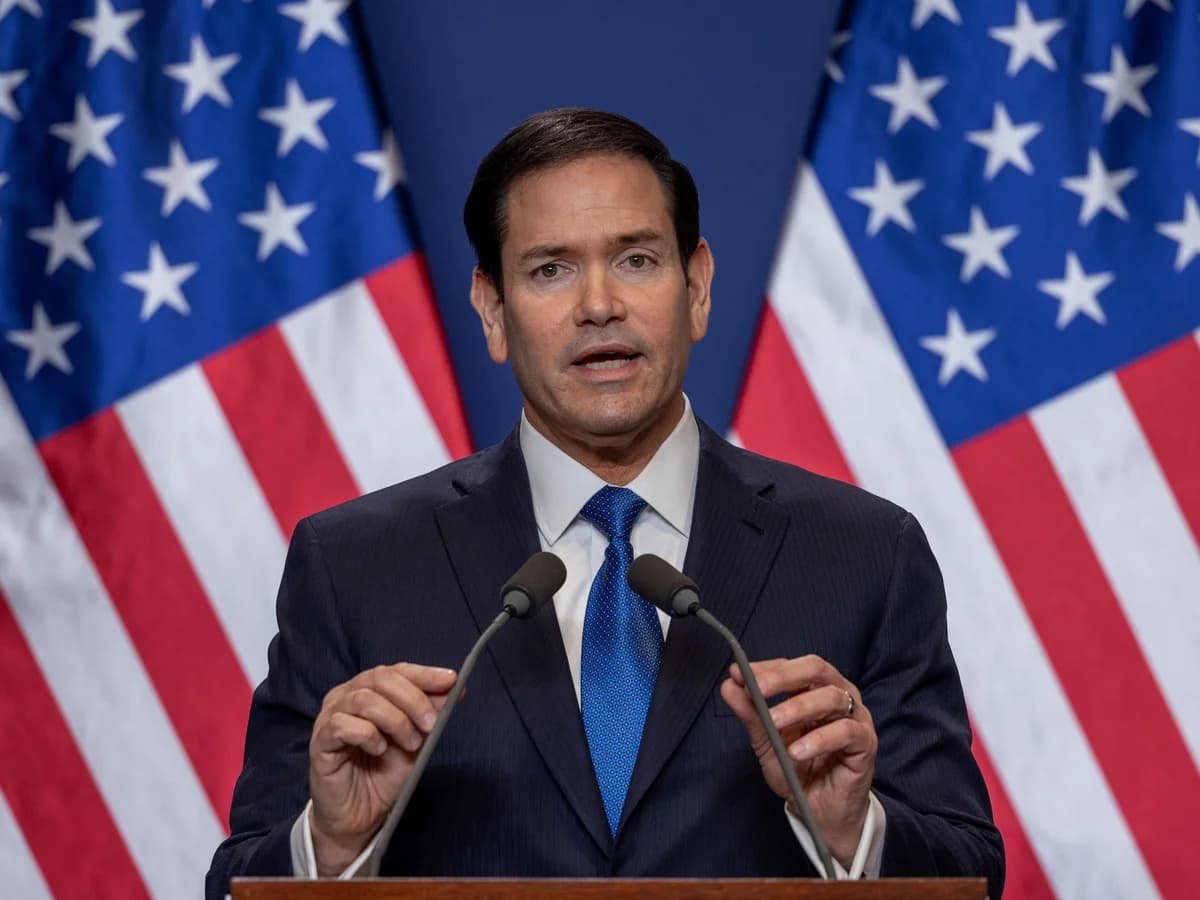
Secretary of State Marco Rubio and Iranian Foreign Minister Abbas Araghchi held a direct telephone conversation Sunday — the first direct diplomatic contact between a U.S. Secretary of State and an Iranian Foreign Minister in more than two years — and the call has produced what multiple officials described as a preliminary framework for a Strait of Hormuz agreement, according to sources familiar with the discussion. Oil markets reacted immediately. Brent crude fell more than $8 in less than an hour, from $118 to approximately $110.
The call lasted 47 minutes. Rubio has previously described the nuclear issue as the core reason for the conflict. The preliminary framework that emerged from Sunday’s call does not, according to sources, resolve the nuclear question — but it maps a path to reopening the Strait while deferring nuclear negotiations to a separate track. That is precisely the structure Iran has been proposing for weeks. The fact that Rubio made the call suggests the administration has moved closer to accepting that sequencing.
What the Framework Contains
Senior administration officials cautioned that Sunday’s conversation produced a framework, not a deal. The distinction is meaningful. A framework establishes the structure within which a deal could be negotiated — the sequence of steps, the issues addressed in each phase, and the parties responsible for each element. It is not a signed agreement, it carries no legal force, and it can collapse at any stage.
With those caveats, the emerging structure described by sources contains three phases. In the first phase, Iran would suspend its toll collection system on Strait of Hormuz shipping and provide safe passage guarantees for commercial vessels. In exchange, the United States would suspend — not lift — the naval blockade, allowing Iranian commercial shipping to resume while military enforcement posture remains in place. In the second phase, a formal ceasefire agreement would be signed, with monitoring provisions involving Pakistani and Omani intermediaries. The third phase, which would address Iran’s nuclear program, frozen assets, and the formal status of the Strait under international law, would be negotiated separately with a 90-day timeline.
Why Rubio Making This Call Matters
| Context | Detail |
|---|---|
| Previous direct US-Iran contact at this level | None since early 2024 |
| Rubio’s prior position on Iran deal | Nuclear issue “the reason we’re in this” |
| Iran’s consistent position | Hormuz and ceasefire first — nuclear separate |
| Call length | 47 minutes |
| Market reaction | Brent crude: $118 → $110 within 60 minutes |
| Oil futures movement | June contracts fell 6.7% |
| Saudi Aramco statement | Monitoring closely — ready to increase production |
| Goldman Sachs revised outlook | Brent could fall to $85 by Q3 if deal signed |
Rubio’s willingness to make the call signals a shift. For weeks, the Secretary of State has been the administration’s most hawkish voice on Iran — the official most insistent that nuclear concessions must be part of any agreement. The 47-minute call with Araghchi, described by the State Department as “constructive and substantive,” is the clearest indication yet that the administration has concluded a phased approach — Strait first, nuclear later — is the only realistic path to ending the conflict before the midterm elections in November.
Iran’s Reading of the Conversation
Araghchi posted on X Sunday evening that the conversation was “serious and businesslike” and that Iran was “ready to move quickly if the American side shows the same seriousness.” He did not claim a deal had been reached or that the framework was finalized. He did not describe the nuclear track as having been resolved. What he described — a direct conversation that produced a structured pathway — is the most positive public characterization any Iranian official has offered of U.S.-Iran diplomatic contact since the war began.
The Omani government, which has hosted Araghchi since he left Islamabad ten days ago, issued a brief statement Sunday saying it “welcomes continued dialogue and stands ready to facilitate.” Pakistan’s foreign ministry congratulated both sides for “engaging in direct and constructive diplomacy.”
Neither statement confirmed the framework’s contents. Both confirmed that something meaningful happened on Sunday afternoon that had not happened in the preceding 67 days of conflict.
What Needs to Happen for a Deal to Close
The gap between a framework and a signed agreement is where most diplomatic processes die. The Iranian supreme leader has not publicly endorsed any deal structure. The Islamic Revolutionary Guard Corps issued no statement Sunday — its silence could mean acceptance or could mean internal deliberation that produces resistance later. Congress, which returns from recess Monday, will want to be briefed on the framework’s nuclear provisions — or the absence of them — before providing any political cover for an agreement that does not address enrichment.
Trump posted on Truth Social Sunday evening: “BIG PROGRESS with Iran! They want to make a deal very badly. Stay tuned!!!” The post did not describe the framework. It did not confirm the Rubio-Araghchi call. It landed as the kind of Trump communication that markets have learned to treat as directionally meaningful and detail-free.
If the framework holds and a Phase One agreement is signed — Strait reopening and ceasefire formalized — Goldman Sachs projects Brent crude could fall from its current $110 range to approximately $85 by the third quarter. At $85 Brent, U.S. gasoline prices would fall from $4.30 to approximately $3.40 a gallon. That single price movement — 90 cents off the pump price — would be the most significant economic relief American households have received since the war began. Whether Sunday’s phone call leads there depends on the next 72 hours of negotiation. For the first time in ten weeks, those 72 hours look genuinely different from the 67 days that preceded them.