
WASHINGTON, May 7, 2026 —
President Trump simultaneously threatened Iran with dramatically escalated military action and said it is too soon for new direct negotiations Wednesday — a combination of signals that sent oil markets into a confused holding pattern and left diplomatic observers trying to determine which statement represents actual policy and which represents negotiating pressure.
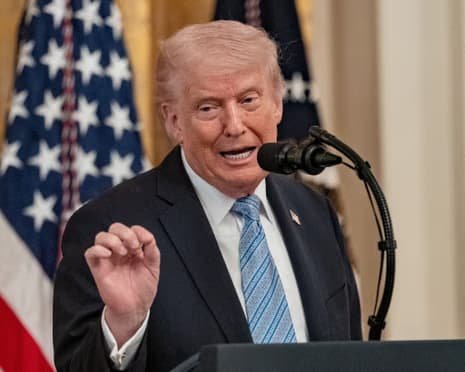
“If Iran doesn’t agree to a deal, they’ll be bombed like they’ve never been bombed before — at a much higher level,” Trump told reporters at the White House. Hours later, when asked whether direct talks between U.S. and Iranian officials would resume, he said: “It’s too soon for that.” The two statements together describe an administration that believes it is close enough to a deal to escalate rhetorical pressure while simultaneously unwilling to create the formal negotiating structure that closing a deal requires.
What “Much Higher Level” Would Actually Mean
Trump’s threat of bombing at a “much higher level” is not imprecise. It refers to a specific category of military action that the administration has so far held in reserve: strikes on Iranian civilian infrastructure — power plants, water treatment facilities, bridges, and energy production sites.
Earlier in the war, Trump explicitly threatened to destroy Iranian power plants and bridges if the Strait of Hormuz was not reopened. Those strikes did not happen. The military campaign focused instead on Iran’s military and nuclear infrastructure. The implicit threat throughout the ceasefire period has been that infrastructure strikes are the escalation the U.S. has not yet employed — and Wednesday’s statement made that threat explicit again.
Iranian officials have previously said that infrastructure strikes would constitute a red line that would trigger a response from Iran’s missile arsenal against Gulf state oil infrastructure, U.S. bases in the region, and Israeli territory simultaneously. The Houthi movement in Yemen, which Iran backs, has continued sporadic attacks on Red Sea shipping throughout the ceasefire period. Hezbollah has continued exchanging fire with Israeli forces in Lebanon. A resumption of full-scale U.S.-Iranian hostilities with infrastructure strikes would almost certainly activate both of those proxy fronts simultaneously.
What the US Central Command Did Wednesday
While Trump made his statement at the White House, U.S. Central Command was taking concrete military action in the Strait. CENTCOM posted on X Wednesday that it disabled an Iran-flagged unladen oil tanker that was attempting to sail toward an Iranian port — in violation of the ongoing U.S. naval blockade — by shooting it with “several rounds” from a cannon gun.
The tanker was not sunk. It was disabled and boarded. The action is the most direct application of blockade enforcement since Project Freedom launched and paused in the span of 24 hours earlier this week. It demonstrates that regardless of the diplomatic temperature on any given day, the naval blockade is active, enforced, and willing to use force against individual vessels attempting to supply Iranian ports.
| Military Action This Week | Date | Detail |
|---|---|---|
| Project Freedom launched | May 4 | US Navy escorts 2 ships through Strait |
| Iranian fast-attack boats destroyed | May 4 | US helicopters sink 6 IRGC craft |
| Iran fires 19 missiles and drones at UAE | May 4-5 | Fujairah oil facility struck |
| Project Freedom paused | May 5 | Trump pauses to allow deal time |
| Iranian tanker disabled with cannon fire | May 6 | Attempting to reach Iranian port — blockade enforcement |
| Trump threatens “much higher level” strikes | May 7 | If Iran rejects peace deal |
Where the Deal Actually Stands
Wednesday’s threat did not arrive in a vacuum. It arrived alongside reporting — from multiple outlets — that Iran is genuinely reviewing the U.S. peace proposal and that mediators have conveyed positive signals to the White House about Iran’s trajectory toward a compromise. Those two facts are not contradictory in the Trump administration’s strategic logic: apply maximum pressure precisely when the other side is closest to conceding, in order to extract the best possible terms.
The Phase One framework — Strait reopening in exchange for a suspended U.S. blockade, with nuclear talks deferred to a 90-day second phase — remains the structure both sides are working around. Iran has not rejected it. Iran has not accepted it. Iran’s supreme leader Mojtaba Khamenei has not spoken publicly about the deal terms in any detail. The IRGC has been intermittently violent and intermittently quiet in ways that track imperfectly with the diplomatic calendar.
Pakistan’s Prime Minister Shehbaz Sharif publicly praised Trump’s decision to pause Project Freedom, calling it a significant contribution to the peace process. The French have organized a coalition of more than 40 nations for a minesweeping operation in the Gulf that will be ready to launch once hostilities formally conclude. The German navy has dispatched a minesweeping vessel to the Mediterranean to be pre-positioned for that effort. The international community is building the infrastructure for the morning after a deal — without the deal itself existing yet.
The Oil Market’s Reading of Wednesday
Brent crude oscillated between $105 and $110 on Wednesday — unable to commit to either the optimistic deal scenario or the escalatory threat scenario because both were real and neither was resolved. The $6 drop from earlier in the week, driven by deal optimism, was partially reversed. The dramatic drop toward $85 that Goldman Sachs projected as the post-deal equilibrium is not happening yet.
For American drivers, Wednesday’s price action means gasoline stays in the $4.30 to $4.50 range nationally — elevated, politically painful, and directly tied to whether Friday’s ceasefire review produces clarity. Every day the situation remains ambiguous is a day oil stays elevated, pump prices stay high, and the Federal Reserve’s path to rate cuts remains blocked by energy-driven inflation.
Friday is four days away from Trump’s Wednesday statement. It was already the most consequential diplomatic deadline of the war. The threat of “much higher level” strikes has made it more so — because Iran’s decision about whether to extend the ceasefire or let it expire will be made in the shadow of a presidential statement that describes the alternative to a deal in the most explicit terms Trump has used since the war began.