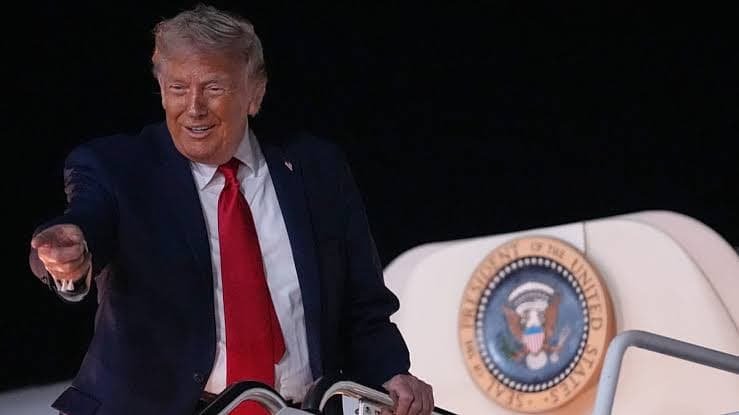

WASHINGTON, June 15, 2026 — President Trump announced Sunday that a ceasefire deal with Iran has been agreed upon and that toll-free shipping through the Strait of Hormuz will now begin, ending a conflict that has rattled global oil markets, sent U.S. inflation to a three-year high, and cost the American military billions in sustained operations since December. Pakistan Prime Minister Shehbaz Sharif confirmed the agreement, saying both the United States and Iran had declared “the immediate and permanent termination of military operations on all fronts, including in Lebanon.
What Trump Said — and What Iran Is Actually Agreeing To
Trump posted on Truth Social: “The Deal with the Islamic Republic of Iran is now complete. Congratulations to all! I hereby fully authorize the toll free opening of the Strait of Hormuz, and, simultaneously herewith, authorize the immediate removal of the United States Naval blockade. Ships of the World, start your engines.
Iran’s deputy Foreign Minister Kazem Gharibabadi confirmed the agreement on Sunday, and said the text of the memorandum of understanding had been finalized. Qatar, which worked alongside Pakistan as a mediator, credited the joint diplomatic effort for bringing the deal to completion.
The terms go beyond a simple ceasefire. Sources familiar with the negotiations told CBS News that, in principle, Iran would commit to not enriching uranium for 15 to 20 years, during which time it would also dismantle its nuclear sites. In exchange, Iran would receive financial relief staggered over time and sequenced to correspond with compliance.
A 60-day ceasefire period starting with the signing of the memorandum of understanding would be used to negotiate the future of Iran’s nuclear program, according to Iran’s state news agency IRNA. In other words: the guns stop now, but the hardest diplomacy is still ahead.
The Strait of Hormuz and What Reopening It Means for American Households
The Strait of Hormuz has been largely closed to commercial shipping since the U.S. and Israel launched operations against Iran last December. That blockade has been one of the central drivers of the American economy’s worst inflation reading in years.
The blockade created severe supply constraints for oil, gas, and fertilizers, sparking price increases and fueling concerns about a return to stagflation. Inflation had already climbed to 4.2% in May — its highest level in three years.
Fully reopening the strait may not happen immediately. Mine-clearing, repairing infrastructure, and guaranteeing security could take time before a full return to pre-war shipping volumes. Analysts and markets are watching closely, but energy traders moved quickly on Sunday’s news — oil prices dropped in after-hours trading as the deal was announced.
Israel, Lebanon, and the Fragile Edge of the Agreement
The deal nearly fell apart before it was announced. Israel launched an air raid on Beirut’s southern suburbs on Saturday, leading to fears the agreement could be sabotaged. Iran had issued repeated warnings that strikes on Beirut were a red line. The raid went ahead regardless.
The Lebanese front remains the most volatile piece. French President Emmanuel Macron said leaders of the G7 nations would meet June 15 to discuss the long-term reopening of the Strait of Hormuz under the newly announced agreement, as well as support for Lebanon and the concluding of a nuclear accord with Iran. That summit is happening today in Evian, France — and the Lebanon question is sitting at the center of it.
What Comes Out of the G7 Today Matters as Much as Sunday’s Announcement
The deal is a memorandum of understanding — a framework with significant gaps still to be filled. The nuclear timeline, the financial relief sequencing, the mechanism for verifying Iranian compliance, and the security guarantees needed to reopen Hormuz without risk of incident all require formal negotiation during the 60-day period that follows.
For American households, the immediate question is simpler: does gas get cheaper? If the Strait reopens fully and without incident over the coming weeks, downward pressure on oil prices — and eventually at the pump — is likely. But if the Lebanon situation escalates or the nuclear talks stall in the 60-day window, the ceasefire’s durability is not guaranteed. The deal Trump called “now complete” is complete in the way a foundation is complete — the rest of the structure still has to be built.