
WASHINGTON, June 15, 2026 —
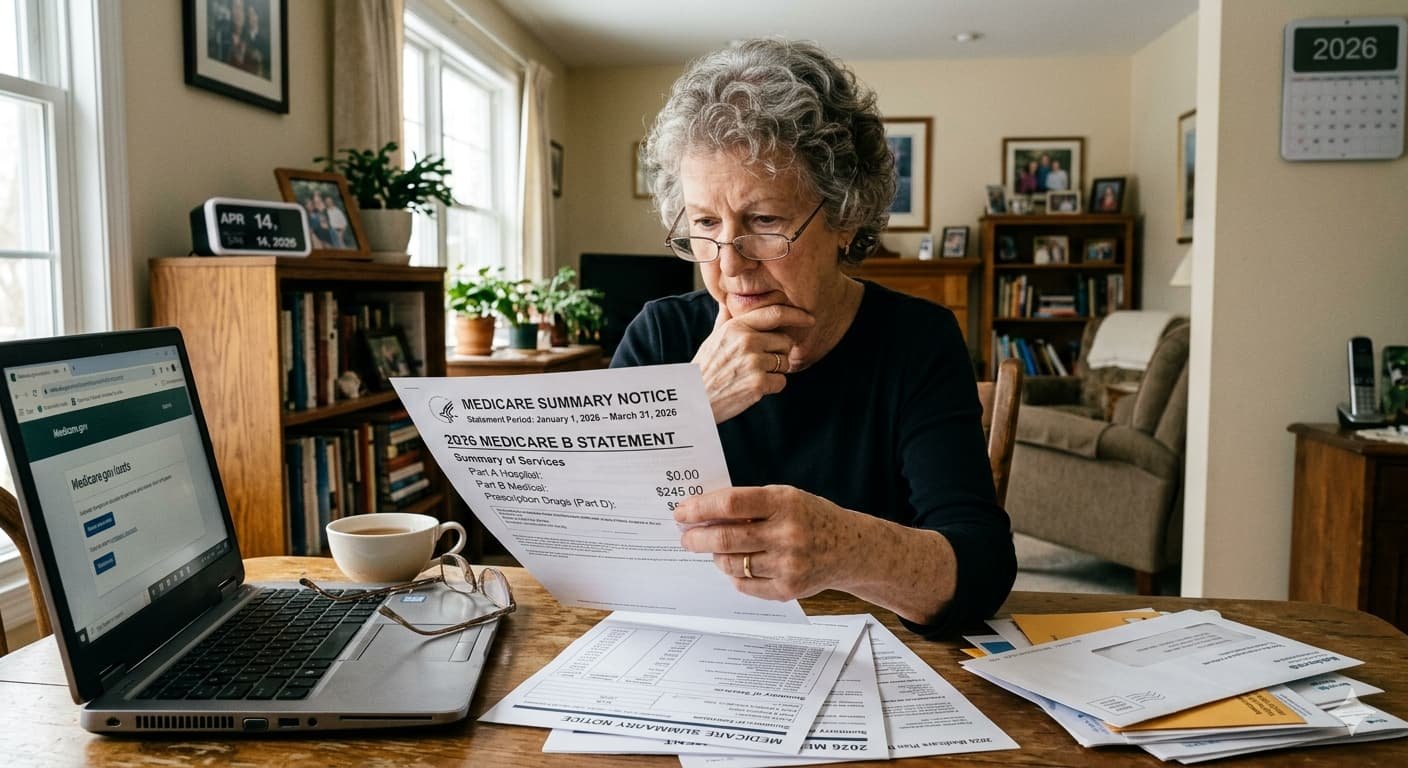
The increase showed up quietly, deducted straight from your Social Security check before you ever saw the money. Medicare Part B premiums rose to $202.90 per month in 2026 — up $17.90 from the $185 base rate in 2025 — and the change took effect January 1 with no separate notification for most beneficiaries. For millions of retirees, the first sign that something had changed was a slightly smaller Social Security deposit.
That is the base rate. What many people are not prepared for is the surcharge system sitting on top of it.
What Is IRMAA and Why Is It Draining More Retirement Income Than People Expect?
The Income-Related Monthly Adjustment Amount — IRMAA — is a Medicare surcharge added to your Part B premium if your income from two years ago exceeded certain thresholds. For 2026, the relevant income is from your 2024 federal tax return.
If your Modified Adjusted Gross Income (MAGI) in 2024 was above $109,000 as a single filer — or above $218,000 as a married couple filing jointly — you are paying significantly more than $202.90 a month. The surcharge climbs across five brackets, and at the highest tier, your total monthly Part B bill reaches $689.90 per person.
Here is what makes this painful for retirees who don’t see it coming: MAGI is not the same as your paycheck income. It includes required minimum distributions from your IRA or 401(k), capital gains from a home sale, Social Security benefits that are taxable, and even interest from municipal bonds. A retired schoolteacher who sold her house in 2024 and invested the proceeds may not consider herself high-income — but her 2026 Medicare bill may say otherwise.
The phenomenon is called “bracket creep,” and it has intensified in recent years as inflation has pushed investment returns and RMDs higher without a corresponding increase in IRMAA brackets.
The 2026 Medicare Part B IRMAA Brackets: Full Table
| 2024 MAGI (Single Filer) | 2024 MAGI (Joint Filer) | Monthly Part B Premium |
|---|---|---|
| ≤ $109,000 | ≤ $218,000 | $202.90 |
| $109,001 – $137,000 | $218,001 – $274,000 | $284.10 |
| $137,001 – $164,000 | $274,001 – $328,000 | $365.30 |
| $164,001 – $191,000 | $328,001 – $382,000 | $446.50 |
| $191,001 – $205,000 | $382,001 – $410,000 | $527.70 |
| Above $205,000 | Above $410,000 | $689.90 |
Source: CMS, November 2025 release. Brackets reflect 2024 MAGI and apply January 1, 2026.
The same IRMAA income brackets also apply to Medicare Part D prescription drug coverage, with surcharges ranging from $14.50 to $91.00 per month on top of your plan’s base premium.
The Deductible Increase Nobody Mentioned to You
It is not just the premium that went up. The annual Part B deductible rose to $283 in 2026, a $26 jump from the $257 deductible in 2025. After you meet that deductible, original Medicare covers 80% of approved costs — leaving a 20% coinsurance that has no out-of-pocket ceiling under original Medicare. That gap is precisely what Medicare supplement insurance, also called Medigap, is designed to close.
On the Part A side, the hospital inpatient deductible rose to $1,736 per benefit period in 2026, up $60 from 2025. Daily coinsurance for stays between 61 and 90 days sits at $434 per day.
Can You Fight an IRMAA Surcharge You Weren’t Expecting?
Yes — and more people should. The Social Security Administration allows you to appeal an IRMAA determination if your income has dropped significantly due to a qualifying life event: retirement, divorce, death of a spouse, reduced work hours, or loss of income-producing property. The process requires filing Form SSA-44 with documentation.
The two-year income lag is the trap. Someone who retired in 2024 and saw their income drop sharply may still be paying high IRMAA surcharges in 2026, based on their final working year. Filing SSA-44 promptly — with proof of income change — can correct the surcharge and potentially return hundreds of dollars per month to your retirement budget.
Part D Drug Coverage: The $2,100 Out-of-Pocket Cap and What It Actually Means
The 2026 Part D out-of-pocket maximum is $2,100 — $100 higher than 2025’s cap, but still a major improvement over the pre-2025 structure, which had no cap at all. Once you hit $2,100 in covered drug costs, you pay $0 for the rest of the year.
Separately, CMS has negotiated new Maximum Fair Prices for 10 drugs initially and 25 total this year — reductions affecting medications for cancer, diabetes, and asthma. If you take any of those drugs, your pharmacist’s pricing may have already changed.
Pro Tips a Generic Medicare Article Would Miss
1. Roth conversions and IRMAA are directly connected — plan before year-end. If you are doing Roth IRA conversions as part of a retirement income planning strategy, every dollar you convert counts toward your MAGI. A conversion that pushes your income just over an IRMAA bracket threshold could cost you $81.20 more per month — nearly $975 per year extra in Part B premiums alone. Time conversions with your tax advisor to stay under the bracket ceiling. This is one of the highest-leverage moves in tax-advantaged savings for Medicare-age retirees.
2. Your Medicare supplement insurance choice is more urgent now. The gap between what original Medicare covers and what you actually owe has grown. The standard 80/20 split — with a $283 deductible and no annual out-of-pocket ceiling — means one major hospitalization can cost thousands. Medigap Plan G covers the Part B deductible and the 20% coinsurance. Comparing Medicare supplement insurance quotes in your state takes under ten minutes and can save far more than the premium costs.
3. Check your IRMAA bracket before any large financial move. A home sale, a portfolio rebalancing, a large RMD — any of these can spike your 2024 income and trigger higher 2026 premiums. If you are already at the edge of an income bracket, 401(k) diversification strategies that defer or spread distributions across years can prevent a single-year income spike from raising your Medicare costs for 12 full months.
FAQ
Q: What is the Medicare Part B premium for 2026?
A: The standard monthly Medicare Part B premium in 2026 is $202.90. Higher-income enrollees pay more, ranging from $284.10 to $689.90 per month depending on their 2024 Modified Adjusted Gross Income.
Q: What is IRMAA and how does it affect my Medicare premium?
A: IRMAA stands for Income-Related Monthly Adjustment Amount. It is a surcharge added to your Medicare Part B and Part D premiums if your income from two years ago exceeded $109,000 (single filers) or $218,000 (joint filers). The Social Security Administration applies it automatically based on your tax returns.
Q: Did the Medicare Part B deductible go up in 2026?
A: Yes. The 2026 Medicare Part B annual deductible is $283, up from $257 in 2025 — a $26 increase.
Q: Can I appeal my IRMAA surcharge if my income dropped?
A: Yes. If your income has fallen significantly due to retirement, divorce, death of a spouse, or reduced work, you can file Form SSA-44 with the Social Security Administration to request an IRMAA reduction based on your current income rather than your 2024 tax return.
Q: What is the Medicare Part D out-of-pocket maximum in 2026?
A: The Part D out-of-pocket cap in 2026 is $2,100. Once you reach that amount in covered drug spending, you pay nothing for covered medications for the rest of the year.
If you are on Medicare or approaching eligibility, the single most useful step right now is to pull your 2024 tax return and check your MAGI against the IRMAA brackets above. If you are close to a threshold, a conversation with a tax advisor or a licensed Medicare specialist before year-end — when 2025 income can still be managed — could protect you from a surcharge you will otherwise carry all of next year. Open enrollment for 2027 Medicare Advantage and Part D plans runs October 15 through December 7, 2026.