
KYIV, June 15, 2026 —
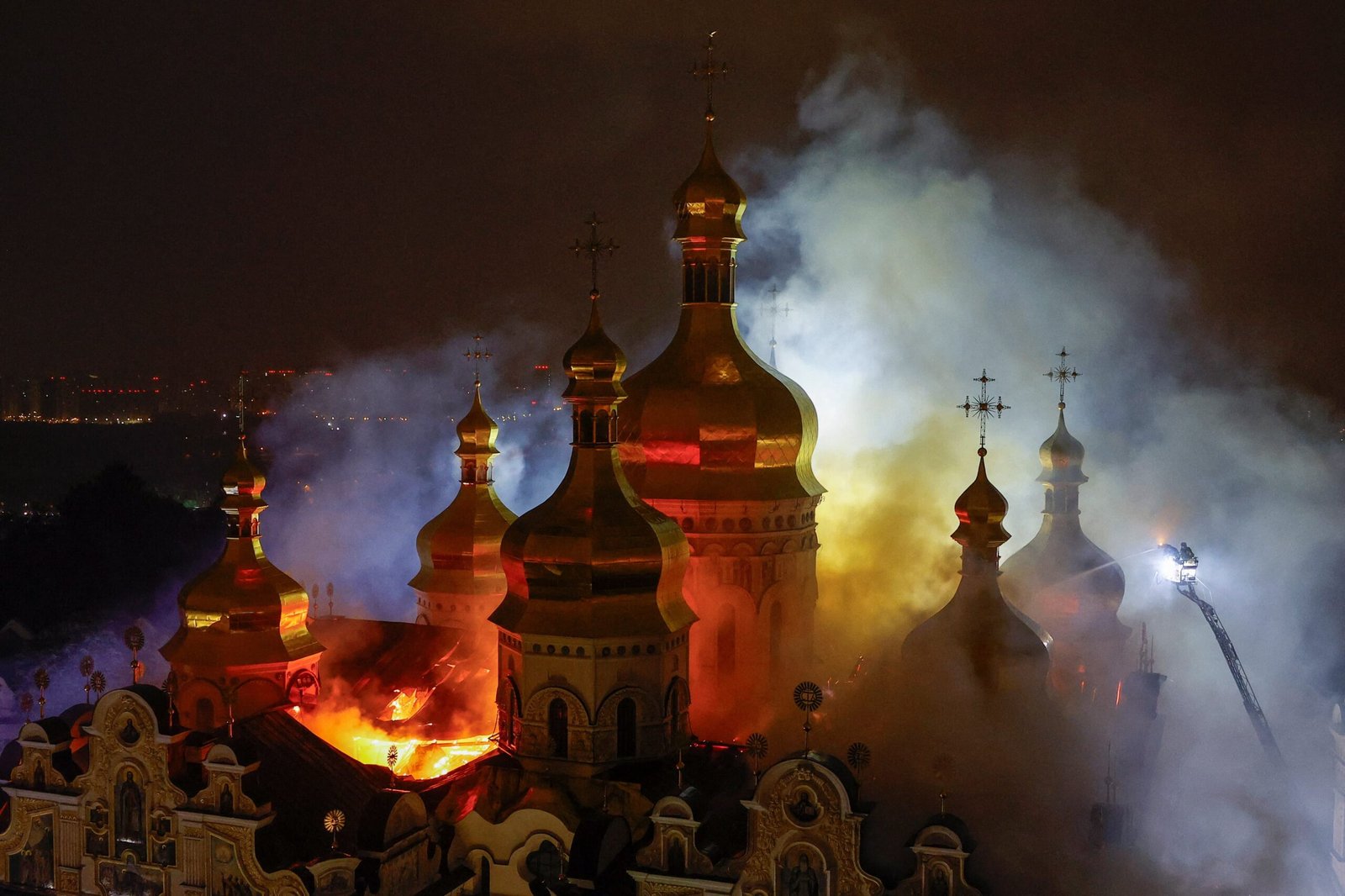
A large-scale Russian attack on Ukraine killed rescue personnel in Kharkiv and four people in the capital Kyiv on Monday, as strikes set apartment buildings ablaze and sparked a fire at the Kyiv-Pechersk Lavra — one of the country’s most significant religious landmarks. It was the kind of assault designed not just to kill but to break something. A monastery that has stood for a thousand years was burning by morning.
What Russia Fired Overnight and What Got Through
Ukraine’s Air Force said Russia launched 70 missiles and 611 drones overnight, primarily targeting Kyiv, while also striking the cities of Dnipro and Kharkiv. A series of powerful explosions echoed across Kyiv, with a wave of ballistic missiles followed by Shahed drones as many people sought shelter underground and officials urged residents to take cover.
The rescuers were killed in Kharkiv by a second Russian strike as they fought a blaze caused by an earlier attack, Interior Minister Ihor Klymenko said. At least five other emergency workers were wounded. This tactic — hitting first responders mid-response — has become a consistent feature of Russia’s urban bombing campaigns. The goal is not just destruction but to make rescuing the wounded feel lethal.
In Kyiv, at least 20 people were wounded and apartment buildings were left burning as air defenses and firefighters worked through the night.
The Monastery of the Caves Is on Fire
A Russian overnight strike set fire to the roof of the Assumption Cathedral at the Kyiv Pechersk Lavra. The Kyiv-Pechersk Lavra, also known as the Monastery of the Caves, is a sprawling complex of monasteries and churches — including some underground — built from the 11th to the 19th century. Some of the churches at the UNESCO-listed World Heritage site are connected by a labyrinthine complex of caves spanning more than 600 meters. The cathedral and surrounding churches overlook the right bank of the Dnipro River and have served as a pilgrimage site for Orthodox Christians for centuries.
The latest barrage fits a broader pattern of Russian strikes on Ukrainian cities and cultural sites in June 2026, following major damage to museums, churches and other landmarks in late May. Hitting the Lavra is not incidental. It carries strategic messaging — the destruction of a site that predates Russia as a modern nation, on land Russia claims as historically its own.
Ukraine’s Deteriorating Air Defense Situation
The scale of last night’s attack — 70 missiles and 611 drones — underscores a problem Kyiv has been raising with Washington for months. Ukrainian President Volodymyr Zelenskyy appealed for more U.S. and European support, describing a previous massive overnight attack as “an explicit statement by Russia: if Ukraine is not protected from ballistic missiles and other missile strikes, those strikes will continue.
That appeal has not produced sufficient results. Ukraine’s stockpiles of air defense interceptors remain constrained, and the math of attrition favors the attacker: Russia can fire drones at a fraction of the cost of the interceptors needed to destroy them.
The Timing: Russia Strikes While Iran Peace Deal Is Announced
This attack landed on the same day President Trump declared the U.S.-Iran war “now complete” and ordered the Strait of Hormuz reopened. The juxtaposition is difficult to miss. As Washington celebrates a diplomatic closing in one theater, the war in Ukraine — now in its fourth year — continues to grind with no end in visible range. Russia’s Foreign Minister Sergei Lavrov said Monday that Moscow remains open to Trump’s proposals for ending the Ukraine conflict, but the overnight strikes suggest no slowdown in military operations while those talks develop.
The bodies of five emergency workers in Kharkiv, and a smoke-blackened cathedral in Kyiv, are the answer Russia gave to any notion of de-escalation.