
WASHINGTON, June 2, 2026 —
Iran suspended all communications with the United States through mediators on Monday, halting the ceasefire negotiations that had been the only path to reopening the Strait of Hormuz and ending a war now in its 95th day — citing Israel’s expanding military offensive in Lebanon as a violation of the ceasefire across every front.
Oil prices surged more than $6 per barrel within hours of the announcement. The Bab el-Mandeb Strait — a second global energy chokepoint that Iran’s allies in Yemen have threatened before — is now explicitly being threatened as a retaliatory lever. And President Trump responded not with alarm, but with something closer to indifference: he told reporters he had not heard from Iran, that going silent would be very good, and that the blockade is a piece of steel.
What Iran Said — and Why Lebanon Is the Trigger
Iran’s IRGC-affiliated Tasnim news agency published the suspension announcement Monday afternoon. The statement was specific about its cause. Lebanon was included as a condition of the original ceasefire agreement reached April 8. Israel’s forces have been pressing a major offensive in southern Lebanon over the past several days — their deepest military incursion into Lebanese territory in 26 years — including the seizure of a medieval castle far north of the Lebanese-Israeli border. Iran considers Israeli operations in Lebanon to be operations conducted by an American proxy, making those violations American violations of the ceasefire.
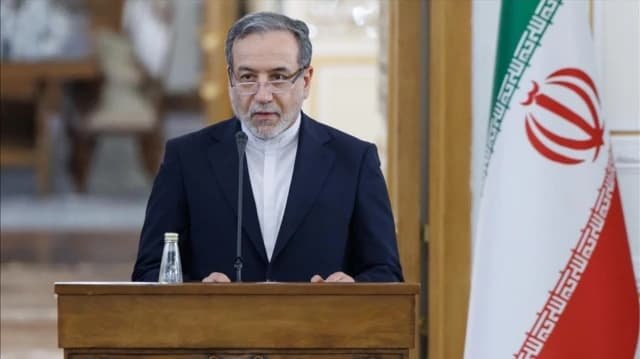
Iranian Foreign Minister Abbas Araghchi posted on social media Monday evening in both Arabic and English that a ceasefire between Iran and the United States constitutes, without any ambiguity, a comprehensive ceasefire across all fronts, including Lebanon. He stated explicitly that any violation of the ceasefire on one front is a violation across all fronts, and that the United States and Israel bear responsibility for the consequences.
Iranian parliament speaker and lead negotiator Mohammad Bagher Ghalibaf, who had been one of the principal Iranian figures in the Doha talks, warned that if Israeli attacks in Lebanon continued, Iran would not only suspend the negotiation process but would stand against Israel directly. He accused the United States of breaching the ceasefire by maintaining its naval blockade on Iranian ports — a blockade that has cut off Iranian oil export revenue for weeks — while simultaneously failing to stop Israel’s operations in Lebanon.
The Bab el-Mandeb Threat That Sent Oil Surging
The most alarming development Monday was not the talk suspension itself. It was what came alongside it. Esmail Ghaani, the head of the IRGC’s Quds Force — the branch that runs Iran’s proxy network across the Middle East — warned that continued Israeli operations in Lebanon and Gaza would lead the Axis of Resistance, the coalition of Iran-backed armed groups including the Houthis in Yemen, to block the Bab el-Mandeb Strait.
The Bab el-Mandeb is the narrow waterway at the southern tip of the Arabian Peninsula connecting the Red Sea to the Gulf of Aden. Roughly 10% of global seaborne trade passes through it, including a significant portion of Europe’s energy imports. The Houthis have targeted shipping in the Red Sea before. A coordinated effort to close the Bab el-Mandeb as a direct response to the Strait of Hormuz crisis would effectively shut two of the world’s most critical energy chokepoints simultaneously.
Oil markets reacted immediately. Brent crude surged more than $6 per barrel on the announcement — reversing the modest decline that had occurred on optimism about the peace negotiations in the prior week. At the pump, that increase will take weeks to reach American consumers, but it is moving in the wrong direction from a gas price that was already running at $4.55 per gallon.
What Trump Said — and What It Signals
Trump’s response to questions about the Iranian suspension was deliberate in its calm. He told NBC News’s White House correspondent that he had not heard directly from Iran, that going silent would be very good, and that we have been talking too much if you want to know the truth. He said the military option was not being activated immediately — we are not going to go and start dropping bombs all over there — but that the blockade would remain fully in force until an agreement was reached.
His position as he described it Monday: I think I can wait as long as they want. They are losing a fortune.
That framing — patience as leverage, economic pressure as the primary tool — is consistent with Trump’s approach throughout the negotiations. Whether it is effective when the ceasefire is actively collapsing, when Iran is threatening a second chokepoint, and when the UN Security Council called an emergency meeting Monday on Lebanon is the question that the next 48 hours will answer.
Trump separately confirmed Monday that he spoke with Israeli Prime Minister Benjamin Netanyahu and with Hezbollah representatives. He said no U.S. troops would go to Beirut. What, if anything, he asked Netanyahu to do about the Lebanon offensive — the specific action that triggered Iran’s suspension — was not disclosed.
| Iran Peace Talks — Status After Monday’s Suspension | Detail |
|---|---|
| Iran’s action | Suspended all mediator communications with US |
| Stated reason | Israel’s Lebanon offensive violates ceasefire on all fronts |
| Iranian announcement source | IRGC-affiliated Tasnim news agency |
| Key Iranian statement | Araghchi: ceasefire is “comprehensive across all fronts” |
| New threat issued | IRGC Quds Force: Bab el-Mandeb Strait could be blocked |
| Oil market reaction | Brent crude +$6/barrel |
| Current US gas price | ~$4.55/gallon |
| US Naval blockade status | Maintained — Trump: “blockade is a piece of steel” |
| Trump’s posture | Patience — “I can wait as long as they want” |
| UN Security Council | Emergency meeting called on Lebanon crisis Monday |
| Israel’s Lebanon offensive | Deepest incursion in 26 years — castle seized north of border |
| Ceasefire technically in effect since | April 8 — now suspended by Iran |
| Strait of Hormuz status | Still closed to commercial shipping |
What Comes Next — and How Fast It Can Escalate
The suspension of mediator communications is not the same as a declaration of resumed hostilities. Iran has not said it is returning to active combat operations against American forces. The IRGC’s warning about the Bab el-Mandeb was conditional — if Israel continues — not a declaration of immediate action.
But the architecture of the negotiation has collapsed for the moment. Pakistan and Qatar, the two primary mediators, cannot facilitate an exchange of texts that Iran has said it will not participate in. Every prior ceasefire extension was negotiated through exactly that mediation channel. With that channel suspended, the path to a deal — or to a ceasefire extension beyond whatever time remains on the current framework — runs through a resumption of talks that Iran has just said it will not resume unless Israel stops operations in Lebanon.
Israel has given no indication it will stop operations in Lebanon. The United States has given no indication it will compel Israel to do so. Trump confirmed he spoke with Netanyahu on Monday and that no U.S. troops would go to Beirut — but said nothing about asking Israel to halt the offensive that triggered Iran’s suspension.
The ceasefire lasted 55 days. It is now suspended in everything but name. The gas price that American households have been paying since the Strait closed in March is not going down this week. And the Bab el-Mandeb, which nobody was talking about on Friday, is now part of the conversation.