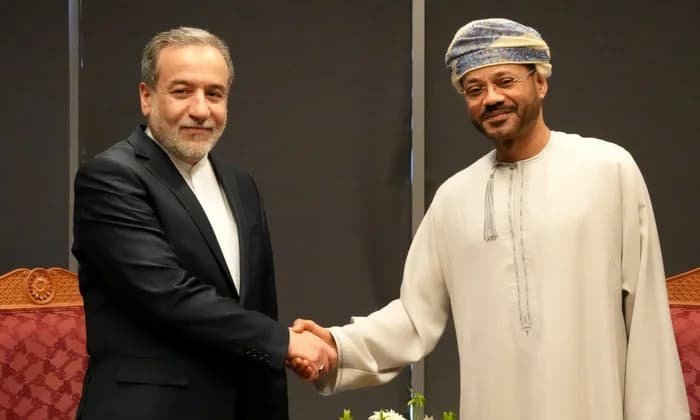

WASHINGTON / MUSCAT, May 7, 2026 —
Iran is expected to deliver its formal written reply to the U.S. peace proposal to mediators Thursday — the same day its navy said safe passage through the Strait of Hormuz is possible under what it described as “new procedures” — in a confluence of signals that sent oil prices plunging 11% Wednesday and pushed the S&P 500 and Nasdaq to simultaneous record highs. President Trump told reporters Wednesday evening the U.S. has had “very good talks” with Iran over the past 24 hours.
The 69-day war that began February 28 may be approaching its most significant diplomatic moment yet. Or it may be approaching another false dawn. The difference will be visible in the document Iran hands to mediators today.
What Iran’s Reply Is Expected to Contain
The document Iran is preparing to deliver through Pakistani and Omani intermediaries is a formal response to the three-phase framework that emerged from Secretary of State Rubio’s call with Iranian Foreign Minister Araghchi on Sunday. Multiple sources familiar with the negotiations told outlets Wednesday that the two sides are working on a one-page memorandum of understanding to end the war and set a framework for more detailed nuclear negotiations.
A one-page memorandum of understanding — as opposed to a comprehensive treaty or detailed agreement — would establish the essential structure: Phase One, in which Iran agrees to allow commercial shipping through the Strait under new procedures while the U.S. suspends the naval blockade; Phase Two, a formal ceasefire document; and Phase Three, a 90-day negotiating window on nuclear issues, sanctions, and frozen assets.
The nuclear question — which both sides have characterized as the central unresolved issue — would not be resolved in the memorandum itself. It would be deferred to Phase Three. That deferral is the fundamental diplomatic compromise that has taken 69 days to reach: Washington accepting that reopening the Strait and ending active hostilities can happen before nuclear concessions are finalized, in exchange for Iran accepting that nuclear negotiations will begin on a defined timeline.
What the IRGC Said — and Why It Matters More Than Anything the Foreign Ministry Has Said
The Islamic Revolutionary Guard Corps Navy statement is the most significant signal of the day — more significant, arguably, than any foreign ministry communication. The IRGC controls the fast-attack boats that have been harassing commercial shipping, the mines that have been laid in Strait approaches, and the military infrastructure that has kept the waterway effectively closed. The foreign ministry talks. The IRGC acts.
When the IRGC Navy says “with aggressor’s threats neutralized and new protocols in place, safe, stable passage through the Strait of Hormuz will be ensured” — the operative word is “will.” Not “could.” Not “might.” Will.
That statement does not come without authorization from Iran’s military command structure. The IRGC does not announce policy independently of the supreme leader’s office. The statement is either a genuine signal that the military establishment has accepted the Phase One framework — or it is a carefully worded formulation that provides diplomatic cover while maintaining the ability to resume harassment if talks break down.
Oil markets read it as the former. Brent crude fell 11% in a single session. That is not a small move. That is one of the largest single-day drops in Brent crude since the 2020 pandemic shock.
The Market Reaction — What $96 Brent Means
| Market | Wednesday Close | Change | Significance |
|---|---|---|---|
| Brent crude | $101.27/barrel | -7.8% | First close below $105 since war began |
| WTI crude | $95.08/barrel | -7% | Below $100 for first time in weeks |
| S&P 500 | Record high | +1.5% | Markets pricing in deal |
| Nasdaq Composite | Record high | +2% | Tech leads on rate cut optimism |
| Dow Jones | Up 610+ points | Strong gains | Broad market rally |
| US gasoline futures | Down 5% | Wholesale drop | Pump price relief coming |
| Heating oil/jet fuel proxy | Down 6% | Airlines/freight relief | Operating cost reduction |
Goldman Sachs’s $85 Brent forecast — contingent on a Phase One deal — is no longer a distant scenario. At $101 Brent Wednesday, the market is already pricing in a significant probability of a deal this week. If Iran’s reply Thursday produces a signed memorandum of understanding, Brent could reach $90 within days and $85 within two to three weeks. At $85 Brent, U.S. gasoline prices fall from their current $4.30-$4.46 national average to approximately $3.40 — a drop of nearly a dollar a gallon that would represent the most significant household economic relief since the war began.
Trump’s Position — “Very Good Talks”
Trump told reporters Wednesday evening that the U.S. has had “very good talks” with Iran over the past 24 hours. The characterization is the most positive he has offered since the war began — more positive than “very good proposal,” more positive than “moving toward a deal,” more positive than any of the incremental language the administration has used since Rubio’s Sunday call.
He also maintained his threat of “much higher level” strikes if Iran rejects a deal — the carrot and the stick operating simultaneously. The diplomatic structure in which maximum pressure and genuine negotiation run in parallel has been the defining characteristic of Trump’s Iran strategy throughout the war. Wednesday was its most concentrated expression: simultaneous record highs in U.S. equity markets and explicit threats of infrastructure bombing in the same news cycle.
Friday’s ceasefire review — the date Iran’s foreign ministry set for reassessing the current situation — is now 24 hours away from the delivery of Iran’s formal reply. The document arriving Thursday sets the terms of what Friday’s review will produce.