
WASHINGTON, APRIL 15, 2026 —
Key Takeaways
- March 2026 was the hottest March ever recorded for the contiguous United States — not just the warmest on record, but the warmest by the widest margin ever measured for any single month in the history of federal climate records.
- Forecasters are warning that an emerging El Niño pattern could push summer 2026 temperatures even higher, potentially setting additional monthly records across multiple U.S. regions in the coming months.
- The emperor penguin was simultaneously declared an endangered species this week by the global authority on threatened wildlife — directly citing climate change and the accelerating loss of Antarctic sea ice that the species depends on for breeding and survival.
The numbers that came out of federal climate monitoring this week are not just record-setting. They represent a category of extreme that climate scientists say was statistically improbable even five years ago. March 2026 was the hottest March ever recorded for the lower 48 United States — and it was not close. The margin by which March 2026 surpassed the previous March record is the largest positive departure from average ever documented for any month across the entire history of federal temperature records for the continental U.S.
That distinction — warmest month ever by the widest margin ever — tells scientists something significant. It means the climate signal has accelerated to a point where individual months are now landing outside the range of natural variability that characterized even recent decades. Put plainly: what happened last month would have been nearly impossible under the climate conditions of the early 2000s.
What the Data Actually Showed
Federal meteorological data covering the contiguous United States showed March 2026 temperatures running dramatically above the 20th-century average across virtually every region of the country. The departure was not confined to a single hot spot or driven by one anomalous weather system — it was widespread, persistent, and extraordinary in its geographic scope.
The Western United States, which has experienced the most sustained long-term warming trend of any region in the country, recorded some of the most extreme departures. But the record was not limited to the West. The Great Plains, the Southeast, and parts of the Northeast all logged March temperatures that broke individual state and station records dating back to the 19th century.
Snowpack across the mountain West — a critical reservoir for summer water supply across California, Nevada, Arizona, Colorado, and Utah — came in well below historical averages for the third consecutive year, raising drought concerns for the irrigation-dependent agriculture and water systems that serve tens of millions of people.
The El Niño Warning for Summer 2026
The March heat record arrived alongside a separate warning from meteorologists about what may be coming next. Forecasters say the atmospheric and oceanic patterns establishing themselves in the Pacific are consistent with an emerging El Niño cycle — the periodic warming of Pacific Ocean surface temperatures that historically amplifies heat across the southern and western United States while increasing drought risk during the warm season.
If El Niño strengthens as projected through spring and into summer, the already-hot baseline established by March 2026 could be pushed further. Climate scientists note that El Niño events occurring on top of the long-term warming trend now produce temperature extremes that would have been associated with rare or unprecedented events just two decades ago.
For American households, that translates directly into higher electricity bills from cooling demand, increased wildfire risk across the West and Southwest, agricultural stress for crops planted in spring, and potential strains on municipal water systems that are still operating under drought conditions in multiple states.
Colorado State University’s annual Atlantic hurricane forecast, released this week, predicted 13 named storms and 6 hurricanes for the 2026 season — a somewhat below-average forecast in terms of storm count, though forecasters caution that the Iran war’s energy disruption has introduced unusual uncertainty into the global atmospheric modeling that underlies those projections.
Emperor Penguins Declared Endangered — A Climate Milestone
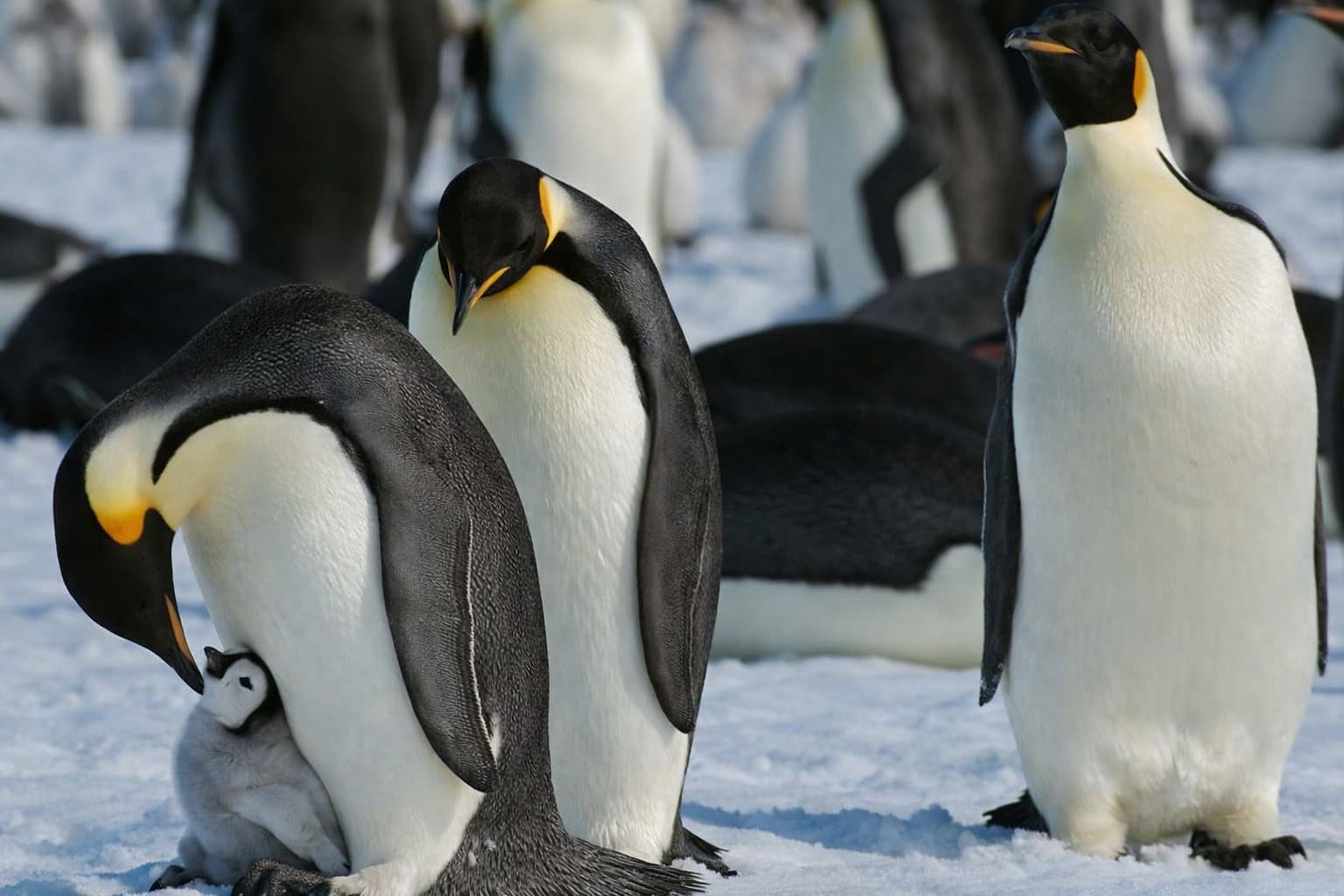
In a separate development with direct climate significance, the International Union for Conservation of Nature — the global authority on threatened wildlife — formally declared the emperor penguin endangered this week, marking the species’ first elevation to that designation.
The emperor penguin, the largest of all penguin species and one of the most recognizable animals on Earth, depends entirely on stable Antarctic sea ice for breeding. Adult penguins walk up to 50 miles inland from the sea ice edge to reach breeding colonies during winter. The ice must remain stable for seven months each year — long enough for eggs to hatch and chicks to develop before summer ice melt. As Antarctic sea ice extent has declined sharply over the past decade, that window has shortened in ways that directly disrupt breeding cycles.
In years of poor sea ice extent, penguin chicks that have not yet developed waterproof adult plumage fall into the ocean when ice beneath their colonies breaks up prematurely — a mortality event that can eliminate an entire year’s breeding class at affected colonies. Scientists documented exactly this kind of catastrophic breeding failure across multiple large emperor penguin colonies in recent years.
The emperor penguin joins a growing list of iconic species — the polar bear, various coral species, multiple Pacific salmon runs — whose endangered status is driven primarily or entirely by climate change rather than the habitat destruction, overhunting, or pollution that drove most prior extinction threats.
Why This Matters
The convergence of record March heat, El Niño signals, and an emperor penguin endangered listing in the same week is not coincidental. It is a snapshot of a climate system in accelerating transition, producing outcomes at a pace and scale that outran the timeline projected by earlier models.
For American readers, the practical implications run from electric bills and wildfire smoke this summer to long-term questions about water availability in the West, the viability of agriculture in drought-prone regions, and the insurance costs attached to weather-related property damage that have already driven major insurers to exit markets like California and Florida entirely.
The record March was not a warning sign. It was a current event — something that happened to tens of millions of Americans last month, whether or not it received adequate attention. Summer 2026 is eight weeks away.