
WASHINGTON, APRIL 16, 2026 —
Key Takeaways
- The U.S.-Iran war’s closure of the Strait of Hormuz has disrupted far more than oil — it has severed a critical artery for fertilizer exports, food shipping routes, and grain supply chains that feed hundreds of millions of people across three continents.
- Brent crude remaining above $90 a barrel has raised the cost of every food product that requires fuel to grow, process, refrigerate, or transport — which is virtually every food product sold in America and worldwide.
- Climate scientists warn that the energy shock is arriving on top of the hottest March ever recorded in the continental U.S. and an emerging El Niño pattern — a convergence that could produce the worst global food security conditions since the 2010-2011 global food crisis.
When global leaders discuss the U.S.-Iran war, the conversation centers on oil prices, nuclear weapons, and military strategy. The food crisis unfolding in parallel has received a fraction of that attention — and it may ultimately affect more lives than any of those other dimensions.
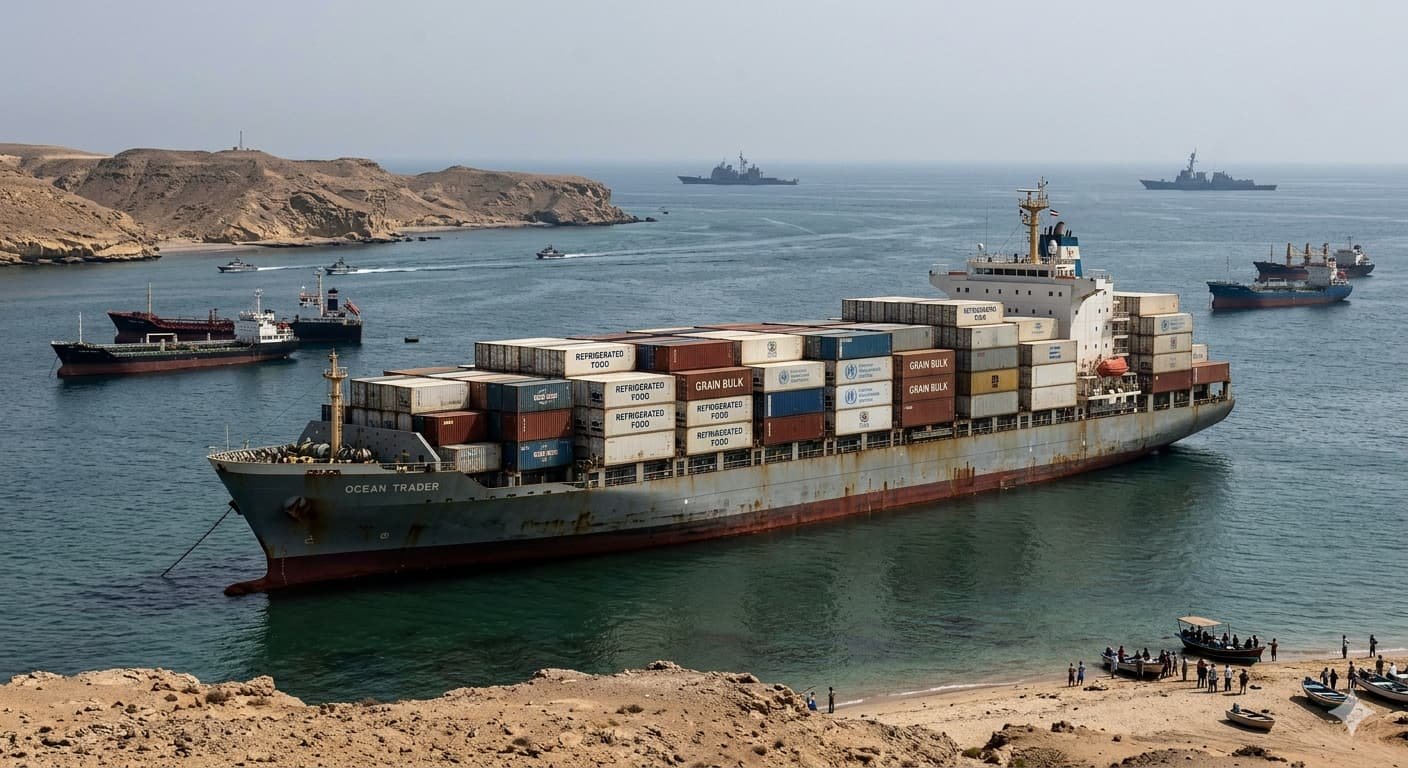
The Strait of Hormuz, through which the U.S. naval blockade is now focused, has historically carried not only 20% of the world’s daily oil supply, but also enormous volumes of the fertilizer precursors, grain shipments, and food commodities that sustain global agriculture. The Gulf states that ring the Strait — Saudi Arabia, Qatar, Kuwait, the UAE, Bahrain — import the vast majority of their food through this same waterway. With the Strait reduced to a trickle of traffic, the regional food emergency is already severe. The global ripple effects are building.
The Fertilizer Crisis Underneath the Energy Crisis
The connection between oil prices and food prices is not simply about the cost of running farm machinery or refrigeration trucks. It runs deeper — through the chemistry of modern agriculture itself.
Natural gas is the primary feedstock for nitrogen fertilizer, which is essential for the yields that modern farming depends on to feed the planet. When natural gas prices spike — as they have throughout the Iran war — fertilizer prices follow within weeks. When fertilizer prices spike, farmers have three choices: pay more for inputs and pass costs to consumers, plant less and reduce supply, or apply less fertilizer and accept lower yields. All three outcomes raise the price of food.
The Gulf region produces a significant share of the world’s chemical fertilizer precursors. Qatar’s LNG facilities — already severely damaged by Iranian strikes earlier in the conflict — normally supply a major portion of the global LNG market that powers fertilizer plants across Europe, South Asia, and East Africa. Those facilities are operating at reduced capacity. The downstream effects on fertilizer availability and cost will play out across planting seasons that are beginning right now in the Northern Hemisphere.
What Americans Are Already Paying
The food price impacts of the Iran war are not hypothetical. They are showing up in grocery stores across America right now, layered on top of inflation that was already running above the Federal Reserve’s comfort zone before the first bomb fell on February 28.
Food packaging costs more because packaging materials are petroleum derivatives. Transportation costs more because diesel prices are up sharply. Refrigeration costs more because electricity prices track natural gas prices. Agricultural equipment costs more to run. And all of those costs hit the supply chain simultaneously, compressing the margins of food producers, distributors, and retailers — some of whom absorb losses, others of whom pass them to consumers.
Ground beef prices have been rising sharply and are forecast to climb further through 2026, reflecting higher feed costs for cattle operations, higher transportation costs for meat processing, and tighter livestock supplies as ranchers reduce herd sizes in response to elevated operating costs. Coffee prices, which depend on global shipping routes and fuel costs across the supply chain, have risen significantly. Produce prices from imported fruits and vegetables are elevated as shipping costs remain high.
The United States Postal Service implemented an 8% fuel surcharge on all package deliveries. Amazon and FedEx added surcharges of their own. Every online grocery order, every delivered food subscription box, every pharmacy package now carries the Iran war as a hidden line item in its cost structure.
The Climate Compounding Factor
The food supply shock from the Iran war is arriving at the worst possible climatic moment. March 2026 was the hottest March ever recorded for the contiguous United States — by the widest margin ever measured for any single month in history. Drought conditions persist across the agricultural Southwest, the Great Plains, and parts of the Southeast.
An emerging El Niño pattern is expected to amplify heat across the southern and western United States through summer 2026, threatening crop yields for corn, wheat, soybeans, and cotton at exactly the moment when global supply buffers have been drawn down by the war’s disruption.
Wheat — one of the most globally traded staples — is particularly exposed. Ukraine, which has been a major global wheat exporter since Russia’s 2022 invasion disrupted Russian exports, continues to face supply uncertainty. The Middle East, including Iran and surrounding Gulf states, is a major wheat importer. A conflict that simultaneously disrupts regional import capacity and raises the energy cost of production in exporting nations is a supply shock operating from both sides of the market simultaneously.
| Global Food Security Risk Factors — April 2026 | Status |
|---|---|
| Strait of Hormuz fertilizer shipments | Severely disrupted |
| Qatar LNG production (feeds fertilizer plants) | Reduced capacity |
| Brent crude oil price | ~$95/barrel (vs ~$75 pre-war) |
| US gasoline average | $4.12/gallon |
| March 2026 US temperature | Hottest March on record |
| El Niño development | Emerging, forecast to intensify |
| US drought conditions (Southwest, Plains) | Ongoing |
| Global food price trajectory | Rising across multiple commodities |
The Gulf States’ Humanitarian Emergency
While Americans absorb higher grocery prices, the situation in the Gulf states directly around the Strait of Hormuz represents a more acute humanitarian crisis. Saudi Arabia, Kuwait, Qatar, the UAE, Bahrain, and Oman collectively import the vast majority of their food — in some cases over 80% of all calories consumed — through the Strait of Hormuz.
With Strait traffic reduced to a fraction of normal, food supply chains to these nations have been severely stressed. By mid-March, roughly 70% of the region’s food imports had been disrupted. Retailers were airlifting staples. Grocery prices in the Gulf rose 40% to 120% in a matter of weeks. The desalination plants that provide virtually all of the region’s fresh water — attacked in some cases and threatened in others — add a second critical dependency to the crisis.
These nations are American allies. Their economic and political stability is intertwined with U.S. security interests across the entire region. A humanitarian food and water crisis in the Gulf states that results from a U.S.-led military operation is a dimension of the war’s cost that has received almost no public discussion in Washington.
Why This Matters
The food dimension of the Iran war is not a secondary story. It is arguably the highest-stakes consequence of the conflict for the largest number of people — including tens of millions of Americans who are already spending a record share of their income on groceries, and hundreds of millions of people globally who were already facing food insecurity before the war began.
The resolution of these pressures depends on the same diplomatic outcome everyone is watching — a ceasefire that holds, a Strait that reopens to full traffic, and oil prices that normalize over several months. Every day those conditions are not met, the agricultural supply chains and fertilizer networks that produce next season’s food become a little more strained.
The diplomatic window closes April 21. The planting season does not wait.