
BEIJING / WASHINGTON, May 13, 2026 —
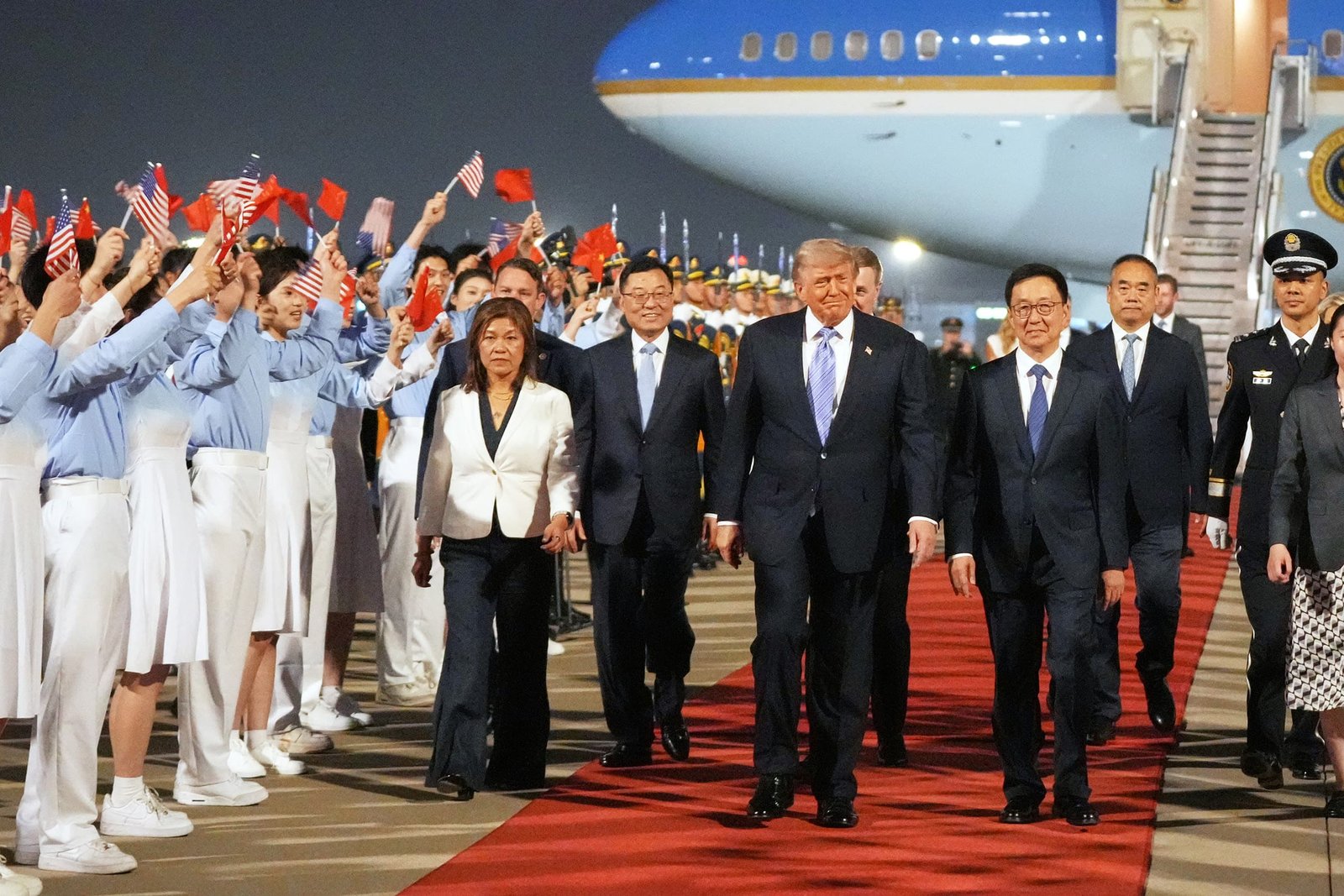
President Trump departs for Beijing Tuesday evening for a two-day summit with President Xi Jinping beginning Thursday — a meeting that analysts at CSIS, the Council on Foreign Relations, and Chatham House all describe in strikingly similar terms: China enters it more confident than almost any outside observer expected, Iran has consumed the agenda space that tariffs and technology were supposed to occupy, and the images of the two leaders together may matter more than any specific agreement they reach.
The summit was delayed from March specifically because the Iran war made the diplomatic environment too unstable. It arrives now at a moment when the ceasefire is on life support, inflation hit 3.8%, and both governments need a win they can describe to their domestic audiences by Friday morning.
Why China Enters This Summit Confident
The conventional expectation heading into a Trump-Xi summit is that the American president’s unpredictability and deal-making instincts give Washington structural leverage. The May 14-15 summit does not fit that template. China arrives in a position of genuine strength built over the past year through specific decisions that have paid off.
When Trump imposed tariffs exceeding 140% on Chinese goods in April 2025, Xi threatened to restrict rare earth minerals and magnets — the critical materials used in electric vehicles, wind turbines, military systems, and semiconductors that China controls approximately 90% of globally. Trump reduced the tariffs. The rare earth threat worked. Beijing’s political establishment drew the lesson: when pushed, America folds rather than absorb the pain of critical mineral supply disruption.
That experience shaped China’s posture heading into Thursday’s summit. Beijing is not coming to apologize for its trade practices, seek American favor, or offer concessions on Taiwan’s status. It is coming to manage a relationship with a country whose erratic trade policy has, paradoxically, pushed American allies toward China. Trump’s tariffs on Vietnam and India drove both countries deeper into Chinese economic partnerships. Trump’s questioning of NATO’s value has reduced European confidence in American security guarantees in ways that benefit Chinese diplomatic positioning. The war with Iran — which China did not start and which is costing China approximately $25 billion per month in higher energy costs — is a problem that Trump created and that China has leverage to help solve.
What Each Side Wants — and the Gap Between Them
The summit’s agenda reflects two governments with partially overlapping and partially conflicting interests across four major issue areas.
| Issue | Trump Priority | Xi Priority | Likely Outcome |
|---|---|---|---|
| Iran war — Strait of Hormuz | China pressures Iran to accept nuclear deal | China encourages reopening — avoids pressuring on nuclear | Reaffirmation of shared Hormuz interest — no Iran pressure commitment |
| Tariffs | Maintain pressure — use as leverage for concessions | Return to October 2025 truce terms — 30.8% average rate | Modest tariff reduction — agricultural and energy purchases in exchange |
| Rare earths | Remove export restrictions immediately | Use as leverage — ease selectively if tariff deal justifies it | Partial easing — linked to tariff reciprocity |
| Taiwan | Avoid any formal commitment | Seek U.S. declaratory shift — reduce arms sales to Taipei | Trump verbal assurances — no formal change to policy |
| Boeing purchase | 500-aircraft deal — headline deliverable | Willing if broader deal justifies it | Letter of intent likely |
| Technology controls | Maintain chip export restrictions | Remove or ease — non-negotiable for Beijing | No movement |
The most important distinction in the table above is between what China wants on Iran and what the U.S. needs from it. Washington needs China to tell Tehran that Beijing will reduce its purchases of Iranian oil unless Iran accepts nuclear concessions — a form of pressure that would fundamentally alter Iran’s economic calculations and potentially break the nuclear deadlock. China will not do this publicly. It will not be seen as enforcing American demands on a country it has positioned itself as supporting. What China will do — and has already signaled through the Araghchi visit last week — is tell Iran privately that the Strait’s closure is hurting China and that a deal that reopens it serves everyone’s interests. That is encouragement, not pressure. Whether it is enough to move Iran’s position is the question Thursday’s conversations will attempt to answer.
The Chatham House Assessment — Xi Is Getting Gifts He Didn’t Ask For
Chatham House’s analysis published Tuesday describes Xi’s strategic position in terms that should give American observers pause. Trump’s decisions over the past year have systematically handed China advantages it could not have secured through its own diplomacy.
Canceling Biden-era clean technology subsidies allowed China to extend its lead in solar panels, wind turbines, and electric vehicles — the industries where the United States was most directly competing with Chinese manufacturers. Tariffing American allies including Vietnam, India, and South Korea drove those countries toward Chinese economic partnerships. Questioning NATO’s value reduced European confidence in American security guarantees in ways that opened diplomatic space for Chinese engagement with European governments. Tying up U.S. military resources and presidential attention in the Iran war has reduced Washington’s bandwidth for the Indo-Pacific competition that both American political parties had identified as the defining strategic challenge of the decade.
The irony, as Chatham House frames it, is that Trump entered his second term with the stated goal of reversing China’s rise. Eighteen months in, the decisions that were supposed to achieve that goal have, in several key domains, accelerated it.
The Business Delegation That Isn’t Going
One detail that reveals more about the summit’s dynamics than any official statement: the U.S. government declined China’s invitation to organize industry-specific meetings between senior Chinese leaders and American CEOs. The reasoning was that participation might make American businesses appear too close to Beijing.
As of Tuesday, the White House had not formally invited executives to join Trump on the trip, and a proposed list of two dozen business leaders may be halved. The contrast with Trump’s 2017 Beijing summit — which produced a ceremony unveiling $250 billion in business deals — is deliberate. The administration wants a diplomatic summit, not a commerce show. Whether that posture produces better long-term outcomes than the 2017 approach is debatable. What is not debatable is that it signals a different kind of engagement with China than the one that defined the first Trump presidency.
The summit begins Thursday. Friday morning, both governments will describe whatever happened as a success. The question is what specific language they use — and whether it contains the nuclear pressure on Iran that could determine whether gas prices are falling or rising when American voters go to the polls in November.