
MOSCOW / KYIV / WASHINGTON, May 10, 2026 —
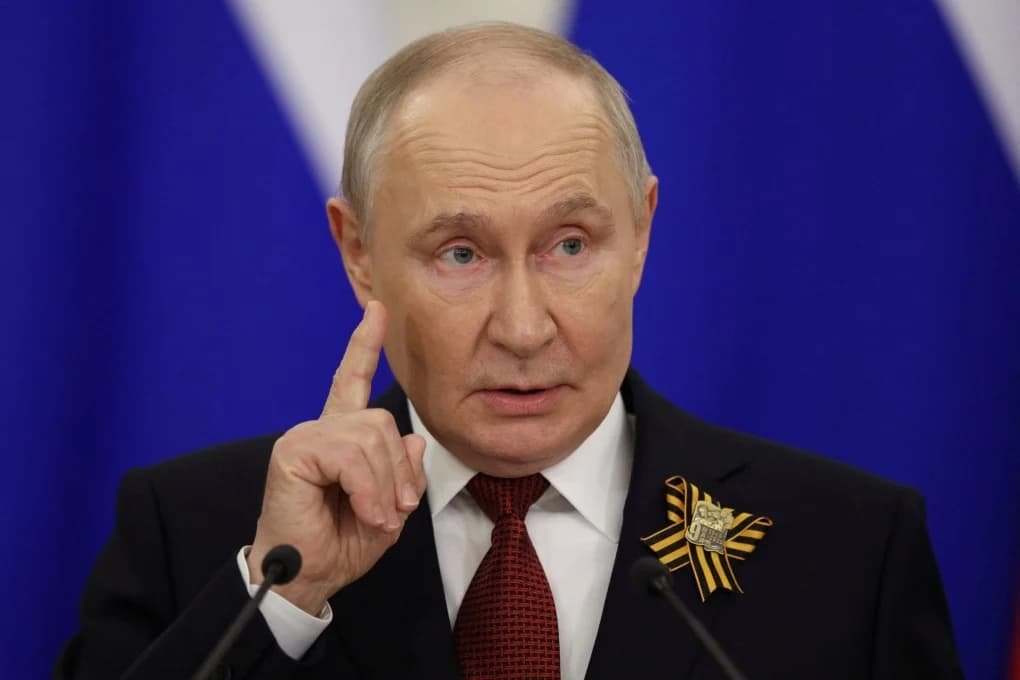
Russian President Vladimir Putin said Saturday that he believes the war in Ukraine is coming to an end — his most optimistic public statement about the conflict’s trajectory since Russia’s full-scale invasion began in February 2022 — as the first Trump-brokered ceasefire between Russia and Ukraine took effect at midnight Friday and a prisoner exchange began along the front lines in eastern Ukraine.
The three-day ceasefire, announced by Trump on Friday as a precursor to longer-term peace negotiations, has been confirmed by both governments. Ukraine has accepted the terms. Russia has accepted the terms. Putin’s Saturday statement — made to reporters at a Kremlin event — represents the first time the Russian president has publicly suggested the war he began may soon conclude on his watch.
What Putin Said — and What It Means
Putin’s statement was delivered without elaboration. He said he “thinks the war with Ukraine is coming to an end” and did not specify a timeline, a mechanism, or a set of conditions. The remark was not a peace proposal. It was not a commitment to any specific outcome. It was a public signal — the kind of signal that authoritarian leaders in his position issue when they want to create diplomatic space without binding themselves to any particular path.
The context matters enormously. Putin has been fighting a war in Ukraine for more than four years. That war has cost Russia an estimated 200,000 military deaths — the highest casualty count Russia has sustained in any conflict since World War II. Western sanctions have contracted the Russian economy, reduced its foreign currency reserves, and cut it off from significant portions of the international financial system. Oil revenues — Russia’s primary source of hard currency — have been complicated by the Iran war’s effect on global energy markets and by sustained Western efforts to cap Russian oil prices.
Whether Putin’s comment reflects genuine exhaustion with the war’s costs or a tactical posture designed to extract the best possible terms from a ceasefire negotiation is unknowable from the outside. What is knowable is that he has never said anything like it before — and that his public statements about the war have historically preceded policy shifts rather than followed them.
What the Three-Day Ceasefire Actually Covers
The Trump-brokered ceasefire took effect at midnight Friday local time along the entire 1,200-kilometer front line in eastern and southern Ukraine. Both sides committed to ceasing offensive operations for 72 hours — a period designed to allow the prisoner exchange to be completed and to establish the procedural trust needed for longer-term negotiations.
| Ceasefire Terms | Detail |
|---|---|
| Duration | 72 hours — through midnight Monday |
| Coverage | Entire Ukraine-Russia front line |
| Broker | United States — Trump personally |
| Prisoner exchange | Underway — terms not fully disclosed |
| Ukrainian acceptance | Confirmed |
| Russian acceptance | Confirmed |
| Monitoring | International observers — details pending |
| Previous ceasefire attempts | Multiple — all collapsed within hours |
| This ceasefire’s status | Holding as of Saturday morning |
The prisoner exchange is the most concrete deliverable embedded in the ceasefire structure. Both sides have been holding significant numbers of prisoners of war — Ukraine estimates Russia holds more than 14,000 Ukrainian prisoners, while Russia claims to hold a smaller but significant number. The exchange announced alongside the ceasefire represents the first sustained, mutually agreed transfer of prisoners since the war’s early months.
Ukraine’s Reaction — Cautious But Engaged
Ukrainian President Volodymyr Zelensky confirmed the ceasefire but issued a statement that reflected the caution of a leader who has watched multiple ceasefire attempts collapse within hours. He called the 72-hour pause “a first step” and said Ukraine would judge Russian intentions by actions rather than statements. He did not describe Putin’s “coming to an end” remark as credible or meaningful — a deliberate withholding of validation that reflects Zelensky’s consistent posture of not rewarding Russian statements that are not backed by concrete concessions.
Ukraine’s military command issued orders to front-line units to observe the ceasefire while maintaining defensive readiness — a posture that allows the ceasefire to hold while not lowering the alert level that four years of experience with Russian military deception makes mandatory. Ukrainian officials have been explicit throughout the war’s duration that a ceasefire that freezes the current front line without addressing Russian withdrawal from occupied Ukrainian territory is not an acceptable permanent outcome. The 72-hour ceasefire does not address that question. It defers it to the negotiations that would follow if the ceasefire holds.
Trump’s Role — The Second Ceasefire He Has Brokered in Two Weeks
Trump’s brokerage of a Russia-Ukraine ceasefire comes 14 days after Iran extended its ceasefire with the United States to May 22 under pressure from the same administration’s diplomatic apparatus. The simultaneous management of two major international conflicts — both involving nuclear-armed adversaries or their proxies, both producing significant economic consequences for American households — represents a diplomatic concentration without modern precedent in the U.S. presidency.
Whether both ceasefires hold and produce durable agreements, or whether one or both collapse in the coming days, will determine how the Trump administration’s second-term foreign policy is ultimately evaluated. The Iran deal’s May 22 deadline and the Russia-Ukraine ceasefire’s 72-hour window are running simultaneously this week, alongside the Trump-Xi summit scheduled for May 14. Three of the most consequential diplomatic events of the decade are occurring in the same seven-day window.
For American households, the Ukraine ceasefire’s most direct economic consequence would arrive through energy markets if it holds and advances toward a permanent settlement. A peace agreement that allowed Russian energy to re-enter global markets at full volume would put additional downward pressure on oil prices — compounding the effect of an Iran deal on Strait of Hormuz flows. The combination of both resolutions, if achieved, could push Brent crude from its current $97 level toward $70 or below — a gasoline price reduction that would be the most significant household economic relief since before the Russia-Ukraine war began in 2022.