
WASHINGTON, APRIL 18, 2026 —
Key Takeaways
- The FBI released a formal warning this week that Iranian state-sponsored hackers are actively targeting U.S. businesses, financial institutions, and consumers as a direct response to the ongoing war — with cybercrime losses across all threat actors already approaching $21 billion annually.
- American courts are on the front lines of the AI revolution, with a federal judge publicly revealing Thursday that he uses “legally curated” AI tools in his judicial work — part of a sweeping transformation of how lawyers, judges, and the justice system itself now operate.
- Scientists made a landmark discovery overturning 170 years of fossil history: a creature long classified as the world’s oldest octopus has been definitively identified as a nautilus relative — rewriting what researchers thought they knew about the evolution of cephalopods.
The technology and science news of the week arrived against the backdrop of a war that is reshaping almost everything — including how America’s adversaries are weaponizing the digital domain, how artificial intelligence is quietly remaking institutions as powerful as the federal courts, and how a fossil sitting in a museum for over a century turned out to be something entirely different than what scientists believed.
The FBI’s Iran Cyberattack Warning — What You Need to Know
The FBI issued a formal warning to American businesses and consumers this week that Iranian state-affiliated hackers have escalated their cyberattack operations against U.S. targets in direct response to the military conflict. The warning came alongside a new FBI report revealing that losses from cybercrime across all threat actors reached nearly $21 billion last year — a record figure that is expected to climb further as AI-powered attack tools make scams, data breaches, and ransomware faster and cheaper to deploy.
Iran has a long and documented history of cyber operations against American targets. In past conflicts, Iranian hackers have deployed destructive malware against financial sector networks, conducted distributed denial-of-service attacks against U.S. banking websites, and executed spear-phishing campaigns against defense contractors and government agencies. With the shooting war now in a fragile ceasefire, cybercrime represents a domain where Iran can continue applying pressure on the United States without triggering military escalation.
The current warning identifies several categories of elevated risk. Financial sector institutions — banks, credit unions, payment processors — face elevated risk of targeted intrusion attempts. Critical infrastructure operators in energy, water, and transportation are on heightened alert. Small and medium-sized businesses are particularly vulnerable because they typically lack the security infrastructure of large corporations while still holding sensitive financial and customer data that is valuable to state-sponsored attackers.
For consumers, the most immediate threat is the flood of AI-enhanced phishing emails, fraudulent websites impersonating government agencies, and social engineering calls that exploit the public’s attention to the war. These attacks often impersonate FEMA, the IRS, or utility companies — particularly effective now that millions of Americans are anxious about energy costs, gas prices, and government benefit changes.
What you can do right now: Enable multi-factor authentication on every financial account you hold. Do not click links in unsolicited emails claiming to be from government agencies — go directly to the official website by typing the address in your browser. Verify any unexpected call from a utility or financial company by hanging up and calling the official number on your bill or card.
AI Is Now in Federal Courtrooms — A Judge Just Said So Publicly
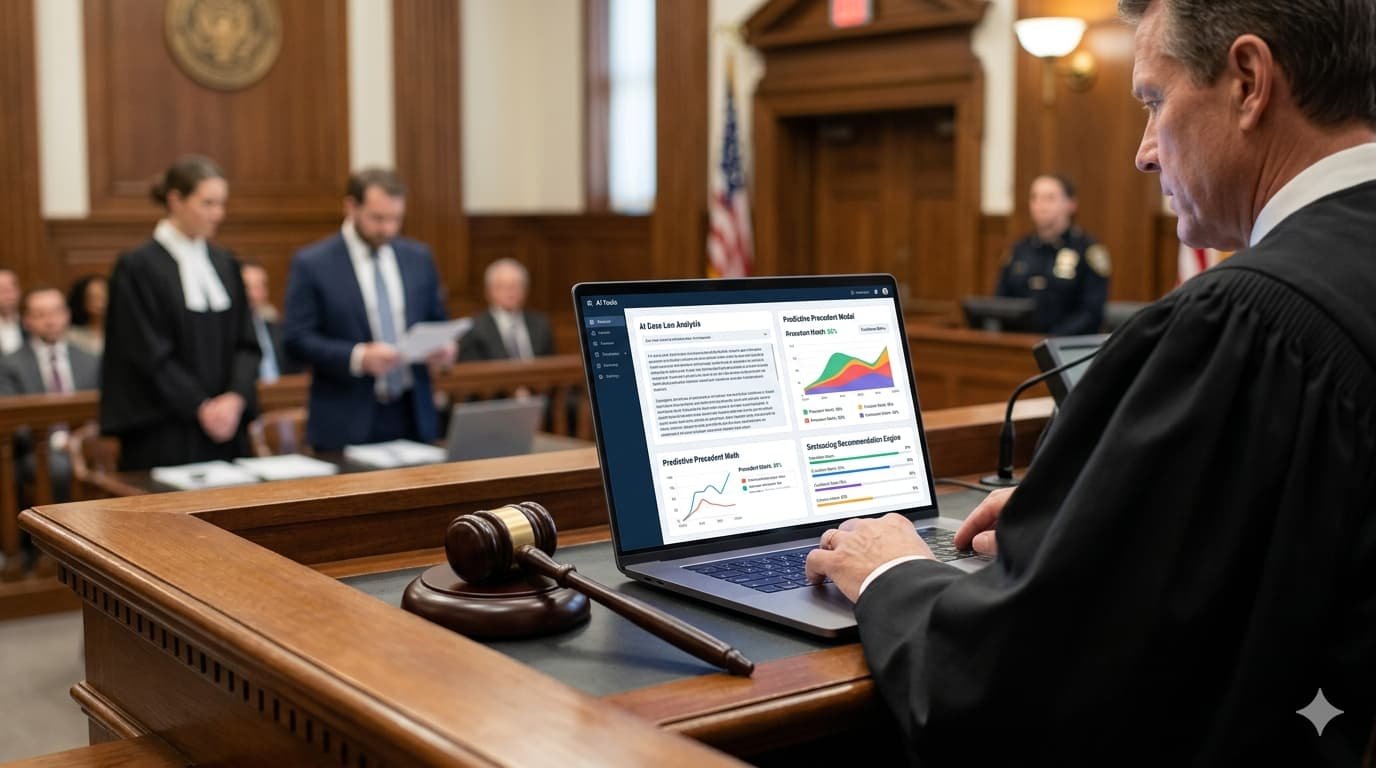
A U.S. federal district judge disclosed publicly on Thursday that he uses artificial intelligence tools — specifically tools he described as “legally curated” for the judicial context — to assist with his work. The statement, made by Judge Xavier Rodriguez of the Western District of Texas during a public forum, is one of the most forthcoming admissions yet from a sitting federal judge about how the technology is being integrated into the American legal system.
The disclosure is significant for several reasons. Federal judges carry enormous institutional power — their rulings affect millions of Americans, set legal precedents, and shape constitutional interpretation. The question of whether and how AI should be used in judicial decision-making raises questions that the legal profession has been struggling to answer for two years.
Proponents argue that AI tools — when properly constrained to legal databases, case law, and verified sources — can help judges and their law clerks process the extraordinary volume of legal research required to manage complex caseloads. The average federal district court judge manages hundreds of pending cases simultaneously. AI-assisted legal research can surface relevant precedents more efficiently and help ensure rulings are grounded in the full scope of applicable law.
Critics raise concerns about opacity. When a judge uses an AI tool to research or draft portions of a ruling, it becomes unclear to the litigants, the public, and the appellate courts exactly how that decision was reached — or whether the AI introduced any bias or error into the reasoning. Several federal circuit courts have issued guidance requiring attorneys to disclose when AI was used to draft filings, but no uniform judicial standard yet exists for judges themselves.
Judge Rodriguez’s voluntary disclosure represents a model of transparency that legal ethics experts generally praised. His description of tools that are “legally curated” — meaning constrained to verified legal databases rather than open-ended internet searches — addresses some but not all of the concerns about AI reliability in judicial settings.
The conversation his disclosure opened is not going away. AI has already transformed how law firms draft contracts, conduct discovery, and brief courts. Whether it remains only in the hands of the lawyers arguing before judges — or extends to the judges themselves — is one of the defining legal technology questions of 2026.
A 300-Million-Year-Old Fossil Just Had Its Identity Corrected
In a discovery that upended 170 years of accepted fossil taxonomy, scientists announced this week that a 300-million-year-old sea creature long celebrated as the world’s oldest octopus is not an octopus at all — it is a nautilus relative.
The creature in question — a fossilized specimen that had been classified as Pohlsepia mazonensis and held in museum collections since the 1800s — was re-examined using modern imaging techniques capable of resolving anatomical features invisible to previous generations of researchers. The new analysis identified structural characteristics inconsistent with octopus anatomy but consistent with the nautiloid lineage — a group of ancient cephalopods whose only living descendant is the chambered nautilus.
The correction matters scientifically for a fundamental reason: the origin of octopuses, which are among the most neurologically sophisticated invertebrates on Earth, has long been poorly understood because the fossil record for soft-bodied cephalopods is extraordinarily sparse. Soft tissue rarely fossilizes. The specimens that do survive are precious and few.
If Pohlsepia was previously understood to be an octopus ancestor from 300 million years ago, that implied a long evolutionary history for the group. Its reclassification as a nautiloid pushes back the question of when true octopuses first appeared — and removes one of the key anchor points scientists had used to anchor the octopus family tree in deep time.
The discovery also illustrates how much remains to be learned even from specimens that have been sitting in museum drawers for over a century. Modern imaging technologies — including high-resolution micro-CT scanning that renders internal anatomy without destroying the specimen — are producing a wave of fossil reclassifications across paleontology, overturning conclusions that seemed settled for generations.
Why This Matters
The three stories of this week’s science and technology cycle share a common thread: the existing understanding of something well-established turned out to be incomplete or wrong. Iranian cyber capabilities are more active and more dangerous than the pre-war baseline suggested. AI is further inside consequential American institutions than most people realized. A 300-million-year-old fossil has been misidentified for longer than the United States has existed.
In each case, the correction is not a failure — it is exactly how knowledge is supposed to advance. The FBI warning allows businesses and consumers to take protective action. The judge’s disclosure allows the legal community to have an informed debate. The fossil reclassification allows evolutionary biology to build a more accurate understanding of one of the ocean’s most remarkable creatures.