
WASHINGTON, June 11, 2026 —
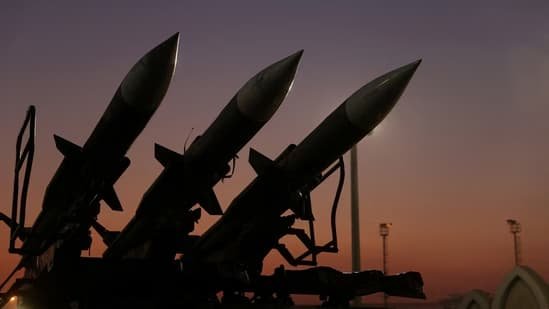
The United States military launched a major new wave of airstrikes against targets inside Iran on Wednesday evening — hitting ammunition depots, command-and-control nodes, and military warehouses across multiple cities — after President Trump confirmed that Iran had shot down an American Apache helicopter near the Strait of Hormuz and declared that Iran would be hit hard in response.
CENTCOM confirmed the strikes began at 5:15 p.m. ET Wednesday and were completed at approximately 9 p.m. ET. Explosions were reported by Iranian state media in Bandar Abbas, a port city in southern Iran directly on the Strait of Hormuz, as well as in multiple other cities. The nominal ceasefire that had been in effect since April 8 is, by any honest accounting, finished.
What Trump Said — and What CENTCOM Did
Trump confirmed Tuesday that the Apache helicopter that went down near the Strait of Hormuz on Monday night — an incident the US initially described as under investigation — had been shot down by Iran. He announced the confirmation from the Oval Office. He vowed retaliation.
“Well, we’re going to be attacking them, attacking them very hard,” Trump told reporters. “We hit them hard yesterday and we’re going to hit them hard again today.”
Defense Secretary Pete Hegseth followed with his own confirmation that a large-scale response was being prepared. Within hours, CENTCOM issued its statement on X: it had struck multiple targets in Iran in response to Iran’s unwarranted and continued aggression, targeting ammunition depots, command-and-control nodes, and warehouses at 5:15 p.m. ET. The strikes concluded at 9 p.m. ET.
CENTCOM was explicit in categorizing the strikes as self-defensive — a framing that has been used for every US offensive action since the April ceasefire took effect. The operational scale of Wednesday’s strikes — multiple target categories, simultaneous execution across several locations, four-hour operational window — represents a significantly larger action than any single engagement since the original February 28 strikes that began the war.
Iran’s Response — and the Jordan Dimension
Tehran did not absorb the strikes passively. Iranian media reported that the IRGC launched a drone attack against the US Fifth Fleet headquarters in Bahrain — which has now been targeted multiple times since the ceasefire began — and a separate ballistic missile attack against a US air base in Jordan. Jordan confirmed it intercepted and shot down five Iranian missiles before they could reach their target.
The Jordan attack represents a meaningful geographic expansion. Jordan has been a largely passive backdrop in the Iran conflict — a country that hosts US military assets and that has maintained official neutrality. Iranian missiles targeting Jordanian territory, intercepted or not, change the regional calculus for Amman in ways that will require a formal Jordanian government response. Jordan’s King Abdullah II was in Washington for meetings just two weeks ago. His government’s position on the conflict’s expansion onto Jordanian soil will be among the most carefully worded diplomatic statements of the week.
Iranian military leadership — specifically the Khatam al-Anbiya Air Defense Base, which coordinates Iran’s integrated air defense — vowed that further devastating and more wide-ranging strikes would follow if the US continued its attacks. Iranian Foreign Minister Araghchi, who had been involved in the Doha negotiating sessions as recently as last week, posted on X that the US bears full responsibility for the escalation.
CENTCOM, for its part, denied Iranian claims that Iran had successfully closed the Strait of Hormuz and attacked a US warship following the overnight exchanges. The Strait’s operational status remains contested — both sides making claims the other disputes, which is a consistent pattern in this conflict’s information environment.
The World Cup Opens Today. Gas Prices Go Higher.
There is a specific irony to the timing. The FIFA World Cup 2026 opened in Los Angeles this morning with the United States men’s national team preparing for its opening match against Colombia. The largest American sporting event since 1994 is beginning on the same day that the conflict which has been the primary driver of American economic distress for 107 days is entering its most intense military phase.
Oil markets responded immediately to Wednesday night’s strikes. Brent crude rose sharply in Asian trading Thursday morning. The Energy Information Administration’s previous projection — that a Strait reopening would reduce US gasoline prices by 35 to 55 cents per gallon — is now pointing in the opposite direction. GasBuddy and AAA both updated their summer price projections overnight to account for an extended closure and escalating conflict.
Americans paying $4.55 to fill their tanks this morning are paying for a war that, as of this week, is no longer a managed conflict with a ceasefire framework. It is an active military engagement with escalating strikes, expanding geographic targets, and no active diplomatic track.
The IAEA chief indicated last week that the US and Iran were close to a nuclear framework. That framework is not the conversation being conducted through CENTCOM right now.
| Iran War Escalation — June 11, 2026 | Detail |
|---|---|
| Confirmed US strikes (Wednesday) | Multiple — 5:15 p.m. to 9 p.m. ET |
| Targets struck | Ammunition depots, C2 nodes, warehouses |
| Locations with explosions (Iran) | Bandar Abbas, multiple other cities |
| Trigger | Trump confirmed Iran shot down Apache helicopter |
| Trump’s statement | “Hit them hard yesterday and today” |
| Iran’s response | Drones at Bahrain Fifth Fleet; missiles at US base in Jordan |
| Jordan interceptions | 5 Iranian missiles intercepted and shot down |
| Ceasefire status | Functionally over — April 8 framework abandoned |
| Khatam al-Anbiya warning | “Devastating and more wide-ranging strikes” to follow |
| CENTCOM Strait claim | Denied Iran closed the Strait |
| Iran Strait claim | Claimed Strait closure and US warship attack |
| US gas price (June 11) | ~$4.55/gallon — rising |
| Oil market reaction | Brent crude rising sharply in Asian trading |
| Iran war day count | Day 103 |
| World Cup opening | Same day — Los Angeles |
What Comes Next — and What Has Changed
The ceasefire architecture is gone. The April 8 framework that both sides nominally observed while violating repeatedly — the structure that enabled the diplomatic tracks through Pakistan and Qatar, that gave negotiators a reason to keep talking while the military kept shooting — has been superseded by a direct declaration from the American president that Iran will be hit hard and by an Iranian military leadership that is promising devastating retaliation.
The diplomatic question is whether the IAEA’s nuclear framework signal — issued only days ago — survives the current escalation or whether it becomes another entry in the list of near-deal moments that collapsed under military pressure. Iran’s Foreign Minister’s post on X suggested the door to diplomacy remains technically open. Iran’s military leadership’s promise of devastating further strikes suggests something else.
Trump said on Wednesday that despite the strikes, he still desires a deal. He said he prefers a diplomatic solution. He was saying those things while authorizing the largest CENTCOM operation against Iran since the ceasefire began.
The World Cup kicks off in a few hours. American families are filling their tanks at $4.55 per gallon. The war that started on February 28 is 103 days old and getting louder.