
WASHINGTON, APRIL 15, 2026 —
The United States and Iran are in active discussions about holding a second round of in-person negotiations before the fragile two-week ceasefire expires on April 21 — with mediators in Pakistan, Saudi Arabia, and Qatar working urgently to bridge the gap that collapsed talks in Islamabad just days ago.
The White House confirmed Tuesday that the Trump administration is open to resuming direct talks as soon as President Trump believes Iran is prepared to meet his core demands. Potential dates and locations are being discussed internally, with officials describing the talks as preliminary but serious. Vice President JD Vance, who led the American delegation in Islamabad, said Tuesday that the next move belongs to Tehran.
The ceasefire expires in six days. What happens in the next 48 to 72 hours will largely determine whether the conflict enters its most destructive phase yet — or whether a deal framework emerges that prevents a return to full-scale bombardment.
What Changed Since Sunday’s Failed Talks
The breakdown of the Islamabad talks on Sunday appeared at first to close the door on diplomacy. Trump ordered a naval blockade of Iranian ports. Iran’s military went to maximum combat alert. Oil surged above $100 a barrel. Stock futures fell.
Then something shifted. On Monday evening, Trump said Iran had called the White House and that Tehran “would like to make a deal very badly.” Stocks recovered and closed higher. Oil dipped below $100. By Tuesday morning, an Iranian Embassy official in Islamabad told reporters that a new round of talks could happen “later this week or earlier next week,” though nothing was finalized.
Satellite imagery reviewed by American news outlets this week showed Iran actively clearing debris from tunnel entrances to its underground missile bases during the ceasefire — a militarily expected move that the U.S. had anticipated but that complicated trust-building. Iran’s missile launchers, roughly half of which remained intact after six weeks of U.S. and Israeli strikes, represent Tehran’s primary remaining military leverage.
The Core Sticking Points Remain Unchanged
Despite renewed optimism about a potential second meeting, the fundamental issues that broke down talks in Islamabad have not moved. Washington is demanding a binding, verifiable commitment from Iran to permanently abandon nuclear weapons development and dismantle its uranium enrichment capacity. Iran insists its nuclear program is civilian, says it has a right to enrich uranium under international law, and will not surrender that right as a precondition to any deal.
The Strait of Hormuz is the second major divide. Iran sees control over the Strait as its primary economic and strategic leverage — its main bargaining chip for sanctions relief, frozen asset releases, and war reparations. The U.S. demands the Strait be fully and unconditionally reopened. Iran is willing to discuss managed reopening only within a broader permanent settlement.
Mediators working across Pakistan, Qatar, and Saudi Arabia are attempting to construct a 45-day extended ceasefire framework that would allow partial confidence-building steps on both the nuclear and Strait issues without requiring either side to make its final concession upfront. The logic is that a longer breathing space might produce the trust needed for a permanent deal that a two-week window cannot.
Iran Is Reconstituting Its Military — And America Knows It
One of the most significant developments to emerge this week came from satellite imagery showing Iran actively working to reopen its underground missile cities — vast tunnel networks where mobile ballistic missile launchers shelter and reload between strikes. U.S. and Israeli strikes earlier in the war specifically targeted tunnel entrances to trap launchers inside.
Iran’s clearing of that debris is standard ceasefire behavior — every military uses a pause in hostilities to repair and reconstitute. But it means that if the ceasefire collapses and war resumes, Iran’s missile capability will be more intact than it was on the day the ceasefire began. That reality is adding urgency to the American side’s negotiating posture.
The U.S. blockade of Iranian ports, which began Monday, has not yet produced any direct confrontation at sea. The Iranian Revolutionary Guard Corps warned that any military vessel approaching the Strait would be treated as a ceasefire violation. The U.S. Navy has been enforcing the blockade of Iranian ports specifically — not the Strait itself — and the CENTCOM clarification has kept the two sides from direct naval contact so far.
Israel and Lebanon Held Historic Direct Talks in Washington
In a development that received less attention than the Iran situation but carries enormous long-term significance, Israeli and Lebanese diplomats held their first direct negotiations in decades at the U.S. State Department on Tuesday.
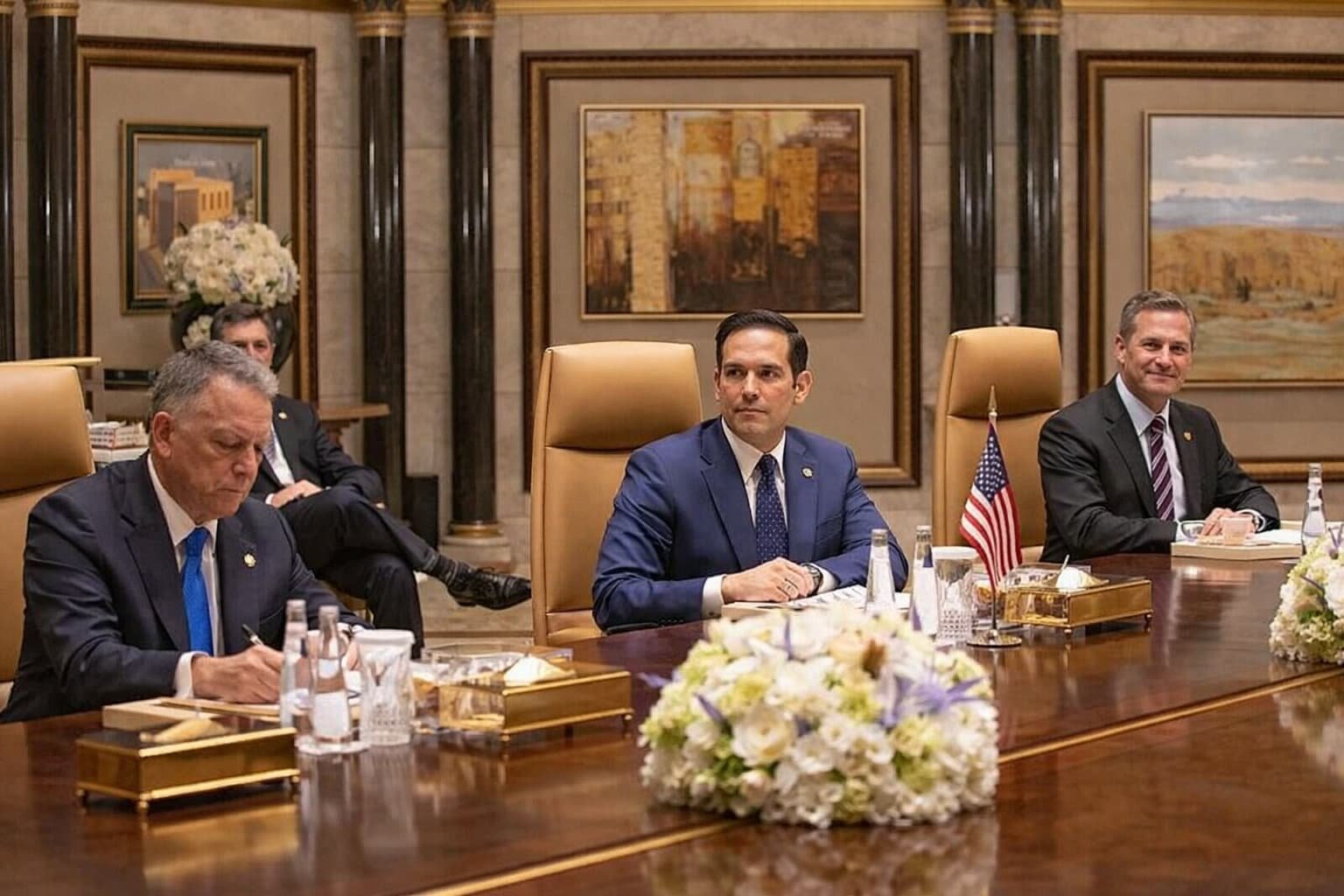
Secretary of State Marco Rubio participated in the talks. Both sides agreed to hold further negotiations at a mutually agreed time and venue. Israel did not commit to a ceasefire in southern Lebanon — where Israeli military strikes and Hezbollah rocket attacks have continued throughout the Iran ceasefire period — but the willingness to sit at the same table for the first time in a generation represents a meaningful diplomatic opening.
Lebanese authorities have reported more than 2,000 deaths from Israeli airstrikes since the broader regional escalation began in early March. Iran insists its ceasefire with the United States includes Lebanon, a position Trump and Israeli Prime Minister Netanyahu both reject.
What Happens If No Deal Is Reached by April 21
The consequences of a ceasefire expiration without a deal are significant and immediate. Trump has declined to rule out resuming massive airstrikes on Iranian civilian infrastructure — power plants, bridges, water facilities — that he threatened before agreeing to the original ceasefire on April 7.
Mediators have privately warned both governments that Iranian retaliation for such strikes would almost certainly target oil and water facilities across Gulf states — Saudi Arabia, Kuwait, Qatar, and the UAE — triggering a humanitarian and energy catastrophe that would dwarf anything seen so far in this conflict.
Oil prices are priced on that risk right now. Brent crude settled near $98 Tuesday, well above pre-war levels of $75, and energy traders are watching the April 21 expiration date as the single most consequential variable in global commodity markets this month.
For American consumers, every day the Strait of Hormuz stays effectively closed — currently seeing fewer than 10 ships per day versus 129 before the war — adds pressure to prices at the gas pump, the grocery store, and anywhere supply chains touch fossil fuels.
The next 48 hours are the window that diplomats on all sides have identified as the last realistic opportunity to schedule a second meeting before time runs out.