
ISLAMABAD, APRIL 3, 2026 —
In a war that has killed more than 3,000 people, closed the world’s most critical oil shipping lane, pushed global energy markets to their worst disruption since the 1970s, and threatened to fracture NATO, the most consequential diplomatic activity is not happening in Washington, Tehran, or Brussels. It is happening in Islamabad — and the country that started none of this may be the only one with the relationships needed to end it.
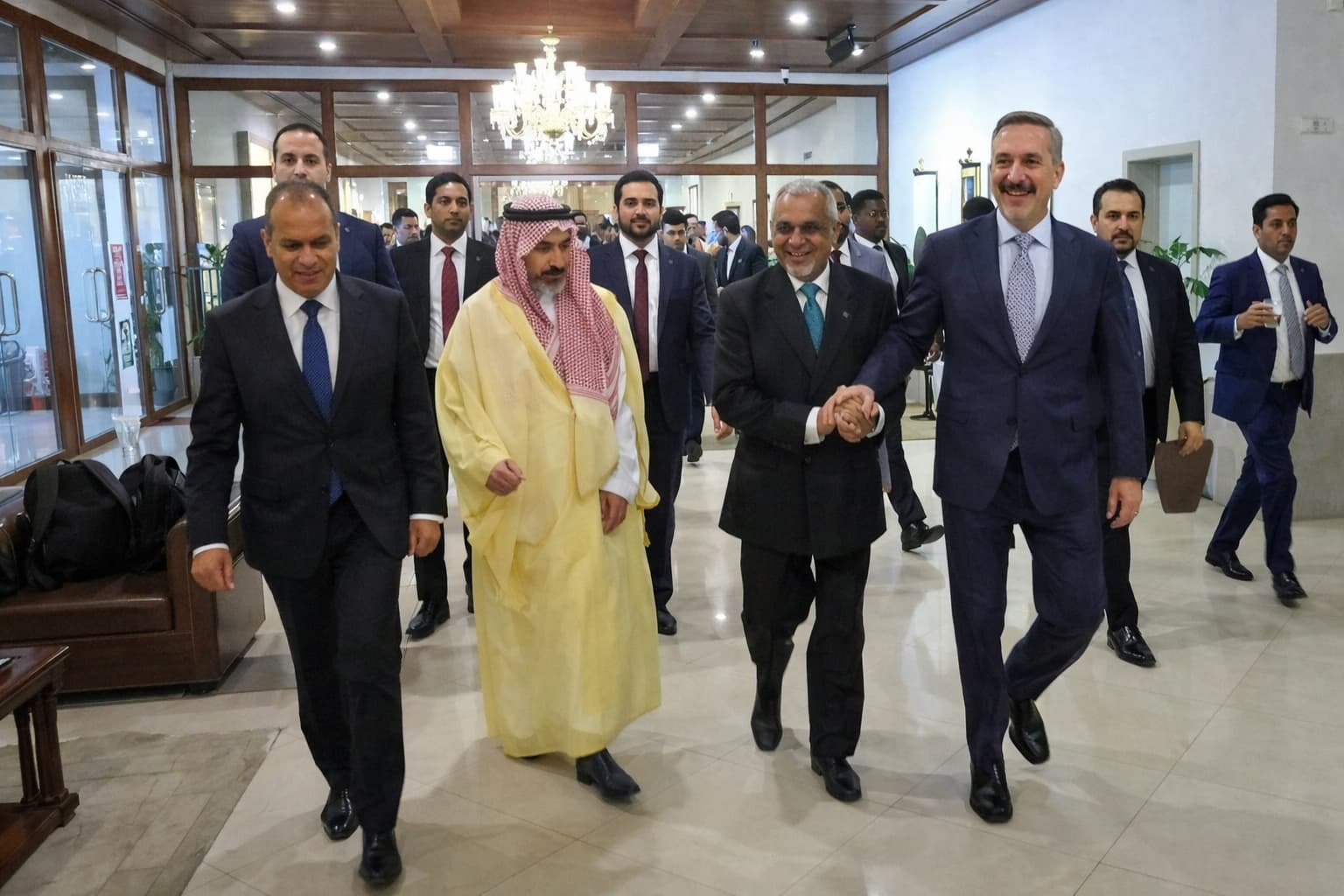
Pakistan has emerged as the central mediator in international efforts to bring the 35-day-old U.S.-Israel war on Iran to a close. Its foreign minister has hosted the top diplomats of Saudi Arabia, Turkey, and Egypt for back-to-back summits. Its army chief has a personal rapport with President Trump. Its prime minister spent over an hour on the phone with Iran’s president this week. It has already physically delivered Trump’s 15-point ceasefire plan to Tehran. And it has publicly offered Islamabad as the site for direct U.S.-Iran talks — the first such talks since the war began on February 28.
As of Friday, April 3, no direct talks have been confirmed. But the framework being built in Pakistan’s capital is the closest thing to a diplomatic off-ramp that this war has produced.
What Pakistan Has Actually Done
Pakistan’s role did not emerge by accident. It has spent the past year carefully building relationships on both sides of the war. Its army chief, Field Marshal Asim Munir, established a personal connection with Trump. Its government openly acknowledged to parliament on March 3 that Pakistan was ready to facilitate dialogue between Washington and Tehran. When Pakistan brokered a ceasefire between India and Pakistan itself last May — and Trump publicly took credit — Pakistan made sure to acknowledge Trump’s role. That moment of diplomatic grace built significant goodwill in the White House.
Pakistan has several structural advantages no other mediator possesses. It is the only Muslim-majority nuclear-armed state that does not host U.S. military bases. It shares a 900-kilometer border with Iran and hosts the world’s second-largest Shia Muslim population — giving it credibility in Tehran that Gulf states and Western nations lack. It has longstanding defence ties with Saudi Arabia. And it is deeply motivated: Iran’s closure of the Strait of Hormuz is blocking virtually all of Pakistan’s oil and gas imports, threatening its economy with a genuine energy crisis.
The 15-Point Plan vs. Iran’s Counteroffer
What Each Side Is Demanding
| U.S. 15-Point Plan (via Pakistan) | Iran’s Counteroffer |
|---|---|
| One-month ceasefire while talks proceed | Immediate permanent halt to all aggression |
| Iran surrenders highly enriched uranium stockpiles | Reparations for all war damage |
| Iran halts all uranium enrichment | International guarantees against future U.S.-Israeli attacks |
| Iran curbs ballistic missile program | End to hostilities against all Iranian allies |
| Iran ends support for regional proxy groups | Formal legal recognition of Iranian sovereignty over Strait of Hormuz |
| Iran reopens Strait of Hormuz | Closure of all U.S. military bases in the region |
The gap between the two positions is vast. Iran called Trump’s 15-point plan “maximalist, unreasonable, and unrealistic.” Trump says Iran agreed to “most of” the points — a claim Tehran flatly denied, calling it “fake news” used to manipulate oil markets. Iran’s parliament speaker characterized the Islamabad talks framework as cover for a planned U.S. ground invasion.
And yet — messages are being exchanged. Both U.S. and Iranian officials have acknowledged that mediators are passing communications between Washington and Tehran. Secretary of State Marco Rubio confirmed on Tuesday that “there are messages being exchanged” and that there is “potential for a direct meeting.” Iran’s own foreign minister, while denying formal negotiations, acknowledged that the U.S. “is sending messages through different mediators” — which he carefully said “does not mean negotiations.”
Why the Next 72 Hours Matter
Trump’s April 6 deadline — giving Iran until Monday to reopen the Strait of Hormuz — creates the next inflection point. Mediators in Egypt and Pakistan pushed for in-person talks in Islamabad as early as this week, according to diplomatic officials. Germany’s foreign minister said he expected a direct U.S.-Iran meeting in Pakistan “very soon.”
At the same time, the military trajectory is moving in the opposite direction from diplomacy. Israel has intensified strikes on Tehran, focusing on arms factories. The U.S. has deployed 3,500 Marines and sailors aboard the USS Tripoli to the region. Pakistani sources confirm that Israel is “speeding up targeting in Iran over the next 48 hours” — trying to destroy as much of Iran’s arms infrastructure as possible before any ceasefire is declared.
The paradox at the heart of this war is now in full view: both sides are simultaneously talking and escalating, each trying to negotiate from a position of maximum strength before they have to stop.
China added a new dimension this week. During a Beijing visit by Pakistan’s foreign minister, China and Pakistan published a joint five-point peace initiative — the first time Beijing has formally entered the mediation effort. As Iran’s largest trading partner and biggest oil customer, China has enormous leverage in Tehran and a clear economic interest in ending a war that is costing it dearly.
Whether Talks Succeed or Fail, Pakistan’s Moment Has Arrived
For a country of 250 million people that has spent decades on the margins of great-power diplomacy — sandwiched between a hostile India, an unstable Afghanistan, and an international community that views it primarily through the lens of terrorism — the Iran war has handed Pakistan a moment it has rarely been offered.
The last time Pakistan played a comparable diplomatic role was in 1971, when it served as the secret back-channel that enabled President Nixon’s opening to China — one of the most consequential diplomatic moves of the 20th century. History does not repeat. But it does occasionally offer a country a second chance to matter.
Whether Islamabad becomes the city where the Iran war ends — or simply the city where the two sides discovered they were too far apart to talk — will become clear within days.