
NEW YORK, May 19, 2026 —
New York Governor Kathy Hochul announced Monday that the Metropolitan Transportation Authority and the five unions representing Long Island Rail Road workers have reached a contract agreement, ending a three-day strike that was the railroad’s first in 32 years and stranded roughly 300,000 daily commuters across Long Island and New York City.
Full LIRR service is expected to resume by Tuesday at noon, with the evening commute operating normally. The strike, which began at 12:01 a.m. Saturday, is over.
How Three Years of Failed Talks Became Three Days of Chaos
The LIRR shutdown did not arrive without warning. The Brotherhood of Locomotive Engineers and Trainmen and four other unions representing approximately 3,500 workers — roughly half the LIRR workforce — voted to authorize a strike in September 2025. Under federal railroad labor law, the unions had to request mediation from the National Mediation Board and observe a mandatory six-month negotiation period followed by a 60-day cooling-off period. The earliest legally permissible strike date was mid-May. At 12:01 a.m. on May 16, the workers walked off the job.
The underlying dispute had been building for three years. The unions demanded a 5% wage increase, citing inflation and the rising cost of living on Long Island — one of the most expensive regions in the United States. The MTA countered with an offer of 3%, with provisions that could bring total compensation to 4.5% if work rule concessions were made. Then, in the final hours before the strike deadline, the MTA introduced healthcare contribution requirements that union leaders said had never been discussed in prior bargaining sessions. Kevin Sexton, national vice president of the Brotherhood of Locomotive Engineers and Trainmen, called the last-minute healthcare demands a deal-breaker. “We are far apart at this point,” Sexton said Saturday morning. “We are truly sorry that we are in this situation.”
300,000 Commuters, Empty Platforms, and a City Left Scrambling
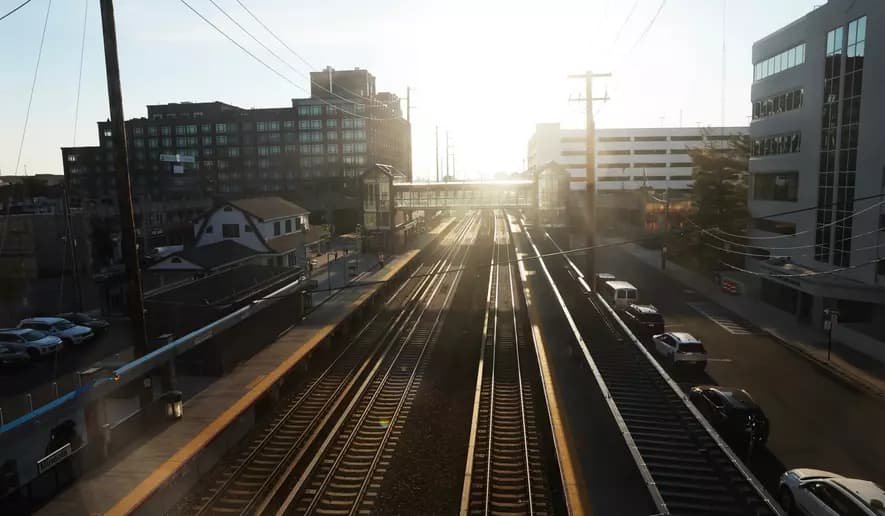
For three days, Penn Station’s LIRR platforms sat empty. The MTA deployed limited shuttle buses from Long Island into Queens during peak commute hours, but by its own admission those buses could not meaningfully replace a railroad that carries 82 million passengers annually — more than 250,000 on an average weekday. Governor Hochul urged commuters to work from home. Most did not have that option.
Nassau County Executive Bruce Blakeman, who is running for governor, blamed Hochul directly. The governor, in turn, directed pressure at both parties to resume talks, telling striking workers that three days of lost wages would erase every dollar of additional salary they would gain under a new contract. “Just three days of a strike would erase every dollar of additional salary that workers would receive under a new contract,” Hochul said Sunday. “This hurts you. This hurts your families. It hurts your neighbors.”
MTA Chairman Janno Lieber held firm throughout the weekend. LIRR workers are already the highest-paid railroad employees in the nation, he argued, and the MTA could not agree to terms that would force fare increases on the riders the system exists to serve. Neither side moved publicly. The National Mediation Board intervened Sunday afternoon, summoning both parties for a new round of federally-assisted bargaining that ran through the early hours of Monday morning.
What the Deal Contains — and Why It Ended When It Did
The specific financial terms of the agreement were not released in full detail at the time of Hochul’s Monday announcement. The governor confirmed that a deal had been reached, that LIRR union leaders had ratified it as fair, and that service would resume at noon Tuesday.
The contours of the settlement, based on reporting from negotiations and statements from both sides, involve a wage increase that falls between the unions’ original 5% demand and the MTA’s 3% opening offer, with the healthcare contribution issue — the last-minute demand that triggered the walkout — resolved in a manner that both sides described as acceptable.
The last LIRR strike before this one ran two days — in 1994 — before both sides reached an agreement. This one lasted three. The pattern held. The pain was acute enough, and visible enough, and politically damaging enough to enough powerful people, that the deal came together when it needed to.
| LIRR Strike 2026 — Key Facts | Detail |
|---|---|
| Strike began | 12:01 a.m., Saturday May 16 |
| Strike ended | Monday May 19 (deal announced) |
| Strike duration | 3 days |
| Service resumption | Tuesday May 19, noon |
| Workers on strike | ~3,500 (five unions, ~half of workforce) |
| Daily commuters affected | 300,000+ |
| Annual LIRR ridership | 82 million |
| Last LIRR strike before 2026 | 1994 (2 days) |
| Unions’ wage demand | 5% increase |
| MTA’s initial offer | 3% (up to 4.5% with concessions) |
| Core dispute trigger | MTA healthcare contributions added in final hours |
| Federal mediator | National Mediation Board |
What New York’s Politicians Will Do With This — Starting Tonight
The LIRR strike arrived in a gubernatorial election year, and every figure with a stake in New York State politics spent the weekend calibrating their response. Hochul, who faces a primary challenge from New York City Mayor Zohran Mamdani among others, took a carefully balanced position — sympathetic to workers’ demands, insistent that both sides return to the table, unwilling to intervene unilaterally. Nassau County Executive Blakeman used the disruption as a direct attack on her management of the state.
The deal’s announcement hands Hochul a political win on the same Monday that bond markets are digesting the Moody’s credit downgrade. Whether the LIRR resolution translates into any durable political capital depends on what the contract’s terms look like when the full details emerge — and specifically on whether the wage increase is large enough that union households see it as a meaningful victory or small enough that MTA officials can credibly claim fiscal responsibility.
For the 300,000 commuters who will board LIRR trains again Tuesday afternoon, those details are secondary. The trains are running. The strike is over. Three days of disruption closes. The long-term questions about transit funding, fare equity, and labor relations on North America’s busiest commuter railroad do not.