
WASHINGTON, May 18, 2026 —
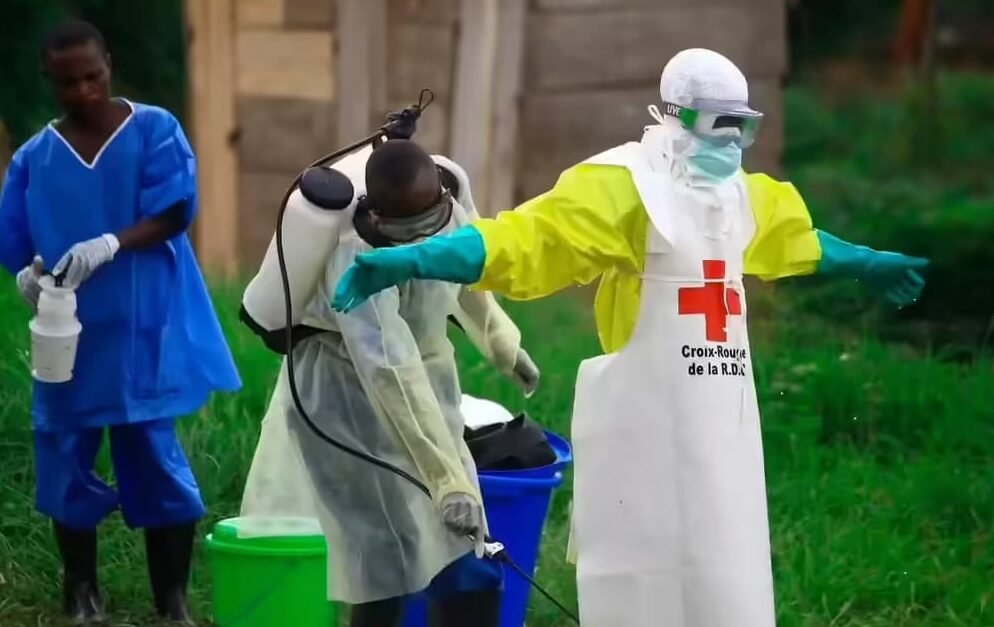
The World Health Organization declared the Ebola outbreak in the Democratic Republic of Congo and Uganda a public health emergency of international concern on Sunday — its second-highest level of global alarm — after the virus killed nearly 90 people and spread from a remote mining region to two national capitals with no approved vaccine or treatment to contain it.
The declaration came as the United States — which formally withdrew from the WHO earlier this year under President Trump — has no official seat at the table where the international response is being coordinated.
A Rare Strain With No Vaccine and No Treatment
This outbreak is not caused by the Ebola strain most Americans know from the 2014 West Africa epidemic. It is caused by the Bundibugyo virus — a rarer species of Ebola first identified in Uganda in 2007, with a case fatality rate that DRC Health Minister Samuel-Roger Kamba placed as high as 50%. This is only the third time in recorded history that the Bundibugyo strain has caused an outbreak. The first two ran in 2007 to 2008 in Uganda and in 2012 in the DRC. Both were eventually contained. Neither reached a national capital.
This one already has.
As of Saturday, Africa’s Centers for Disease Control reported 336 suspected cases and 88 deaths. Laboratory confirmation has been achieved in eight cases. The outbreak began in Mongbwalu, a high-traffic gold mining area in DRC’s northeastern Ituri Province, where an infected nurse arrived at a health facility on April 24 showing Ebola-like symptoms. From there, infected people traveled to seek treatment in other areas, carrying the virus with them before its nature was confirmed. The WHO was not alerted until May 5, eleven days after the first known case.
By then, the virus had already moved.
From a Mining Town to Two Capital Cities
The geography of this outbreak is what alarmed WHO officials enough to trigger the emergency declaration. Suspected cases have been confirmed across at least three health zones in Ituri Province — Bunia, Rwampara, and Mongbwalu. Cases have reached Goma in eastern DRC. Two separate laboratory-confirmed cases with no apparent link to each other have now been identified in Kampala, Uganda’s capital — both among individuals who had traveled from DRC. One of those cases died. The other is being treated in hospital.
A case has also been identified in an individual who traveled from Ituri Province to Kinshasa, DRC’s capital of more than 17 million people, though that case tested negative on confirmatory testing. The concern is not that single case. The concern is what the trajectory of infections reaching two capital cities within two weeks of confirmed identification says about the scale of what is not yet being detected.
Eight samples tested positive out of 13 collected across various areas of Ituri — a positivity rate of 62%. Healthcare workers are among the dead. Armed conflict across Ituri Province, one of the most volatile regions on the African continent, is actively complicating contact tracing and containment. Population movement in and out of Mongbwalu, a busy commercial hub, means the virus had weeks of undetected spread before international health authorities were even aware of it.
America Has No Seat at the WHO Table — and That Matters
The United States formally completed its withdrawal from the WHO in January 2026, the first nation ever to do so. The withdrawal means American public health officials have no formal role in coordinating the international Ebola response, no automatic access to WHO situation reports, no seat at emergency committee meetings, and no formal channel for contributing to or receiving real-time data from the WHO’s outbreak response infrastructure.
The CDC remains an independent agency and maintains its own bilateral relationships with African health ministries. But the institutional pathway through which U.S. expertise, funding, and personnel historically flowed into global outbreak response has been severed. During the 2014 West Africa Ebola epidemic, which infected more than 28,000 people and killed more than 11,000, the United States provided more than $5 billion in emergency response funding and deployed thousands of military and civilian personnel through WHO-coordinated channels.
None of that framework currently exists for this outbreak.
| Bundibugyo Ebola Outbreak — Current Status | Figure as of May 18 |
|---|---|
| Suspected cases | 336 |
| Deaths (suspected) | 88 |
| Laboratory-confirmed cases | 8 |
| Countries affected | DRC, Uganda |
| Capital cities with cases | Kampala (Uganda), Kinshasa concern (DRC) |
| Bundibugyo strain fatality rate | Up to 50% |
| Approved vaccine (Bundibugyo strain) | None |
| Approved treatment (Bundibugyo strain) | None |
| WHO alert level | PHEIC (public health emergency of international concern) |
| Patient zero identified | Nurse, Mongbwalu, April 24 |
| WHO notification date | May 5 |
| DRC outbreak confirmation date | May 15 |
| U.S. WHO membership status | Withdrawn (January 2026) |
What the WHO Is Not Calling It — and Why That Distinction Matters
The WHO stopped short of declaring a pandemic emergency — the organization’s highest level of alert, the designation used for Covid-19. Director-General Tedros Adhanom Ghebreyesus specifically advised against closing international borders. The WHO’s position is that the risk of global spread, while real, remains manageable with aggressive containment measures.
Ebola transmits only through direct contact with the bodily fluids of a symptomatic person — not through the air. The Bundibugyo strain is infectious in infinitesimally small quantities but is not airborne. It does not spread from asymptomatic individuals. Those characteristics distinguish it sharply from respiratory viruses and provide a theoretical pathway to containment that a respiratory pathogen would not.
The practical challenge is executing that containment in a conflict zone where humanitarian access is limited, healthcare infrastructure is strained, and a virus had an eleven-day head start before the world knew what it was dealing with.
The WHO’s emergency declaration is designed to unlock funding, mobilize personnel, and coordinate the international response. Whether that response arrives fast enough — and whether the absence of the United States from that coordination structure slows it — is the question that will define this outbreak’s trajectory.