
TENERIFE / WASHINGTON, May 11, 2026 —
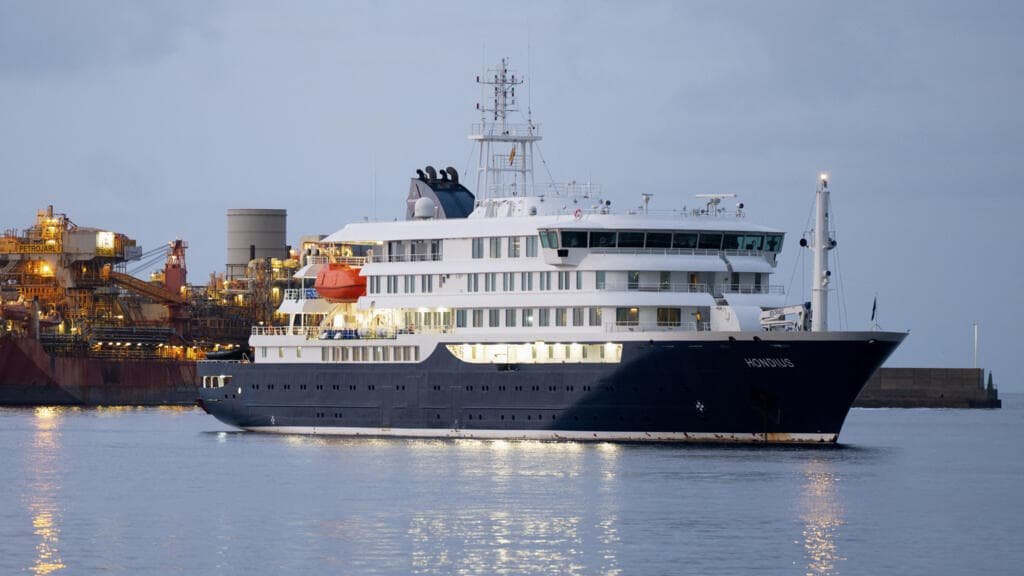
American passengers aboard a cruise ship struck by a hantavirus outbreak in the Atlantic Ocean are being flown home on military and government aircraft — with two passengers transported in the plane’s biocontainment units “out of an abundance of caution” — after the Dutch-flagged MV Hondius anchored outside the island of Tenerife in the Canary Islands and authorities began a controlled disembarkation of all 17 affected passengers Sunday.
The outbreak marks the first confirmed shipboard hantavirus cluster in modern maritime history and has activated the federal government’s emergency health response protocols for repatriation of American citizens from a potential biosafety situation.
What Hantavirus Is — and Why Authorities Are Taking It This Seriously
Hantavirus is a family of viruses carried primarily by rodents — particularly deer mice in North America — and transmitted to humans through contact with infected rodent urine, droppings, or saliva. It is not typically transmitted from person to person. But two specific forms of hantavirus disease are severe enough to be treated as medical emergencies when diagnosed in cluster situations.
Hantavirus Pulmonary Syndrome — the North American form — carries a mortality rate of approximately 38%. It begins with flu-like symptoms and can progress to severe respiratory failure within days. The South American form, Hantavirus Cardiopulmonary Syndrome, follows a similar trajectory. Both forms can go from first symptoms to critical condition in 72 hours or less.
The disease is rare — the United States typically records fewer than 50 cases per year, primarily in rural areas of the southwestern states where deer mice are endemic. A shipboard cluster — with passengers in enclosed quarters, sharing air circulation systems, and having potentially common exposure points — presents an epidemiological profile that public health officials treat with heightened urgency even when person-to-person transmission is not suspected.
What Happened Aboard the MV Hondius
The MV Hondius is a Dutch-registered expedition cruise ship operated by Oceanwide Expeditions, a Netherlands-based adventure travel company. The ship — which carries approximately 170 passengers on polar and Atlantic expedition voyages — was in the Canary Islands when the cluster of illness was identified among passengers.
Authorities have not disclosed the precise exposure source, the timing of symptom onset, or the specific itinerary leg during which passengers are believed to have been exposed. Three reports from local sources in Ushuaia, Argentina — the southernmost city in the world and a frequent departure point for Antarctic and sub-Antarctic expedition voyages — expressed doubt that birding tourism in the region played a role in the outbreak.
The MV Hondius anchored outside Tenerife rather than docking at port — a standard precautionary protocol when a vessel carries potentially infectious passengers and port health authorities have not cleared the arrival. Passengers disembarked under controlled conditions, with health workers present during the process. Most left behind their belongings, which remained aboard as the ship prepared to sail to Rotterdam for disinfection.
The Federal Response — Military Planes and Biocontainment
| Response Element | Detail |
|---|---|
| Passengers affected | 17 confirmed |
| Americans aboard | Confirmed — number not fully disclosed |
| Transport method | Military and government aircraft |
| Biocontainment units used | 2 passengers — “out of an abundance of caution” |
| Ship destination | Rotterdam — for full disinfection |
| Passenger belongings | Left aboard — ship sealed |
| Exposure source | Under investigation — not yet confirmed |
| Person-to-person transmission risk | Low — hantavirus not typically transmitted this way |
| CDC involvement | Active — federal emergency health protocols activated |
The decision to transport two passengers in aircraft biocontainment units — specialized sealed medical enclosures designed to prevent pathogen spread during air transport — reflects the precautionary approach federal health authorities apply to any situation involving a virus with a mortality rate approaching 40%. The biocontainment units are not an indication that those two passengers are confirmed severely ill. They indicate that authorities are not willing to take the risk of treating this cluster the same way they would treat a more routine shipboard illness.
The CDC’s involvement activates a specific set of protocols under U.S. federal health emergency law — including monitoring of all repatriated passengers, contact tracing for anyone who may have been exposed, and coordination with state health departments in the states to which passengers are returning.
What Passengers and Their Families Should Know
Hantavirus does not spread through casual contact between humans. The presence of a hantavirus cluster on a cruise ship does not put other passengers at risk in the way that influenza, norovirus, or COVID-19 would. The disease’s route of transmission is from rodent excretions to humans — not from infected humans to healthy humans.
The risk to other passengers on the same ship — those who were not among the 17 affected individuals — depends entirely on whether they shared the same exposure source, whatever that source turns out to be. If the exposure was a specific location or activity that the 17 affected passengers participated in and others did not, passengers who did not share that exposure are at significantly reduced risk. If the exposure was a common area of the ship itself, the risk profile changes.
Federal health authorities are expected to contact all passengers from the affected voyage to advise on monitoring symptoms. The primary symptoms to watch for are fever, muscle aches, and fatigue in the first 1 to 5 days following potential exposure, followed by shortness of breath — which is the warning sign that distinguishes hantavirus pulmonary syndrome from common flu and requires immediate emergency medical attention.
The Broader Context — Why Hantavirus Is Appearing in the News More Frequently
The United States has seen a gradual increase in hantavirus cases over the past decade, driven by climate-related changes in deer mouse population dynamics and by increased human activity in rural and wilderness areas. The 2026 data year is still early, but public health researchers have noted that years with above-average rainfall — which produce larger rodent populations — tend to produce corresponding increases in hantavirus exposure risk.
The shipboard context is genuinely novel. Maritime vessel disinfection protocols are designed primarily for bacteria and respiratory viruses. Whether standard cruise ship sanitation practices address the specific exposure risk posed by rodent-transmitted viruses — including the possibility of rodent presence aboard vessels that transit rodent-populated coastal areas — is a question the MV Hondius outbreak will force maritime health authorities to examine more formally than they have before.