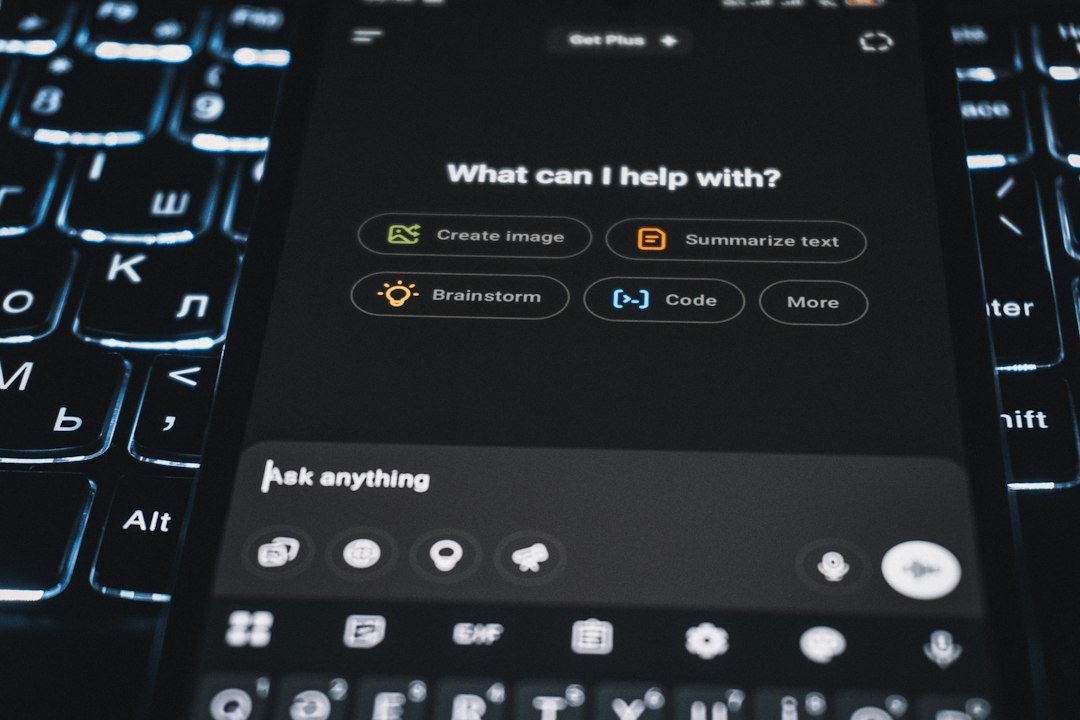

Photo by Zulfugar Karimov on Unsplash
About one in five voters said they consult AI chatbots for election news and voting decisions this midterm cycle, according to a September survey conducted by the American Association of Political Consultants. The survey found Democratic and Republican voters are turning to the technology at similar rates, a sign that reliance on tools like ChatGPT, Gemini and Claude has spread across the political spectrum rather than clustering within one party.
Some voters are trying asking AI to help research their ballot and even decide who to vote for this midterm election year, a national public radio network report said. The practice reflects a broader shift in how Americans gather political information, as traditional sources like local newspapers and televised debates compete with instant, conversational answers generated by AI models.
Filling Gaps in Down-Ballot Races
Several voters said they rely on chatbots for down-ballot races with thinner news coverage, to make tables comparing candidates for governors’ races and to verify or debunk viral claims, the report said. These are often the contests voters know least about, since local media coverage of county commissioners, school boards and state legislative seats has shrunk in many parts of the country.
A 40-year-old graphic designer from Morgantown, West Virginia, spent hours talking through his 2026 ballot with ChatGPT, asking it to list his races, compare candidates and measure them against his stated political principles. The approach let him treat the chatbot almost like a research assistant, building out his own voter guide from scratch rather than relying on a single outside source.
A retired Madison, Wisconsin, city-council staffer used Google’s Gemini to generate a comparison table after Wisconsin’s lieutenant governor dropped out of the governor’s race. The sudden change in the field illustrates why some voters say chatbots are useful in fast-moving races: the tools can quickly update summaries as candidates enter or exit a contest, something static voter guides can struggle to keep pace with.
A Pennsylvania author went a step further, using Claude to build “Ballot Lookup,” a volunteer-run nonpartisan website meant to inform voters about who is on their ballot and their stance on certain issues. The project shows how individual citizens, not just tech companies, are using AI to try to fill gaps in civic information that once fell to local newsrooms and election boards.
Concerns About Bias and Persuasion
Not everyone is convinced the technology is a neutral guide. A postdoctoral fellow at a university who studies AI’s societal impacts said chatbots “might select some things that would reinforce and persuade you even more towards the way that you were leaning already.” That dynamic raises the possibility that voters seeking objective comparisons could instead receive answers subtly shaped to match their existing beliefs, reinforcing political echo chambers rather than breaking them down.
Compounding that worry is a lack of transparency. Since AI companies don’t disclose how their commercial models are trained or how they choose which sources to draw on, it’s hard to know what biases might shape their answers, a university fellow who studies AI said. Without visibility into training data or source selection, voters have little way to judge whether a chatbot’s summary of a candidate’s record is balanced or skewed.
A spokesperson for OpenAI directed NPR to its election information and safeguards page, which notes the company continues to monitor bias in its models to keep ChatGPT’s responses politically neutral. The statement suggests at least one major AI developer is aware of the stakes involved when its product becomes a tool voters use to make decisions at the ballot box.
Beyond Research: Messaging and Government Use
The influence of AI on elections isn’t limited to voters searching for information on their own. Political text messages could become more effective and more annoying because bots taught to sound like a candidate are engaging voters with personalized, AI-generated text messages, the report said. That development points to a parallel trend: campaigns themselves are deploying AI not just to inform voters, but to persuade them directly through tailored outreach.
Meanwhile, the federal government is drawing its own lines around AI use. While Senate offices have access to chatbots like ChatGPT, they are not authorized to use any of the more advanced AI tools at the center of regulatory talks and public debate about AI safety, the report said. That restriction underscores how unsettled the rules remain around AI even inside institutions tasked with writing the laws that could govern it.
Taken together, the trend suggests AI chatbots are becoming a fixture of how some Americans approach elections, whether they’re building personal voter guides, comparing governor candidates, or fact-checking claims they see online. Whether that shift ultimately helps voters make more informed choices, or simply reinforces the opinions they already hold, remains an open question for researchers, campaigns and the companies building the tools themselves. As the 2026 midterms approach, the debate over AI’s role in democracy is likely to intensify rather than fade.