
WASHINGTON, May 24, 2026 —
President Donald Trump announced Saturday morning that a peace agreement with Iran to end the war and reopen the Strait of Hormuz is “largely negotiated” and will be announced shortly — a declaration that sent oil markets lower, generated banner headlines across every major outlet, and produced no confirming statement whatsoever from Tehran.
The deal is not done. Iran’s silence may be the most important data point of the day.
What Trump Said — Every Detail That Is Verified
Trump posted on Truth Social Saturday morning describing calls from the Oval Office with nine world leaders: Saudi Arabia, the UAE, Qatar, Pakistan, Turkey, Egypt, Jordan, Bahrain, and Israeli Prime Minister Benjamin Netanyahu. He described all of those calls as focused on finalizing terms with Iran. He called the emerging agreement a Memorandum of Understanding pertaining to peace. He said it still must be formally finalized by the United States, Iran, and the other participating countries.
The Financial Times reported earlier Saturday, citing a regional official with direct knowledge of Pakistan-led mediation efforts, that the potential framework would establish a structure for nuclear talks, ease sanctions on Iran, and unfreeze Iranian overseas assets. Pakistani and Qatari negotiators had held direct talks with Iranian counterparts on Thursday and Friday, with both sides staying in regular contact with American officials.
Trump’s post was specific about the Strait of Hormuz reopening. He said nothing about Iran’s nuclear program. He said nothing about Iran’s stockpile of highly enriched uranium — the specific demand his administration had repeatedly described as non-negotiable throughout the war.
What Is Missing From the Framework — and Why It Matters
The absence of any nuclear language in Trump’s announcement is the central puzzle of Saturday’s development. Throughout the twelve weeks of the conflict, the Trump administration’s stated position was unambiguous: Iran must surrender its enriched uranium and permanently relinquish any nuclear weapons capacity. Trump had specifically demanded Iran dismantle its nuclear facilities at Natanz, Fordow, and Isfahan. Those demands were the reason every prior negotiating round had collapsed.
A deal that reopens the Strait, eases sanctions, and unfreezes Iranian assets without addressing the nuclear program would represent a fundamental retreat from the administration’s stated objectives — or, alternatively, a framework that defers nuclear questions to a separate negotiating track. The Financial Times reporting suggested the latter: nuclear talks would be established as a parallel process rather than a precondition to ending the war.
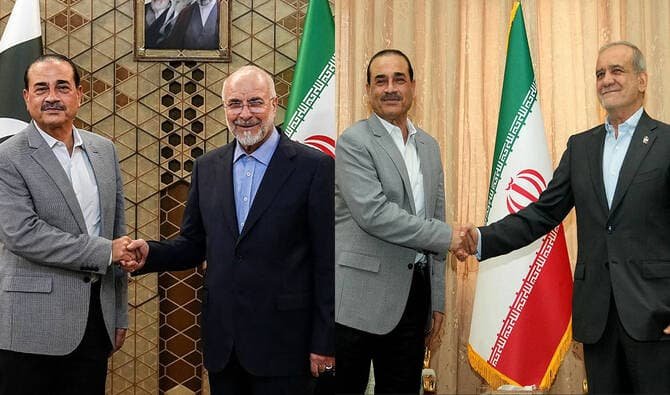
Iran has not confirmed any of this. Iranian state media, which is controlled by the government and which would be the first outlet through which Tehran officially communicated any agreement, contradicted parts of what Trump described. There was no statement from Iranian Foreign Minister Abbas Araghchi. There was no statement from Iranian President Masoud Pezeshkian, who had met with Pakistan’s army chief in Tehran on Saturday — a meeting that itself signaled active mediation but produced no public outcome statement.
The regional official who spoke to the Financial Times before Trump’s post was direct about the risks: last-minute disputes could blow up the efforts. That warning was issued before Trump declared the deal largely negotiated. The gap between Trump’s characterization and Iran’s silence is exactly the kind of gap that has collapsed every near-deal moment in this conflict.
Nine Leaders. One Call Session. What the List Says About the Deal’s Architecture
The list of leaders Trump called is itself a map of the deal’s architecture. Saudi Arabia, the UAE, Qatar, Bahrain, and Jordan are the Gulf states with the most direct economic and security exposure to the Strait’s closure — their economies have been battered by the energy disruption and their territory has absorbed Iranian retaliatory strikes. Their presence in the call suggests they are being asked to play a role in guaranteeing or incentivizing Iranian compliance.
Pakistan and Qatar are the two nations that have served as active back-channel mediators throughout the conflict. Their inclusion confirms the mediation framework that has been in place since April. Turkey and Egypt are regional powers with relationships with Tehran that Washington lacks — their participation suggests the deal’s architects are trying to build a broader regional legitimization structure around whatever framework is ultimately announced.
Netanyahu’s presence is the most complicated element. Israel struck Iran’s nuclear facilities in June 2025, triggering the initial ceasefire. Israel has pressed the United States not to accept any deal that leaves Iran’s nuclear infrastructure intact. Trump said his call with Netanyahu went very well. Netanyahu has not commented publicly.
| Iran Deal Status — May 24, 2026 | Detail |
|---|---|
| Trump’s characterization | “Largely negotiated” — to be announced shortly |
| Iran’s response | No confirmation — state media contradicted parts |
| Nuclear program language in Trump post | None mentioned |
| Framework content (per FT reporting) | Nuclear talks structure, sanction easing, asset unfreeze |
| Pakistani/Qatari talks with Iran | Thursday and Friday — ongoing |
| Leaders on Trump’s Oval Office calls | Saudi Arabia, UAE, Qatar, Pakistan, Turkey, Egypt, Jordan, Bahrain, Netanyahu |
| Strait of Hormuz status | Still closed to commercial shipping |
| Ceasefire in place since | April 8 — fragile, punctuated by skirmishes |
| Oil market reaction | Prices fell on Trump’s announcement |
| U.S. military posture | Full standby — no stand-down order |
The Pattern That Has Defined This Conflict From the Start
Every phase of this conflict has followed the same structure. Trump signals imminent resolution. The Gulf states apply pressure. Iran holds. A deadline passes or is extended. The ceasefire frays. Strikes are threatened or executed. Then the cycle restarts.
What is different on Saturday is the specificity of Trump’s language — Memorandum of Understanding, to be announced shortly, largely negotiated — and the breadth of the diplomatic contact he described. Nine leaders on one morning’s calls is not a routine diplomatic check-in. It is the architecture of a close.
But close is not done. Iran knows the price of confirming a deal that its own hardliners will call surrender. The nuclear question — the one Trump’s post did not mention — is the question that has ended every previous round of talks. Whether the framework that is being characterized as largely negotiated actually resolves that question, defers it, or sidesteps it entirely will determine whether this announcement is the beginning of the end of the war or the beginning of the next phase of it.