
CAMP DAVID, Md., May 30, 2026 —
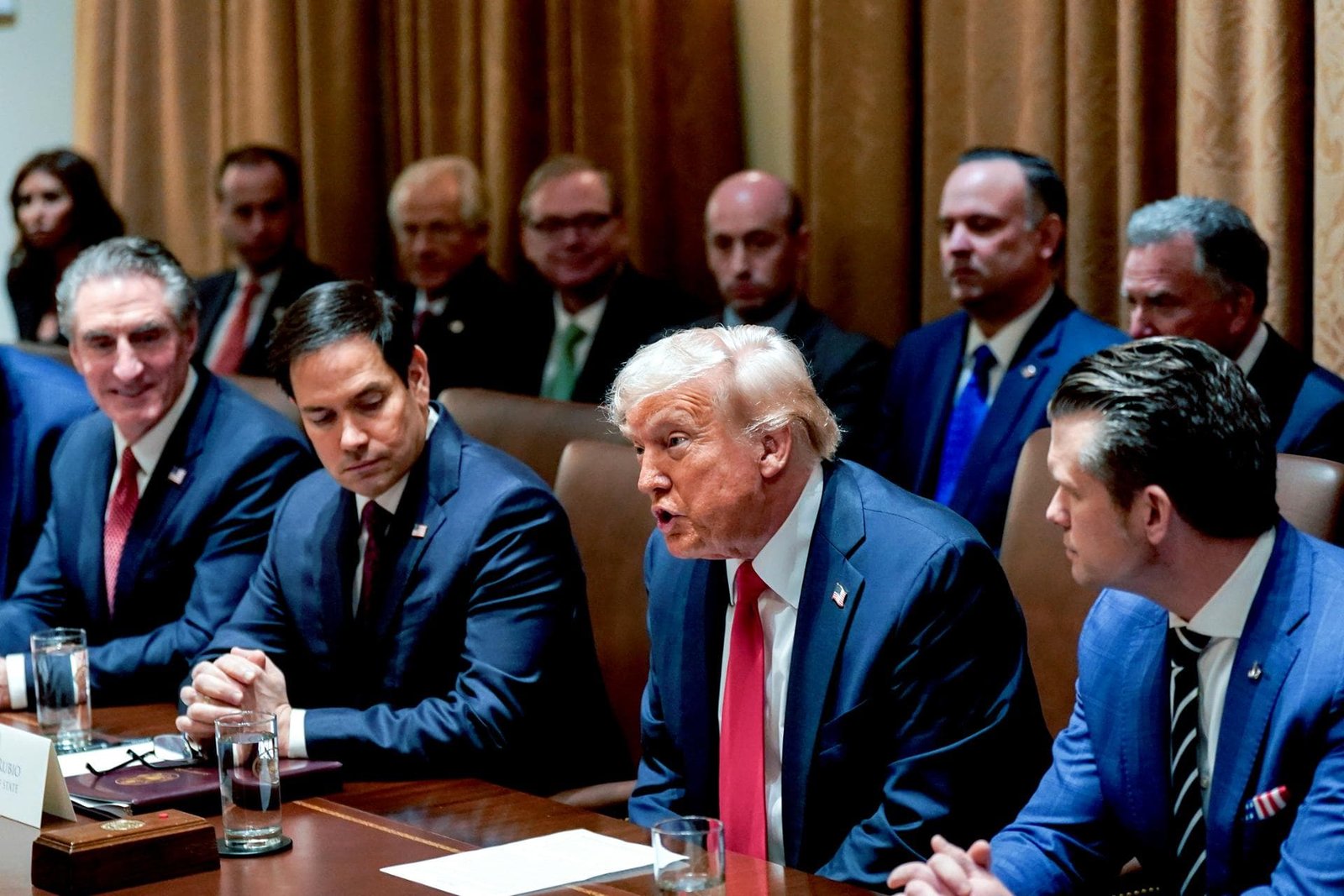
President Donald Trump convened his full Cabinet at Camp David on Friday for what the White House described as a high-stakes meeting to weigh the path forward on the Iran war — a rare offsite gathering that signals the administration believes a decision point has arrived on whether to accept a ceasefire deal, resume large-scale strikes, or pursue a third path involving further pressure on Iran’s economic lifelines.
The meeting is extraordinary in its composition. All Cabinet members were expected to attend. The last time a full Cabinet was convened at Camp David to deliberate on a military situation of this magnitude was during the earliest weeks of the Afghanistan decision-making process in 2001.
What Drove the Camp David Convening
The meeting comes after a week of contradictions that would have been confusing even by this conflict’s standards. Trump declared last Saturday that a deal was largely negotiated and would be announced shortly. Iranian state media contradicted the claim within hours. The Situation Room meeting that followed on Friday night produced no announcement. Then, on Monday, U.S. Central Command launched fresh self-defense strikes against Iranian missile launch sites and boats attempting to mine the Strait of Hormuz — even as Iranian Foreign Minister Abbas Araghchi and Parliament Speaker Mohammad Bagher Ghalibaf were in Doha for direct talks with Qatari mediators.
Strikes during negotiations. Negotiations during strikes. The two tracks have been running simultaneously for weeks, but the gap between them has never been wider than it was this past week.
Trump told reporters Tuesday that talks were proceeding nicely, even as he insisted he would not accept anything less than a substantial deal. He simultaneously expanded the diplomatic scope of the negotiation in a way that introduced new variables: he posted on Truth Social that any Iran peace agreement should include commitments from Saudi Arabia, Qatar, and Pakistan to sign the Abraham Accords and normalize ties with Israel. Arab countries have consistently said normalization requires a sovereign Palestinian state. That condition injected Israeli-Palestinian politics into a negotiation that was already managing uranium enrichment, Strait governance, mine clearance, sanctions relief, and regional security guarantees simultaneously.
Iran in Doha — and What the Delegation’s Presence Means
The arrival of a high-level Iranian delegation in Doha, including Araghchi and Ghalibaf, is the most significant diplomatic movement of the week. Qatar has served as one of the two primary back-channel mediators — alongside Pakistan — since the ceasefire took effect on April 8. A delegation at this seniority level traveling to Doha rather than meeting in Tehran or in a neutral third-party location suggests Iran is prepared to negotiate on specific text rather than general principles.
Iran’s publicly stated position remains that nuclear issues are not being discussed in the current talks. The Trump administration’s publicly stated position remains that no deal is acceptable without addressing the nuclear program. Whether those two positions are irreconcilable, or whether both sides are maintaining rhetorical room while negotiators work on specific language that addresses the nuclear question differently for domestic audiences, is the question that the Camp David meeting is attempting to answer.
A senior Iranian military adviser posted on social media Friday that Trump was betraying diplomacy — a statement that arrived while the Cabinet meeting was underway and that Iranian officials did not walk back.
The Abraham Accords Expansion That Complicated Everything
Trump’s Truth Social post connecting the Iran deal to Abraham Accords expansion was the week’s most operationally significant complication. The Abraham Accords, signed in 2020, normalized relations between Israel and the UAE, Bahrain, Morocco, and Sudan. Bringing Saudi Arabia into the framework has been a Trump foreign policy objective since his first term.
By tying that objective to the Iran ceasefire, Trump transformed a bilateral war termination negotiation into a regional realignment exercise. Saudi Arabia, Qatar, and Pakistan — the three countries named — each have their own conditions, their own timelines, and their own domestic political constraints on normalization. Qatar hosts the largest U.S. military installation in the Middle East and has maintained relations with both Israel and Iran. Asking it to choose publicly is a different kind of ask than the one that produced the existing Accords.
The Camp David meeting is expected to address whether the Abraham Accords expansion remains a formal condition of any Iran deal or whether it can be separated into a parallel diplomatic track.
| Iran War Status — May 30, 2026 | Detail |
|---|---|
| Cabinet meeting location | Camp David — full Cabinet attendance |
| Iranian delegation in Doha | Foreign Minister Araghchi, Parliament Speaker Ghalibaf |
| U.S. strikes this week | Monday — missile sites and mine-laying boats, southern Iran |
| Iranian position on nuclear talks | Not being discussed in current negotiations |
| Trump’s deal condition (latest) | Abraham Accords expansion by Saudi Arabia, Qatar, Pakistan |
| Ceasefire original date | April 8, 2026 |
| Strait of Hormuz status | Closed to commercial shipping |
| U.S. gas price (national avg.) | ~$4.55/gallon |
| Oman role | Mediator — Trump threatened sanctions Friday |
| Trump’s stated standard | Will not accept less than a substantial deal |
What Comes Out of Camp David
The gathering of a full Cabinet at an offsite facility for a single conflict deliberation suggests the administration is approaching a binary decision point rather than managing an ongoing process. Either a deal is acceptable in its current form and the announcement follows, or it is not and the military posture returns to active operations.
The Iranian delegation in Doha and the Camp David meeting are happening simultaneously. If both sides are serious, the next 48 to 72 hours will produce either an announcement or a resumption of strikes at a scale larger than the self-defense actions of the past week. Trump has said this problem will be solved one way or the other. Camp David is where the administration is deciding which way.