
WASHINGTON, May 30, 2026 —
President Donald Trump convened a two-hour meeting in the Situation Room on Friday evening to make what the White House described as a final determination on the Iran deal — and emerged without an announcement. As of Saturday morning, the United States and Iran have a tentative agreement that both sides’ negotiators have outlined, a ceasefire that both sides have violated in the past week, and a president who has not yet signed off on the terms.
The deal is close. It is not done. And the gap between those two states has cost the region blood this week.
What Happened While the Negotiations Were Running
The week between the framework agreement’s broad acknowledgment and Friday’s Situation Room meeting was not peaceful. On Monday, U.S. Central Command conducted what it called self-defense strikes targeting Iranian missile launch sites and boats around the Strait of Hormuz. Iran struck back. A U.S. official confirmed that American forces in Kuwait were the suspected target of an Iranian missile strike — the first time an American ally on the Gulf’s western shore had been directly hit in the conflict.
Iran’s Islamic Revolutionary Guard Corps fired warning shots at four vessels near the Strait that were attempting to pass without prior coordination or authorization. The IRGC said the vessels lacked permission. The vessels disputed that characterization. Vice President JD Vance, asked about the exchange of fire, said the ceasefire remained in place but that the United States reserves the right to launch defensive strikes. He described the situation as messy and said these things sometimes have little flare-ups.
A flare-up that targets Kuwait is not small. It is a signal — from Tehran — that the terms of any final agreement had better be acceptable, because the alternative is escalation that draws Gulf states directly into a conflict that has until now remained primarily bilateral.
What the Deal Outline Contains — and What Iran Has Explicitly Ruled Out
American and Iranian negotiators agreed to the outline of a deal days ago, according to an Arab official involved in mediating the talks. Both sides have delayed finalizing it. The reasons are specific and documented.
On Friday afternoon, the Iranian Foreign Ministry confirmed that negotiations are still ongoing and that the agreement text has not been finalized. Iranian officials were explicit about one point that the prior framework reporting had left ambiguous: Iran says nuclear issues are not being discussed in the current talks. That statement — delivered publicly on Friday, hours before Trump’s Situation Room meeting — is the clearest indication yet that the deal taking shape is a ceasefire extension and Strait arrangement, not a nuclear settlement.
The Trump administration sanctioned the Iranian agency controlling the Strait of Hormuz on Friday afternoon — a move that Treasury Secretary Scott Bessent followed with a specific threat: the United States would sanction Oman if it helped Iran collect transit fees for passage through the Strait. That threat arrived one day after Trump said on social media he could blow up Oman — a statement that rattled a country that has served as a quiet diplomatic back-channel between Washington and Tehran for years.
The Situation Room Meeting — and the Decision Still Waiting
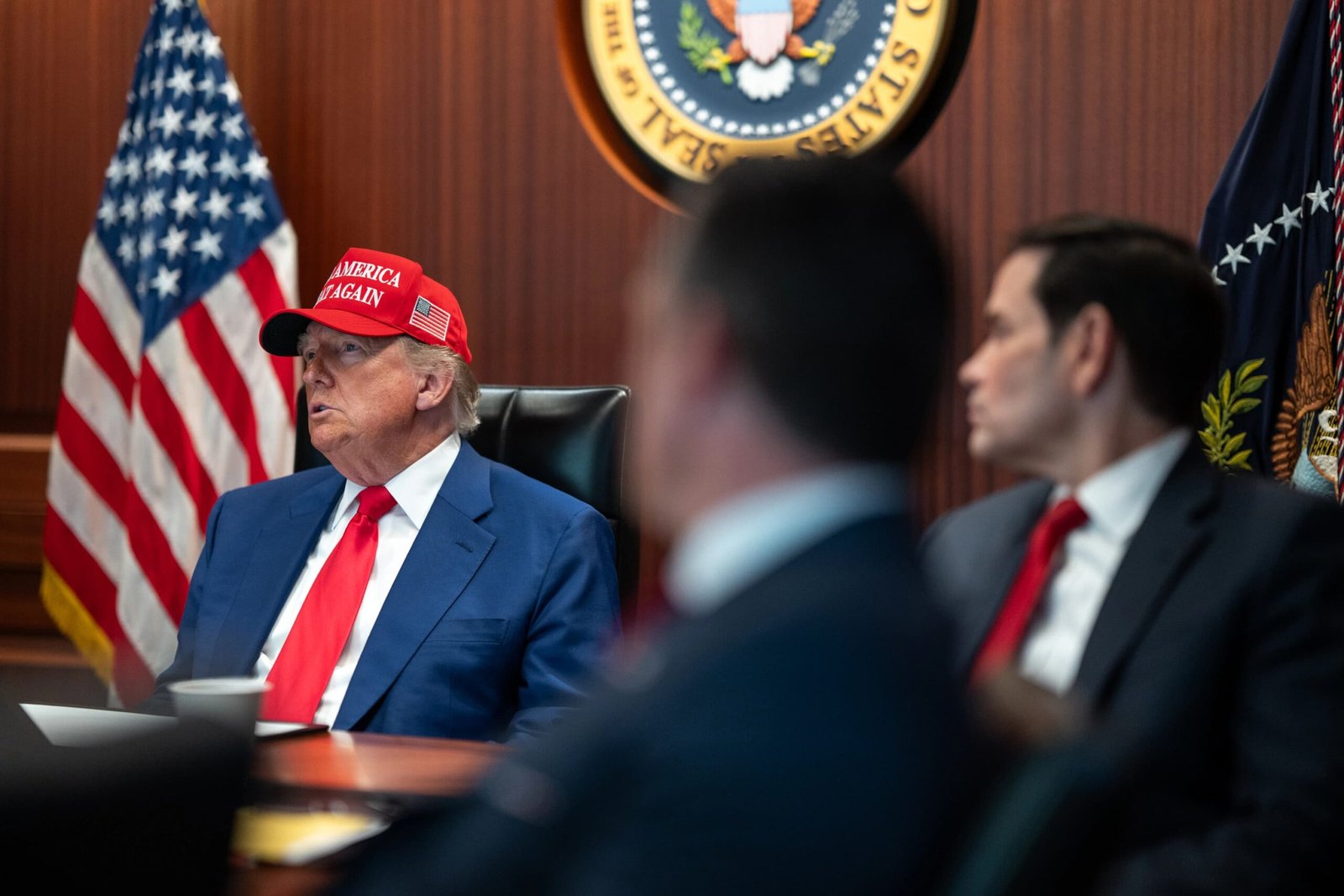
Trump met with his national security team in the Situation Room on Friday for approximately two hours. The White House said the purpose was to make a final determination. When the meeting ended, the White House said only that it had concluded. No announcement followed Friday night.
The silence is its own message. A signed deal would have produced a Truth Social post before the Situation Room chairs were pushed back. The absence of a post means one of three things: the terms require further negotiation, Trump is not yet satisfied with what Iran has agreed to, or the administration is managing the announcement timing deliberately.
What is confirmed: a deal outline exists, both sides’ negotiators have seen it, and Trump has not approved it. What is not confirmed: whether the nuclear component — Iran’s enriched uranium stockpile, the program’s future — is inside the deal or explicitly outside it. Iran’s Friday statement that nuclear issues are not being discussed suggests the latter. That position directly contradicts the Trump administration’s stated non-negotiable requirement that Iran surrender its nuclear program.
Whether Trump accepts a ceasefire extension and Strait arrangement that defers the nuclear question — or demands nuclear terms before approving anything — is the decision that remains unmade as of Saturday morning.
| Iran Deal Status — May 30, 2026 | Detail |
|---|---|
| Deal outline | Agreed by negotiators — awaiting Trump approval |
| Trump Situation Room meeting | Friday, approx. 2 hours — no announcement |
| Ceasefire status | Officially in effect — violated by both sides this week |
| US strikes this week | Monday — self-defense strikes on Iranian missile sites |
| Iranian strike this week | Kuwait — U.S. forces targeted |
| IRGC Strait warning shots | Fired at 4 vessels attempting transit |
| Iran’s position on nuclear talks | “Nuclear issues not being discussed” |
| Trump administration position (stated) | No deal without nuclear program addressed |
| US sanction announced Friday | Iranian agency controlling Strait |
| US threat to Oman | Sanctions if Oman helps Iran collect Strait fees |
| Strait of Hormuz status | Still closed to commercial shipping |
| US gas price (national avg.) | ~$4.55/gallon |
| Trump’s last public statement | Has not confirmed or denied deal terms |
The Oman Dimension — and Why Threatening a Mediator Is Risky
Trump’s comment that he could blow up Oman was not delivered in a diplomatic context. It appeared on Truth Social after Oman’s government indicated it was exploring whether Iranian transit fee proposals for Strait passage could be part of a broader settlement framework. Trump’s response — a threat of military and economic destruction against a Gulf state that has quietly served as one of the most reliable diplomatic back-channels in the region — drew alarm from Middle East analysts and from Omani officials who have built their foreign policy on strategic neutrality.
Bessent’s follow-up sanction threat against Oman was more formal but equally blunt: help Iran collect Strait fees and face consequences. The message has been received in Muscat. Whether it has strengthened or weakened Oman’s willingness to continue facilitating the talks that brought both sides to the outline of a deal is not yet clear.
The Iran deal, after three months of war and five rounds of negotiations, is sitting inside a Situation Room meeting that ended without a statement and a Truth Social feed that went quiet on Friday night. Trump will announce his decision when he makes it. The region — and the American gas pump — is waiting.