
Photo by Kai Pilger on Unsplash
Hundreds of thousands of people packed Paris’ Champs-Élysées Avenue for Pope Leo XIV’s outdoor Mass on Saturday, Sept. 26, 2026, marking the first papal visit to France in nearly two decades. The Vatican estimated that 700,000 people came out for the Mass, far exceeding the 600,000 who had registered in advance.
A Parade Through the Heart of Paris
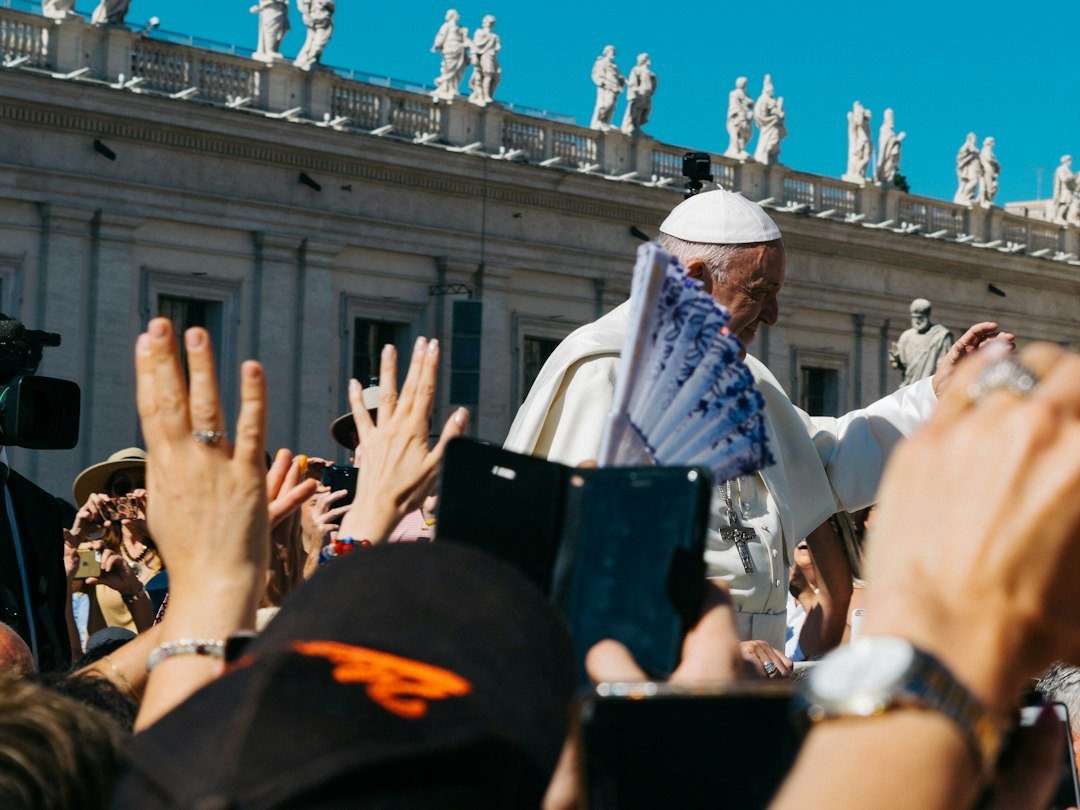
The American pope greeted flag-waving, cheering crowds from his popemobile during a roughly 2-kilometer parade along the Champs-Élysées leading to the Place de la Concorde. The scene unfolded despite heavy security and road closures across central Paris, yet the mood remained festive. People of different faiths, and some with no faith at all, turned out to catch a glimpse of the pontiff.
During his speech, Pope Leo encouraged attendees in a mostly secular France “to build a renewed nation upon roots nourished by faith.” The remark carried particular weight given the setting. France adheres to a strict form of secularism in public life, rooted in a 1905 law that separates church and state, and the country has seen sharp declines in churchgoing in recent decades as secularizing trends have emptied churches across Europe. That the pope managed to draw such an enormous crowd against this backdrop was itself a notable moment for the Catholic Church.
A Contested Venue
Not everyone welcomed the choice of location. The selection of Place de la Concorde as the Mass site drew criticism from supporters of secularism, who argued the plaza represents the Republic itself and that other venues, such as the Invalides, would have been more fitting for a papal gathering. The comparison to past visits is telling: Pope Benedict XVI celebrated Mass at the Invalides in 2008 in front of 240,000 people, meaning Leo’s crowd nearly tripled that figure at a site some felt was ill-suited to a religious event of this scale.
The debate over venue reflects a broader tension in France between its official secular identity and moments when religious life spills into the most symbolic corners of public space. That the Vatican’s own registration numbers were overwhelmed by actual turnout suggests the appetite for the pope’s visit exceeded even the Church’s expectations.
Signs of a Quiet Religious Revival
Earlier Saturday, during a visit to the Catholic Institute of Paris, the pope said he was surprised by the number of new converts registered in recent years and expressed gratitude for what he called God’s “unfathomable work.” His comments point to a pattern that has been building beneath the surface of France’s secular public life. The number of adult baptisms in France each year has tripled since 2016, reaching 13,000 this year. For a country long associated with empty pews and declining religious participation, that figure represents a striking countertrend, one the pope appeared eager to acknowledge and encourage during his visit.
The juxtaposition is hard to miss: a nation legally committed to keeping religion out of public institutions is nonetheless seeing rising numbers of adults choosing to enter the Church, and hundreds of thousands turning out to see its spiritual leader in one of the most famous public squares in the world.
A Broader Agenda Beyond Paris
The Mass was only one part of a four-day visit that began Friday with prayer at the newly restored Notre Dame cathedral and was set to continue with prayer at Lourdes, one of Catholicism’s most significant pilgrimage sites. Beyond the religious ceremonies, the pope used his time in France to raise concerns about artificial intelligence, nuclear arms, and human rights, signaling that his agenda extended well past matters of faith and into pressing global issues.
Those themes are consistent with a papacy that has sought to speak to both spiritual and secular audiences, addressing technological and geopolitical anxieties alongside calls for renewed faith. By pairing a message about rebuilding a nation’s spiritual roots with warnings about AI and nuclear risk, the pope appeared to be positioning the Church as a voice on both the moral and existential challenges facing modern society.
As the visit moves toward Lourdes, questions remain about what lasting impact the trip will have on French religious life and on the ongoing debate over the place of faith in a country so firmly committed to secular governance. For now, the images from the Champs-Élysées and Place de la Concorde tell their own story: a sea of people, estimated at 700,000 strong, gathered in the heart of a famously secular republic to witness a moment many did not expect to see repeated so soon after Benedict XVI’s visit nearly twenty years earlier. Whether this marks a turning point or a singular spectacle remains to be seen, but the scale of Saturday’s turnout has already reignited conversation about faith’s place in French public life.