
Photo by Happy Face Emoji on Unsplash
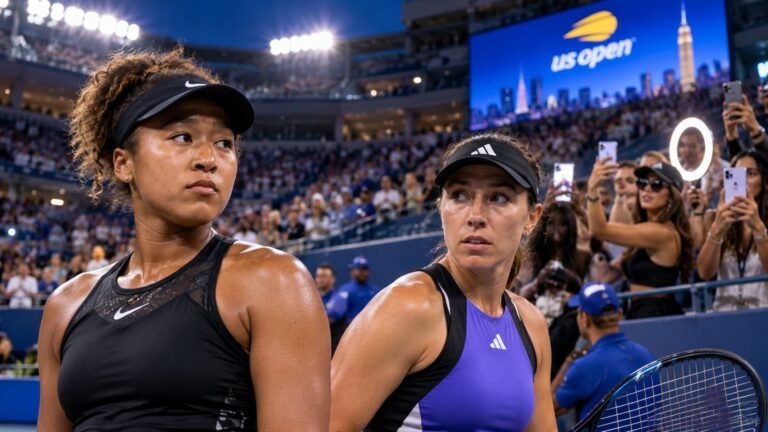
A viral video showing credentialed influencers disrupting Naomi Osaka’s U.S. Open match at Arthur Ashe Stadium, forcing the chair umpire to intervene, has ignited a fierce debate over who belongs courtside at America’s premier tennis tournament.
The footage, which spread rapidly online, captured the kind of scene tennis purists have long dreaded: content creators treating a Grand Slam match as a backdrop for social media theater rather than a competitive sporting event. But ESPN reporting notes an important distinction lost in much of the online outrage. The people who drew criticism during Osaka’s match were not among the content creators officially credentialed by the U.S. Tennis Association.
What the Videos Actually Show
One clip shared on TikTok that has gone viral shows a woman using a large, very bright light to capture content in the middle of Osaka’s match, illuminating the court in a way that clearly irritated players and officials alike. Another video shows a large group of influencers packed into a suite, collectively recording a promotional video and asking their audience, “Did you miss us?”
In a separate but related clip, a group of influencers was spotted loudly reciting Kim Kardashian’s famous line, “Hey, guys. We’re back. Did you miss us ’cause we missed you,” while filming inside the stadium. The moments underscored a growing tension between the tournament’s embrace of social media culture and the traditional decorum expected at a professional sporting event.
A Rapidly Expanding Credentialing Program
The controversy comes as the U.S. Open has dramatically expanded its relationship with online creators. Content creators were credentialed as media for the first time at the 2025 U.S. Open, with 54 receiving official passes. This year, the tournament nearly doubled that program, growing from 54 creators last year to roughly 100 this year, according to a sports outlet citing ABC News reporting.
Of those 100 accredited influencers, 20 are dedicated solely to covering the food and beverage scene at the tournament, according to sports analysis, a detail that illustrates just how far the credentialing program has expanded beyond traditional match coverage.
That rapid growth has amplified scrutiny over who exactly is allowed inside the venue with official access, and how those credentials are being used once granted.
Revoked Passes and a Vendor Mix-Up
The blowback intensified this week when two New York City-based creators, Meg Radice and Audrey Jongens, revealed on Thursday that their U.S. Open credentials had been revoked after they posted photos of their passes to Instagram. The revocation raised questions about how credentials were being distributed and monitored throughout the two-week event.
US Open head Brendan McIntyre addressed the situation directly, saying the pair had been incorrectly credentialed in the first place. “These individuals were not credentialed as media or content creators,” McIntyre said in a statement to a sports outlet, indicating the two had instead been improperly submitted as vendor staff rather than through the official content creator program.
Radice and Jongens pushed back against the criticism in a video response, describing themselves as “diehard tennis fans” and calling it their “dream” to be credentialed for the event. Their account suggests the confusion stemmed from an administrative error rather than any intentional attempt to bypass the tournament’s rules, though the episode nonetheless became a flashpoint in the broader debate over influencer access.
Osaka Calls for Respect and Etiquette
Amid the swirling controversy, Osaka herself weighed in, calling for greater respect from those attending matches regardless of their credential status. “If you come to a sporting event, you have to respect the sport,” she told reporters. She added that spectators and content creators alike should take basic steps to understand the environment they’re entering. “It’s common courtesy to read up on the sport, especially the etiquette,” Osaka said.
Her comments captured a sentiment shared by many longtime tennis fans who feel the sport’s traditional hush-toned atmosphere is being eroded by an influx of creators more focused on content than competition.
Media coverage of the episode has been blunt. Headlines have described the situation as influencers “killing the US Open and turning it into a zoo,” while Reuters characterized it as an “Influencer boom at US Open tests boundaries of tennis etiquette,” according to a sports outlet’s analysis of the coverage.
The episode raises broader questions for the U.S. Open and other major sporting events navigating the collision between traditional spectator norms and the economics of social media promotion. With roughly 100 creators now holding official credentials, and vendor-related mix-ups already surfacing this year, tournament organizers face pressure to tighten oversight of who receives access and how that access is used inside the stadium.
Whether the backlash prompts stricter screening for future tournaments remains to be seen, but the viral disruptions during Osaka’s match have already forced a public reckoning over where the line should be drawn between digital content creation and respect for competitive sport.