
WASHINGTON, June 26, 2026 —
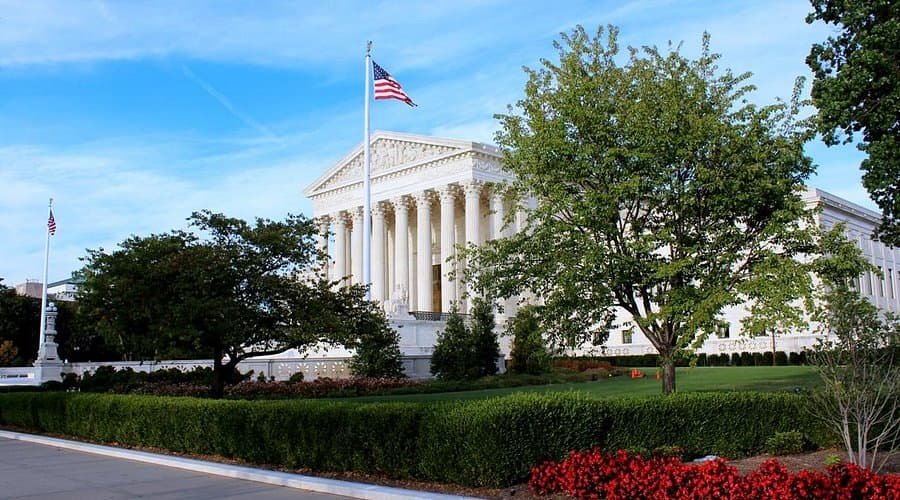
The Supreme Court handed the Trump administration its broadest immigration victory yet on Thursday, ruling 6-3 that federal courts have virtually no authority to review the government’s decisions to revoke Temporary Protected Status — a move that clears the legal path to deporting hundreds of thousands of Haitians, Syrians, and other migrants who have lived and worked lawfully in the United States for years, in some cases for decades.
The ruling, written by Justice Samuel Alito, was one of two immigration decisions handed down the same morning. The second upheld the administration’s authority to bar asylum seekers from applying for protection if they have not yet physically set foot on American soil — a practice known as metering that has kept thousands of migrants waiting indefinitely at ports of entry along the southern border.
Together, the two decisions remove the principal legal barriers the administration faced in executing its immigration agenda. The court’s three liberal justices dissented in both cases. Justice Sonia Sotomayor read her dissent aloud from the bench — a rare act reserved for decisions the dissenters consider most consequential.
What TPS Is, Who Holds It, and What They Face Now
Temporary Protected Status was created by Congress in 1990 to give migrants from countries experiencing war, natural disaster, or severe instability the ability to live and work legally in the United States without fear of deportation for as long as those conditions persist. Designations are made and renewed by the Secretary of Homeland Security, and they can be revoked when the secretary determines conditions have changed.
Roughly 1.3 million people across 17 countries currently hold TPS. The two groups at the center of Thursday’s ruling are Haitians and Syrians — the administration moved to end both designations in Trump’s first months back in office. Lower courts had blocked those terminations while legal challenges proceeded. Thursday’s ruling removes that block entirely.
Haiti remains in the grip of gang violence that has displaced 1.5 million people and killed more than 2,300 this year alone. The State Department currently advises American citizens against any travel to the country. Syria, while no longer in active civil war, has not restored anything resembling stable governance after more than a decade of conflict. Neither country was described by immigration advocates or security analysts as safe for mass return.
| Who Is Affected by the Supreme Court’s TPS Ruling | |
|---|---|
| Group | Status / Detail |
| Total current TPS holders (all countries) | Approximately 1.3 million people |
| Countries covered by active TPS designations | 17 nations |
| Haitians with TPS at risk of termination | Estimated 200,000+ |
| Syrians with TPS at risk of termination | Estimated 7,000+ |
| Ruling vote | 6-3, along ideological lines |
| Judicial review of future TPS decisions | Barred under the majority ruling |
| Separate ruling on asylum metering | Also 6-3 in administration’s favor |
The Court’s Reasoning — and the Dissent’s Warning
Justice Alito, writing for the conservative majority, concluded that the statute governing TPS grants the Secretary of Homeland Security sole discretion over designation decisions — and that this discretion is explicitly shielded from court review. The majority also rejected a racial discrimination claim from Haitian petitioners, who argued the termination of their status was tainted by race-based animus from senior administration officials. Alito acknowledged the statements but found what he called a sufficient race-neutral explanation: the current administration simply opposes TPS as it has been administered.
Justice Elena Kagan, joined by Justices Sotomayor and Ketanji Brown Jackson, called the decision a fundamental break from administrative accountability. The majority’s ruling, Kagan wrote, grants total immunity from basic judicial oversight while exposing hundreds of thousands of people to removal. She also argued the Haitian termination was procedurally defective, pointing to a failure to conduct required consultations on country conditions before revoking the designation.
In a concurring opinion, Justice Clarence Thomas went further than the majority, arguing that noncitizens in the United States have no equal protection rights against the federal government — a position that, while not binding as law, alarmed legal scholars who warned it could be used to erode due process protections for millions of people regardless of their immigration status.
What Happens Next
The administration celebrated the ruling as a vindication of its position that TPS is temporary by definition. The immediate practical effect is that lower court injunctions blocking the Haitian and Syrian terminations are lifted. Those individuals do not face deportation overnight — wind-down periods and logistical constraints create delays — but they have lost the legal protection that kept removal proceedings at bay.
Eight major cases remain before the court before the term closes, including the administration’s bid to end birthright citizenship, its attempt to remove a sitting Federal Reserve governor, and questions around transgender athlete bans and mail-in ballot deadlines. Thursday was not the final opinion day of the term.
The immigration landscape for more than a million people shifted permanently on Thursday morning. The decision on how quickly to act on that shift now rests entirely with the executive branch — and the courts, under Thursday’s ruling, largely cannot intervene.