
WASHINGTON, May 31, 2026 —
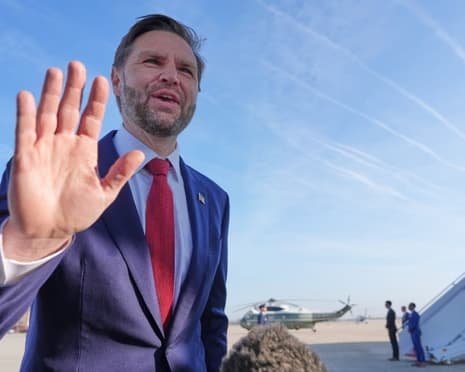
Three days after Trump convened his entire Cabinet at Camp David to make a final determination on the Iran deal, the United States still has no signed agreement. Vice President JD Vance told reporters Friday that it remains “TBD” whether Trump will sign the memorandum of understanding with Iran, confirming that the two sides are still negotiating over what he described as “a couple of language points.” Defense Secretary Pete Hegseth simultaneously warned that the U.S. military is “more than capable” of resuming strikes against Iran at any moment.
The deal is real. The signing is not.
What Vance Said — and What It Reveals About Where Talks Stand
Vance’s TBD characterization is the most candid public assessment of the deal’s status from inside the administration since Trump declared it largely negotiated eight days ago. The phrase means that after Camp David, after the Situation Room session, after Trump’s Friday demands, and after the Iranian delegation’s time in Doha — the president has still not put his signature on the document his own negotiators helped draft.
The specific sticking points, according to Vance, involve language. That word — language — is diplomatic shorthand for fundamental disagreement about what the agreement actually commits both sides to do. In the context of the Iran MOU, the language dispute centers on two issues that have not been resolved across multiple rounds of negotiations.
The first is uranium. Treasury Secretary Scott Bessent said in a Thursday briefing that there will be no sanctions relief until Iran agrees to turn over its highly enriched uranium. Trump posted on Truth Social Monday that the nuclear material could either be transferred to the U.S. or destroyed at another acceptable location. Iranian state media immediately repudiated that assertion. The gap between what Trump publicly described as the uranium arrangement and what Iran’s government was willing to confirm publicly represents the same fundamental divide that has derailed every prior round of Iran nuclear talks in the past two decades.
The second is the Strait. Iran has signaled it intends to maintain greater control over Strait passage than existed before the war. The MOU framework calls for the Strait to reopen without tolls. Iran has previously demanded transit fees. The IRGC fired warning shots at four vessels this week that attempted to pass without what Iran described as prior coordination. Each of those warning shots is a preview of what Strait management under the current arrangement looks like.
Hegseth’s Warning — and What It Means for the Timeline
Hegseth’s statement that the U.S. is more than capable of resuming strikes was delivered in direct response to a question about whether military pressure would be applied if the MOU was not signed. He did not say a strike was imminent. He said the capability exists and has not gone anywhere.
That warning is operationally significant. U.S. Central Command launched defensive strikes in southern Iran as recently as Monday of this week — targeting missile launch sites and mine-laying boats around the Strait — even while the MOU was being negotiated. The military pressure track and the diplomatic track have been running simultaneously throughout this conflict. Hegseth’s statement confirms they still are.
Trump set specific conditions on Truth Social before the Camp David meeting: Iran must permanently forgo nuclear weapons, reopen the Strait without tolls, clear naval mines, and cooperate with the U.S. and IAEA in eliminating highly enriched uranium stockpiles. In exchange, the U.S. would lift its naval blockade. Iran has not publicly confirmed accepting all of those conditions. The White House has not confirmed Iran accepted them privately.
The $12 Billion Frozen Assets Dispute Inside the MOU
One element of the MOU framework that has received less coverage than the nuclear and Strait questions is the frozen assets provision. An Iranian delegation spokesperson said this week that negotiators were successful in securing the release of half of Iran’s blocked overseas assets — approximately $12 billion — as part of the MOU terms.
The $12 billion figure represents funds frozen under prior sanctions regimes that Tehran has sought access to throughout the ceasefire period. For Iran’s government, whose economy has been devastated by three months of war and prior years of sanctions, asset release is the economic lifeline that makes any ceasefire extension worth accepting. For the Trump administration, releasing $12 billion to Iran before the nuclear question is fully resolved risks repeating what Republican critics described as the fundamental error of the Obama-era nuclear deal.
Bessent’s condition — no sanctions relief until Iran agrees to surrender its highly enriched uranium — suggests the administration is using economic leverage as its primary tool for extracting the nuclear concession Iran has not publicly agreed to make.
| Iran MOU Status — May 31, 2026 | Detail |
|---|---|
| MOU signing status | Not signed — Trump has not approved |
| Vance characterization | “TBD” — “couple of language points” remaining |
| Hegseth warning | US “more than capable” of resuming strikes |
| Nuclear uranium demand (Trump) | Transfer to US or destroy at acceptable location |
| Iran response to uranium demand | Repudiated by Iranian state media |
| Strait reopening condition | No tolls — Iran fired warning shots at 4 vessels this week |
| IRGC warning shots | Fired at 4 vessels Wednesday |
| Frozen assets provision | Iran claims $12B secured — US has not confirmed |
| Bessent condition on sanctions | No relief until Iran agrees to surrender HEU |
| US strikes this week | Self-defense strikes, southern Iran, Monday |
| Iran strike this week | Ballistic missiles at Kuwait |
| Ceasefire technically in effect since | April 8 — repeatedly violated by both sides |
| Strait commercial shipping status | Still closed |
What Has to Happen Before Trump Signs
The outlines of a deal that works are visible in the reporting. The MOU extends the ceasefire 60 days, reopens the Strait, releases $12 billion in Iranian assets, lifts the U.S. naval blockade, and starts a formal 60-day negotiating window on nuclear issues. Both sides’ negotiators have been working from a version of that framework for more than a week.
What separates the current situation from a signed agreement is the uranium language. Trump has publicly staked out a position — surrender the uranium or we will not sign. Iran has publicly rejected that as a precondition. Whether there is a formulation of the uranium commitment that both governments can accept publicly while each describes it differently to their own domestic audiences is the specific challenge that has not yet been solved.
Vance said the president will make the call. Trump has not yet made it. The Strait is still closed. The military is still positioned. The gas price is still $4.55.