
WASHINGTON, May 23, 2026 —
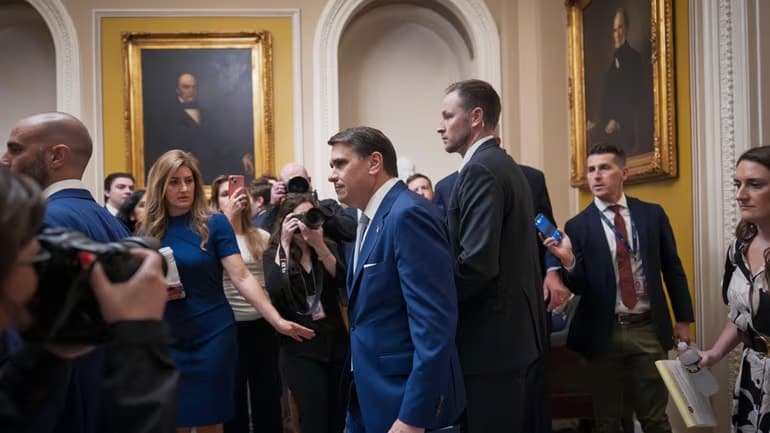
Senate Republicans abruptly left Washington Thursday evening for the Memorial Day recess without voting on a $70 billion immigration enforcement funding bill they had spent weeks assembling — walking away from Trump’s self-imposed June 1 deadline after the $1.776 billion Anti-Weaponization Fund fractured their own caucus and a tense closed-door meeting with Acting Attorney General Todd Blanche made things considerably worse.
The departure was not scheduled. It was a retreat.
How the Anti-Weaponization Fund Blew Up an Immigration Bill
The $70 billion immigration enforcement package was designed to fund Immigration and Customs Enforcement operations, border infrastructure, and deportation activities for the next three years. Republican leaders had structured it to pass under budget reconciliation rules — a procedure that bypasses the 60-vote filibuster threshold and allows passage with a simple majority. As of Wednesday, Senate Majority Leader John Thune of South Dakota believed he had the votes.
Then Thursday happened.
The Anti-Weaponization Fund, part of a settlement that resolves Trump’s lawsuit against the IRS over the leak of his tax returns, unexpectedly became one of the main complications in the bill after Democrats announced that they would force votes to block it or prevent Jan. 6 rioters from receiving payouts. The fund itself is legally separate from the immigration bill — it was not included in the legislation’s text. But the reconciliation procedure that Republicans were using to pass the immigration bill also opened a window for Democrats to force amendment votes on the floor. Democrats planned to use that window to put every Republican senator on record about the Anti-Weaponization Fund — forcing a vote that would either let Jan. 6 rioters potentially receive taxpayer money or publicly break with the president.
A tense meeting with acting Attorney General Todd Blanche on Thursday morning to discuss the settlement only heightened the frustration among senators. Soon after it ended, Republican leaders announced that they would not vote on the immigration enforcement measure until they returned from a Memorial Day recess the week of June 1, which was Trump’s self-imposed deadline for them to pass it.
What Republicans Were Already Fighting About Before Blanche Arrived
The Anti-Weaponization Fund was not the only wound in the legislation by Thursday morning. Two other provisions had already been stripped or abandoned in the days prior.
Republicans had initially included a $1 billion spending provision in the first draft of the bill to enhance security for the East Wing Modernization Project — the name for President Donald Trump’s ballroom construction at the White House. However, that was stripped out by the Senate parliamentarian over the weekend because it did not adhere to rules that would exempt it from the 60-vote filibuster.
Trump had personally pushed for the ballroom funding and for provisions from a voting overhaul called the Save America Act to be included. Both were stripped. Trump publicly lashed out on social media at Republicans who appeared willing to let those provisions go. By the time Blanche arrived Thursday morning to answer questions about the Anti-Weaponization Fund, the caucus had already absorbed two days of presidential pressure and was in no mood for additional complications.
Congress departed for a weeklong recess without passing the Republican-backed measure to fund immigration enforcement amid dissent within their own ranks over the federal fund to pay people who claim to have been politically persecuted.
What Thune Said — and What His Words Revealed About the Caucus
Senate Majority Leader Thune’s statement after Blanche left the closed-door meeting was measured and damning simultaneously. Thune said Blanche had demonstrated “an appreciation for the depth of feeling” among Republican senators on the Anti-Weaponization Fund. The phrase is Washington code for: the attorney general understood, in the room, that his caucus was furious, and he still could not give them what they needed to move forward.
Senate Republicans are postponing consideration of their filibuster-proof immigration enforcement funding bill until June after it got snagged in a political debate over the Trump administration’s $1.8 billion Anti-Weaponization Fund. The bill’s delay is particularly significant because the June 1 deadline is not a procedural formality. It was set publicly by Trump himself, and missing it — because Republican senators refused to vote — represents an institutional failure of the kind that the administration had insisted the new Senate majority would not produce.
The senators most vocal in their opposition to the fund included members from states that Trump won by large margins. Their discomfort was not about partisan opposition to the immigration bill. It was specifically about being forced to go on record either endorsing a fund that could compensate Jan. 6 rioters or publicly breaking with a president who has demonstrated throughout the 2026 primary cycle his willingness to end the careers of Republicans who cross him.
| Senate Immigration Bill Collapse — Key Facts | Detail |
|---|---|
| Bill | $70 billion immigration enforcement package |
| Procedure | Budget reconciliation (filibuster-proof) |
| Trump’s deadline | June 1, 2026 |
| Status as of May 22 | Delayed until at least June 1 recess return |
| Primary complication | Anti-Weaponization Fund — $1.776 billion |
| Fund purpose | Compensate alleged victims of DOJ “weaponization” |
| Stripped provisions | $1B White House ballroom security (parliamentarian ruling) |
| Senate Majority Leader | John Thune (R-SD) |
| AG meeting outcome | Heightened frustration among senators |
| Democratic strategy | Force floor amendment votes on Anti-Weaponization Fund |
| Senators in dissent | Multiple — names not yet publicly released |
| Congress status | Departed for Memorial Day recess |
| Return date | Week of June 1 |
The Jan. 6 Connection That Made Every Republican Uncomfortable
The reason the Anti-Weaponization Fund became politically lethal inside the Republican caucus is not abstract. Two Capitol Police officers — Daniel Hodges and Harry Dunn — filed a federal lawsuit earlier this week specifically to block the fund, alleging it would compensate Jan. 6 rioters who attacked them. Their lawsuit generated significant national coverage.
When Democrats announced they would force amendment votes on the fund as part of the reconciliation debate, every Republican senator faced the same question: vote to protect the fund and be associated publicly with the possibility of Jan. 6 rioters receiving taxpayer money, or vote against the fund and publicly break with a president who established it and whose political machine has already ended two Senate careers in the past eight days.
There was no good vote available. The caucus chose the third option: leave town without voting at all.
The immigration bill will return when the Senate reconvenes the week of June 1. Whether Republican leaders can resolve the Anti-Weaponization Fund problem in the intervening week — through a negotiated carve-out, a direct commitment from Blanche, or a change to the fund’s eligibility criteria — will determine whether the legislation passes on its second attempt or fractures the caucus further.
Trump’s June 1 deadline has already been missed in spirit. Whether it is missed in fact depends on what the next ten days produce.