
WASHINGTON, May 21, 2026 —
Two police officers who defended the U.S. Capitol from a mob on January 6, 2021 — one of whom was pinned against a door as a rioter ripped the mask off his face while the crowd screamed for his death — filed a federal lawsuit Wednesday seeking to block the Trump administration from distributing nearly $1.776 billion in taxpayer money to people who claim they were victims of politically motivated prosecutions.
The officers’ core allegation: the fund will be used, among other purposes, to compensate the same rioters who nearly killed them.
The Fund, the Settlement, and the Man Who Built Both
The Anti-Weaponization Fund was created through a settlement of Trump’s $10 billion lawsuit against the Internal Revenue Service over the leak of his tax returns. Under the agreement, the federal government — meaning American taxpayers — deposited $1.776 billion into a fund designed to compensate individuals who claim they were mistreated by the Justice Department under prior administrations.
The settlement was authorized by Acting Attorney General Todd Blanche. Blanche was, until recently, Trump’s personal criminal defense attorney — the lawyer who represented him at his Manhattan hush money trial. He now runs the Justice Department. The five-member commission that will decide who receives payments from the fund will be appointed by Blanche. The commission has not yet been named.
Blanche said in a CNN interview Wednesday that the commission will have to consider a person’s actions when deciding whether to give them money. But he added: “Whether the commissioners will give that person money — that claimant — it’s up to them.” When pressed directly on whether rioters who assaulted police officers on January 6 could receive payments, Blanche declined to rule it out. He said it was “abhorrent” to harm law enforcement but added that “people that hurt police get money all the time” from suing the government.
Who Filed the Lawsuit and What They Saw That Day
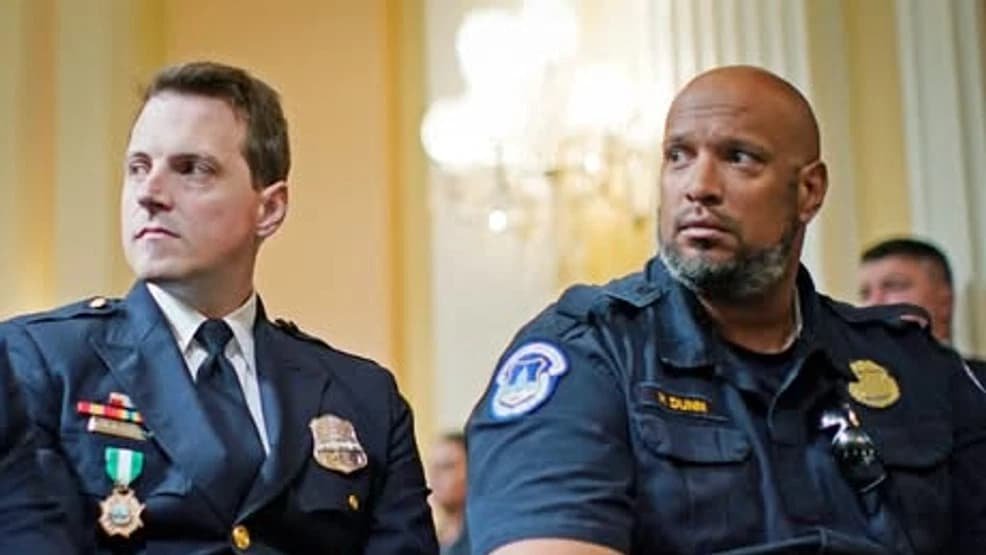
The two plaintiffs are Metropolitan Police Department officer Daniel Hodges and former U.S. Capitol Police officer Harry Dunn. Both testified before Congress about their experiences on January 6. Dunn is currently running for a congressional seat in Maryland as a Democrat.
Videos from that day captured a rioter ripping Hodges’ mask off as he was pinned against a door during a fight for control of a tunnel entrance. More than 100 police officers were injured during the Capitol riot. Nearly 1,600 people were charged with January 6-related crimes before Trump used his pardon power to erase all of those cases in a sweeping act of clemency in the opening days of his second term.
The officers’ lawyers filed the federal lawsuit in Washington a day after Blanche defended the fund’s creation during a congressional hearing. The suit names Trump, Blanche, and Treasury Secretary Scott Bessent as defendants.
What the Lawsuit Argues — in Its Own Words
The 29-page complaint makes three distinct legal arguments. The fund is unconstitutional. The settlement that created it was unlawful. And the payments it may make will directly endanger the lives of the officers filing the suit.
“The fund, styled the ‘Anti-Weaponization Fund,’ is illegal,” the suit alleges. “No statute authorizes its creation, the settlement on which it is premised is a corrupt sham, and its design violates the Constitution and federal law.
“If allowed to begin making payments, the fund will directly finance the violent operations of rioters, paramilitaries, and their supporters who threatened plaintiffs’ lives that day, and continue to do so,” lawyers for Dunn and Hodges wrote in the suit.
The suit also alleges that paying out the rioters will directly escalate the physical danger Dunn and Hodges already face. “Dunn and Hodges already face credible threats of death and violence on a regular basis; the Fund substantially increases the danger,” the complaint states.
The lawsuit asks a federal judge in Washington to declare the administration’s fund unlawful and to block any payments from being distributed.
The Constitutional Argument Buried in the Settlement’s Fine Print
Lawyers for Dunn and Hodges argue that officials violated federal law by not following a provision that requires the attorney general to certify that any government settlement payment “is in the interest of the United States.” “The payment of $1.776 billion into the Anti-Weaponization Fund to settle Trump v. IRS was patently not ‘in the interest of the United States,'” they wrote. “Rather, it was a misappropriation of taxpayer funds orchestrated by the President to reward his allies and the rioters who committed violence in his name.
The administration has dismissed the backlash. Blanche called opposition to the fund “fake outrage.” The White House has not commented on the lawsuit directly.
A federal judge in Washington will now decide whether to issue a temporary restraining order blocking distributions while the case is heard. No hearing date has been set. The commission that will make payout decisions has not yet been assembled. No money has yet been distributed.
| January 6 Anti-Weaponization Fund — Key Facts | Detail |
|---|---|
| Fund total | $1.776 billion |
| Source of funds | Settlement of Trump v. IRS ($10B lawsuit) |
| Fund purpose | Compensate alleged victims of DOJ “weaponization” |
| Settlement authorized by | Acting AG Todd Blanche (Trump’s former personal attorney) |
| Commission appointment | Five members chosen by Blanche — not yet named |
| Can Jan. 6 rioters receive money | Blanche declined to rule it out |
| Jan. 6 charges erased by Trump pardon | Nearly 1,600 people |
| Officers injured in Capitol riot | 100+ |
| Plaintiffs | Officer Daniel Hodges, former officer Harry Dunn |
| Defendants | Trump, Blanche, Treasury Secretary Bessent |
| Lawsuit filed | May 20, 2026 (Washington federal court) |
| Relief requested | Declare fund unlawful, block all distributions |
| Hearing date | Not yet scheduled |
| Money distributed so far | None |
The lawsuit is the first known legal challenge to the Anti-Weaponization Fund. It will not be the last. The officers who held the line on January 6 are now asking a federal court to hold a different kind of line — between public funds and the people who used violence to try to prevent the peaceful transfer of power. That question, five years after the riot, is now in front of a judge.