
WASHINGTON, May 19, 2026 —
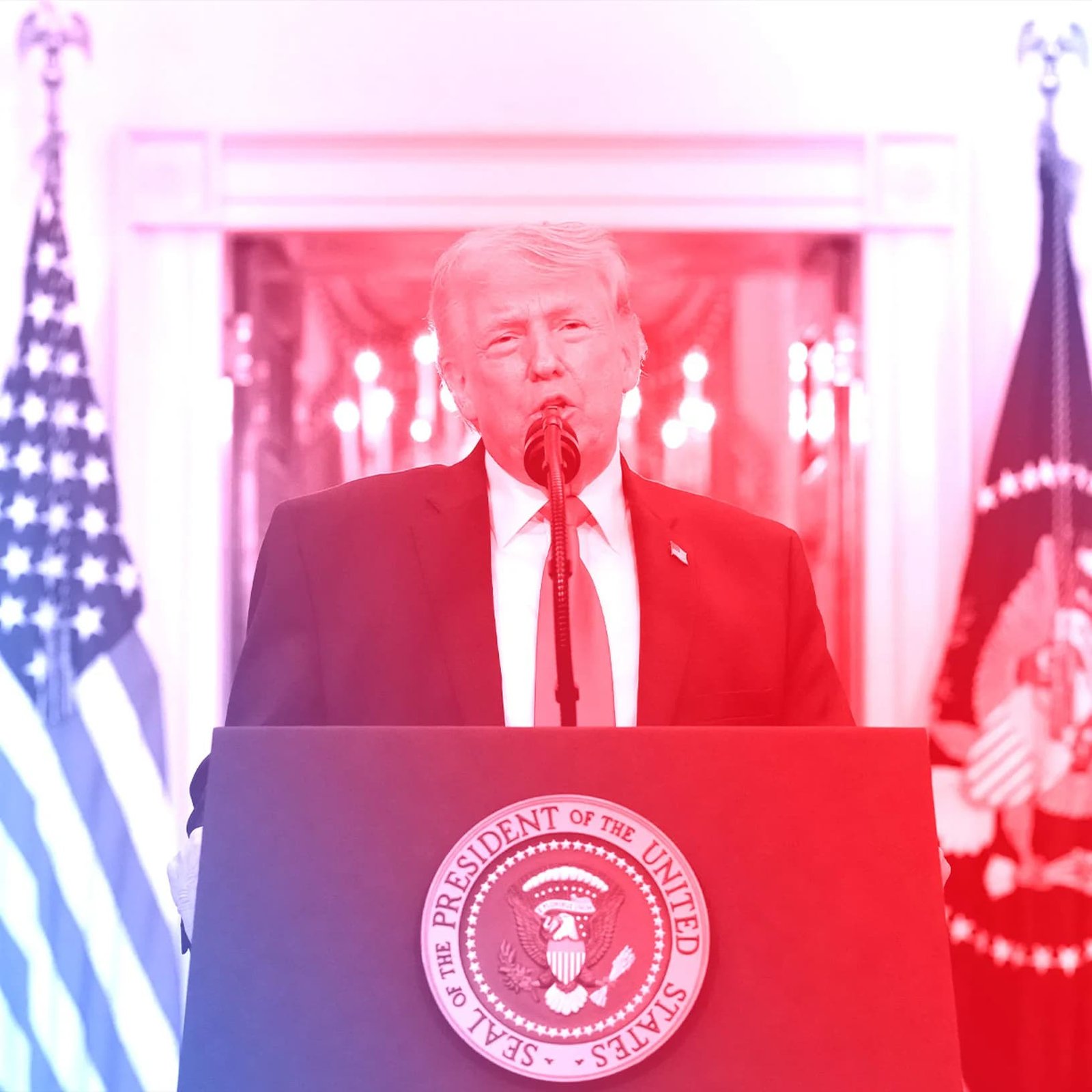
President Donald Trump announced Monday evening that he has called off a planned military strike on Iran that was set for Tuesday morning, after the leaders of Qatar, Saudi Arabia, and the United Arab Emirates personally asked him to hold off while peace negotiations — described by multiple parties as more substantive than any previous round — continue.
Trump revealed the existence of the planned strike only as he announced its cancellation. No prior public indication had been given that the U.S. was 72 hours from resuming full-scale hostilities.
The Truth Social Post That Revealed a Strike Nobody Knew Was Coming
Trump’s announcement came first via Truth Social, in the early evening hours of Monday. The post was direct and specific. He had informed Defense Secretary Pete Hegseth and Joint Chiefs Chairman General Dan Caine that the U.S. would not be conducting a scheduled attack on Iran on Tuesday. The reason, Trump wrote, was that the Qatari emir, the Saudi crown prince, and the UAE president had each personally contacted him to ask for restraint while serious negotiations proceeded.
“There seems to be a very good chance that they can work something out,” Trump told reporters at the White House shortly after posting. “If we can do that without bombing the hell out of them, I’d be very happy.”
The president simultaneously ordered the military to remain ready. His directive to Hegseth and General Caine was explicit: stand down for Tuesday, but be prepared to execute a full, large-scale assault on Iran on a moment’s notice if an acceptable deal is not reached.
What Iran Put on the Table — and Why This Round Feels Different
The framework of the current negotiations involves Iran’s nuclear program at its core. Iran has insisted throughout the war that its nuclear activities are for peaceful purposes. Its previous proposals to Pakistani mediators — who have served as the primary back-channel between Washington and Tehran since the ceasefire began fraying — were rejected by Trump as unacceptable.
On Monday, Iranian state-linked media reported that Tehran submitted a revised 14-point proposal to Pakistani mediators. The specific contents of that proposal have not been made public. Trump acknowledged it in his White House remarks, calling the current moment “a little bit different” from prior near-deal moments that ultimately collapsed.
The biggest obstacle, according to Iran’s foreign minister as recently as Friday, has been a fundamental lack of trust on both sides. The ceasefire that took effect April 8 has been violated repeatedly — by Iranian drone attacks on Gulf targets, by the strike on the Barakah nuclear plant perimeter on May 17, and by the exchange of fire between U.S. and Iranian vessels in the Strait of Hormuz on May 7. Each side accuses the other of bad faith. The Strait of Hormuz remains effectively closed to commercial traffic.
What changed Monday was the intensity of Gulf state pressure. Saudi Arabia, Qatar, and the UAE all have profound economic and security interests in preventing a resumption of full-scale strikes that would almost certainly draw Iranian retaliation across the Gulf. Their simultaneous intervention — three leaders making personal calls to Trump on the same day — represents the most coordinated diplomatic pressure the region’s powers have applied since the war began.
The Military Posture That Didn’t Change
The cancellation of Tuesday’s strike is not a stand-down. Trump was precise about that distinction. The instruction to Hegseth and General Caine was to maintain full operational readiness for a large-scale assault executable at any moment. The aircraft, the ships, the munitions and the targeting packages built for Tuesday’s attack are still in place. The only thing that changed was the authorization to use them.
Trump had told the New York Post in an interview earlier Monday — before the Truth Social post — that Iran knew “what’s going to be happening soon,” without providing specifics. The strike planning had clearly been advanced enough that Trump considered it settled. The Gulf state intervention arrived late enough in the process that its reversal of the decision represents a genuine diplomatic achievement for Riyadh, Doha, and Abu Dhabi.
Whether Tehran uses the window that just opened — or whether the 14-point proposal Iran submitted Monday contains enough movement on the nuclear question and the Strait to form the basis of a real framework — determines what the next 48 hours look like.
| Iran War Diplomatic Status — May 19 | Detail |
|---|---|
| Planned Tuesday strike | Called off by Trump Monday evening |
| Reason given | Personal requests from Qatar, Saudi Arabia, UAE |
| Iran’s latest move | Revised 14-point proposal to Pakistani mediators |
| Key sticking points | Nuclear program, Strait of Hormuz reopening |
| Military readiness status | Full standby — large-scale assault authorized “at a moment’s notice” |
| Ceasefire original date | April 8 |
| Strait of Hormuz status | Effectively closed to commercial traffic |
| U.S. war operational cost | At least $29 billion (Pentagon, May 12) |
| Mediator nations | Pakistan, Qatar |
| Trump’s characterization | “A little bit different” from prior near-deal moments |
The Clock Is Running. The Deal Is Not Yet Real.
Trump has said versions of this before. He said it was time for a deal in March. He said talks were close in April. He described the ceasefire as being on “massive life support” before leaving for Beijing. The pattern has been: optimism, near-deal, collapse, escalation, repeat.
What is different this time is the convergence of pressures. The Moody’s credit downgrade, announced Friday, now puts a fiscal cost on the continued war that is visible in the bond market. American households are paying $4.50 a gallon for gas and absorbing inflation at 3.8%. The One Big Beautiful Bill is cutting Medicaid and SNAP while the war continues adding to the deficit. The Gulf states, whose own economies depend on Strait access and regional stability, intervened with unusual directness.
None of that guarantees a deal. Iran’s revised proposal may contain terms Washington cannot accept. The military standby is real. Tuesday’s strike did not happen. Wednesday is still unwritten.