
WASHINGTON, May 12, 2026 —
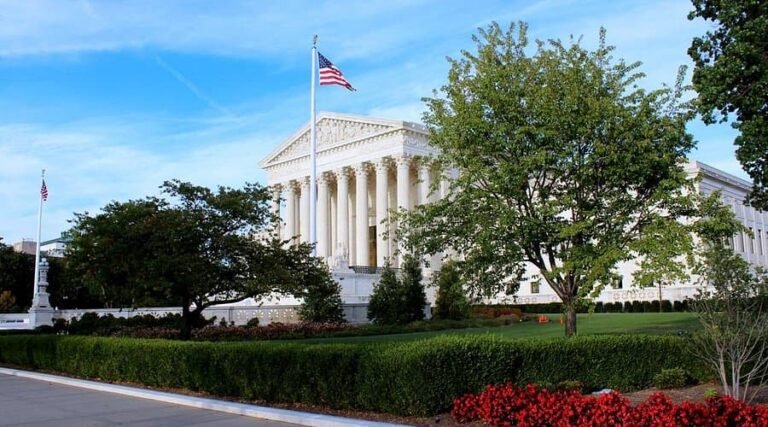
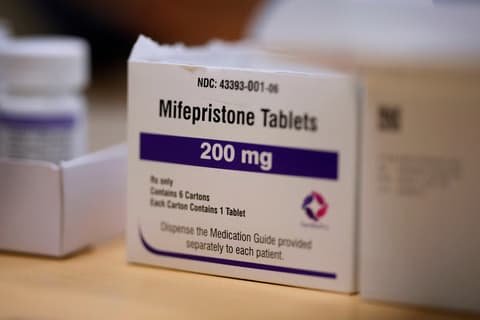
The Supreme Court extended its temporary stay on the Fifth Circuit’s mifepristone ruling on Monday afternoon — keeping nationwide telehealth and mail access to the abortion pill intact until Thursday, May 14 at 5 PM Eastern, while the nine justices continue deliberating over one of the most consequential abortion cases to reach the court since Dobbs.
Justice Samuel Alito issued the extension without explanation — a single administrative order that blocked the Fifth Circuit’s in-person dispensing requirement from taking effect. The extension gives the full court additional time to consider emergency appeals from Danco Laboratories and GenBioPro, the two companies that manufacture mifepristone, while simultaneously setting a new deadline that falls on the same day President Trump lands in Beijing for his summit with Xi Jinping.
The convergence is not coincidental in its political implications, even if it is coincidental in its timing.
What the Fifth Circuit Ruled — and What the Supreme Court Is Reviewing
The Fifth Circuit Court of Appeals ruled on May 1 that the Food and Drug Administration exceeded its authority when it modified mifepristone’s prescribing requirements in 2021 and 2023 to allow telehealth prescriptions and mail delivery. The court reinstated rules from before the COVID-19 pandemic that required patients to receive mifepristone only after an in-person visit with a licensed clinician — effectively eliminating the mail-order access that has expanded dramatically since Roe v. Wade was overturned in 2022.
The ruling applied immediately and nationwide — not just in Louisiana, whose lawsuit generated the case. Because FDA drug regulations apply uniformly across all states, the Fifth Circuit’s order instantly restricted mifepristone access in California, New York, Massachusetts, and every other state with protected abortion rights, not just the conservative states whose abortion laws the ruling’s plaintiffs sought to protect.
Danco and GenBioPro appealed directly to the Supreme Court within hours, asking for emergency relief. Alito — who handles emergency applications arising from the Fifth Circuit — issued a one-week temporary stay on May 4. That stay expired Monday evening. His new order extends the pause until Thursday at 5 PM ET.
What Alito’s Silence Signals — and What It Does Not
Administrative stays — the technical category of Alito’s order — are procedural tools that maintain the legal status quo while a court considers how to proceed. They do not indicate how the court will ultimately rule. They do not require any explanation. They do not represent any justice’s position on the merits of the underlying case.
Alito authored the 2022 Dobbs decision that overturned Roe v. Wade and is one of the court’s most consistently anti-abortion voices. His issuance of consecutive administrative stays preserving mifepristone access has generated considerable commentary — both from legal analysts who note that the stays carry no ideological implication and from advocates on both sides of the abortion debate who have attempted to read significance into every hour of extended access.
The court’s deliberations remain internal. Louisiana has filed its formal response. The justices are reviewing the emergency application from Danco and GenBioPro. The full court will either grant the emergency relief — putting the Fifth Circuit’s ruling on hold for the duration of litigation — or deny it, at which point the in-person requirement takes effect with whatever additional delay the court decides to allow.
| Mifepristone Case Timeline | Date | Event |
|---|---|---|
| Louisiana files FDA lawsuit | 2025 | Challenge to telehealth prescribing rules |
| District court rules partially for Louisiana | April 2026 | FDA rules “arbitrary and capricious” — stay granted |
| Fifth Circuit rules for Louisiana | May 1, 2026 | In-person requirement reinstated immediately nationwide |
| Alito first administrative stay | May 4, 2026 | Telehealth access preserved — 1 week |
| Alito second administrative stay | May 11, 2026 (Monday) | Extended until Thursday May 14 at 5 PM ET |
| Full court decision pending | By Thursday or after | Grant emergency relief or deny — case continues |
| Supreme Court final ruling | Months away | If emergency relief granted — full merits review follows |
The Political Trap the Trump Administration Cannot Escape
The Trump administration filed no written brief in this case — despite the case involving federal regulatory rules that a Republican administration’s Justice Department would normally defend or modify. The silence was deliberate. Trump has repeatedly said abortion is a states’ rights issue and that the Supreme Court was right to return abortion decisions to state legislatures. Taking a position in the mifepristone case — either supporting the Fifth Circuit’s restriction or defending the FDA’s telehealth rules — forces the administration into a corner that alienates one of its constituencies.
Supporting the Fifth Circuit’s ruling aligns with the anti-abortion base that has been one of the Republican Party’s most reliable constituencies since Roe. It would also restrict mifepristone access in blue states with protected abortion rights — a politically costly outcome in the states whose voters the administration most needs to persuade heading into November’s midterms.
Defending the FDA’s telehealth rules preserves access but alienates the same anti-abortion base while contradicting the administration’s broader posture on the issue.
Both sides interpreted the silence as an implicit endorsement of their preferred outcome. The Supreme Court is left to decide without guidance from the executive branch — an unusual situation in a case involving federal agency rules.
What Thursday’s Deadline Means for the Millions of Women Who Use Mifepristone
Mifepristone is used in approximately 63% of all abortions in the United States — more than 400,000 medication abortions per year. It is also used for miscarriage management. The telehealth and mail access pathway that the Fifth Circuit suspended — and that Alito has twice temporarily restored — is the primary mechanism through which women in states with abortion bans access the drug.
A Thursday afternoon deadline means patients and providers have roughly 72 hours of certainty before the legal landscape shifts again. Providers in states where abortion is legal have been managing an extraordinary degree of uncertainty since May 1 — unable to make scheduling, staffing, or protocol decisions with any confidence because the legal status of their core medication has changed three times in eleven days.
Danco Laboratories told the court that the Fifth Circuit’s order “injects immediate confusion and upheaval into highly time-sensitive medical decisions.” The company’s assessment of the practical impact of repeated overnight changes to prescribing rules describes the lived experience of both patients and providers navigating abortion access in 2026.
Whatever the Supreme Court decides by Thursday — or after Thursday if it extends the stay again — will resolve the immediate uncertainty. The underlying case, involving FDA regulatory authority and the limits of state standing to challenge federal drug approvals, will continue in litigation for months or years regardless of how the emergency application is resolved.