
NEW YORK / WASHINGTON, May 5, 2026 —
Key Takeaways
- U.S. gasoline prices hit $4.46 a gallon Monday — the highest since July 2022 — and an independent oil analyst advising Gulf Oil told CNN the probability of prices reaching $5 a gallon this month is approximately 50-50, driven by Iran’s continued attacks in the Strait of Hormuz despite the ongoing ceasefire.
- Brent crude settled at $114.40 a barrel Monday — its highest closing price of 2026 — before pulling back slightly Tuesday as traders processed the military exchanges, with analysts warning the $100 floor is now structural as long as the Strait remains effectively closed.
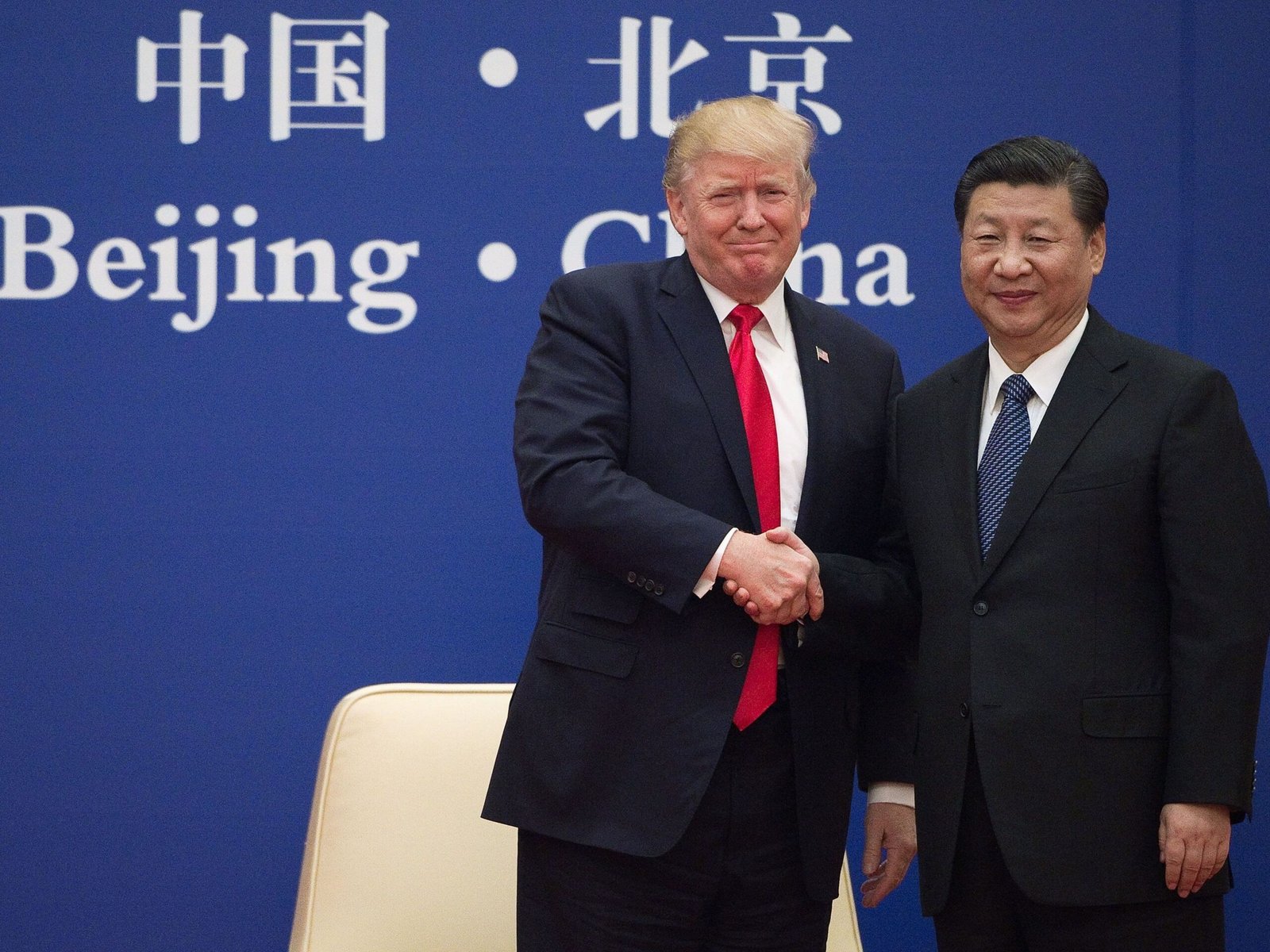
- The most consequential near-term economic variable may be Trump’s summit with Chinese President Xi Jinping, scheduled for May 14 — a meeting where a U.S.-China agreement to jointly pressure Iran toward a comprehensive deal could shift oil market expectations more dramatically than any battlefield development.
The Path to $5 Gasoline — and Who It Would Hurt
Tom Kloza, an independent oil analyst and adviser to Gulf Oil with three decades of market experience, told CNN Monday that pump prices could reach $4.75 a gallon this month and that $5 is now a live possibility rather than a tail risk. The national average has been rising consistently since Project Freedom began — Monday’s $4.46 was the worst reading since the summer of 2022, when Russia’s invasion of Ukraine pushed prices to a record $5.02.
The mechanics of how $114 Brent crude translates to $4.46 gasoline and then to a potential $5 are straightforward. Crude oil accounts for roughly 60% of a gallon of gasoline’s price. At $114 Brent, refiners are paying more for the crude they process — and passing that cost to distributors, who pass it to gas stations, who pass it to drivers. The pass-through has a lag of approximately two to four weeks, meaning the full impact of Monday’s Brent settlement price has not yet fully reached American pump prices.
| Oil Price → Pump Price Projection | Brent Crude | Est. US Avg. Gas Price | Timeline |
|---|---|---|---|
| Current | ~$112/barrel | $4.46/gallon | Today |
| If Hormuz remains closed | ~$115–$120/barrel | ~$4.75/gallon | 2–3 weeks |
| If full escalation resumes | ~$130+/barrel | ~$5.00+/gallon | 3–4 weeks |
| If Phase One deal signed | ~$85–$90/barrel | ~$3.40–$3.60/gallon | 2–3 weeks after deal |
The political stakes are as stark as the economic ones. A sustained period of $5 gasoline — even a few weeks — would represent the single most damaging domestic economic event for the Republican Party heading into November’s midterms. Trump’s approval rating on the war is already at 32%. Every cent above $4 a gallon is a daily visible reminder, at the most heavily frequented commercial transaction in American life, of the conflict’s cost.
Why $100 Oil Is Now the Floor, Not a Spike
Deutsche Bank analysts released a note Tuesday noting that renewed attacks in the Gulf — including Iran’s strike on the UAE’s Fujairah oil port — have cast doubt on the state of the ceasefire as both sides exert influence over the Strait. Their conclusion: $100 Brent is now structural, not episodic, as long as the Strait remains effectively closed.
The structural argument rests on three factors that have not been present in prior oil price spikes. First, the Strait carries approximately 20% of global seaborne oil — not a marginal share that can be easily routed around. Second, the alternative routing options — the East-West pipeline across Saudi Arabia and the Abu Dhabi Crude Oil Pipeline through the UAE — are operating at capacity and can absorb only a fraction of diverted Hormuz flows. Third, OPEC+ production capacity is constrained by the UAE’s reduced operations following Monday’s attack, limiting the ability to compensate for lost Gulf output through increased production elsewhere.
Goldman Sachs’s earlier projection of Brent falling to $85 following a Phase One deal — the framework that emerged from the Rubio-Araghchi call Sunday — is effectively suspended until the ceasefire review on Friday produces a clear outcome. The market is no longer pricing a deal as probable. It is pricing continued military activity as the base case.
What the Trump-Xi Summit Could Actually Do
Trump’s two-day summit with Chinese President Xi Jinping, scheduled for May 14 in Beijing, was postponed from its original March date specifically because of the Iran war. Its rescheduling — with the war still unresolved and oil above $100 — makes energy economics the dominant subtext of every conversation the two leaders will have.
China is the world’s largest importer of crude oil. Approximately one-third of all Chinese crude imports pass through the Strait of Hormuz. At $112 Brent, China is paying approximately $40 per barrel more for its oil than it was before the war began — a cost that flows through its economy in ways that create genuine political pressure on Beijing to contribute to a resolution.
The specific mechanism being discussed in pre-summit diplomatic channels is a joint U.S.-China statement pressing Iran to accept a comprehensive deal — one that includes nuclear concessions, not just Strait reopening. China has significant influence over Iran’s economic calculus: it is Iran’s largest trading partner and its primary buyer of sanctioned oil exports. A credible Chinese signal that it will reduce purchases unless Iran moves toward a deal would fundamentally alter Tehran’s negotiating posture.
Whether Xi will offer that signal at the May 14 summit — and whether Trump will offer something meaningful in return, such as a softening of the tech export controls that have been a central source of U.S.-China economic tension — is the most consequential diplomatic question of the next ten days.
The Federal Reserve’s Impossible Position — Again
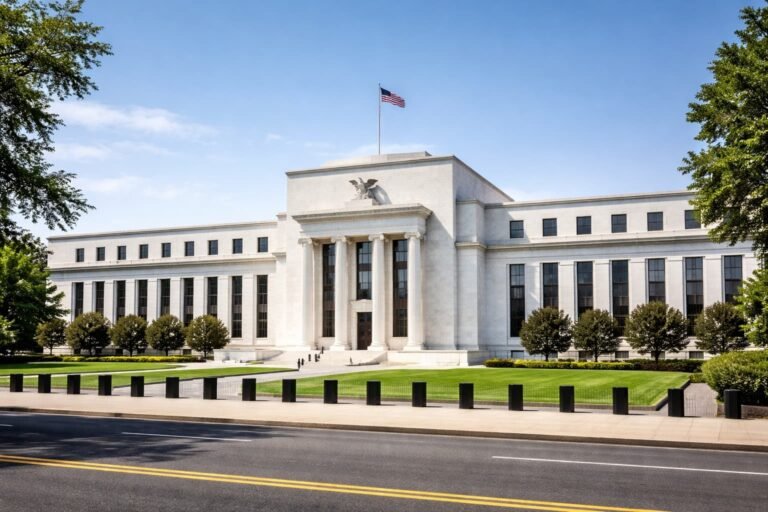
Kevin Warsh’s first week as Federal Reserve Chair has been defined by a situation Powell never faced: an oil price shock generating inflation while the labor market softens simultaneously. Tuesday’s oil market developments — Brent above $100, gasoline approaching $4.75 — reinforce exactly the combination that makes rate cuts politically and economically untenable.
Core PCE inflation strips out energy. But headline CPI does not. When the May CPI reading drops in mid-June, it will reflect April’s $4.46 gasoline directly. The Federal Reserve cannot ignore the political and consumer confidence consequences of a headline inflation surge even if its preferred metric stays contained. Warsh’s first FOMC meeting — scheduled for June — will be shaped by Friday’s ceasefire review as much as by Thursday’s April jobs report.
Friday is not just Iran’s deadline. It is the date around which the entire economic and monetary policy outlook for the rest of 2026 will pivot.