
WASHINGTON / LONDON, May 1, 2026 —
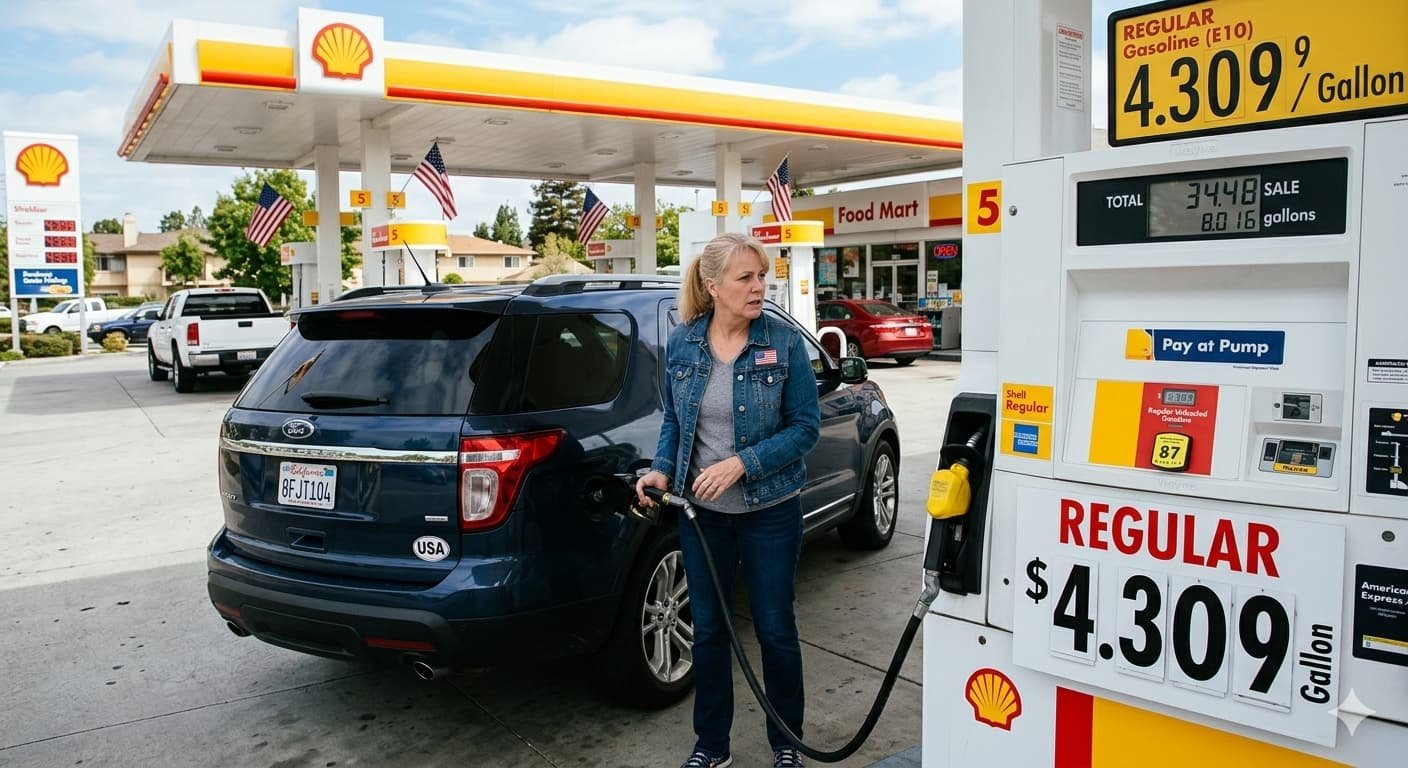
Brent crude oil surged past $126 a barrel in early trading Thursday — the highest price since July 2022 — as the Iran war entered its tenth week with no ceasefire extension in place, no confirmed date for a second round of peace talks, and fresh signals from Tehran that it will not accept any deal that does not include immediate removal of the U.S. naval blockade as a precondition. U.S. gasoline prices hit $4.30 a gallon nationally, according to the American Automobile Association — the highest since the summer of 2022 and a level that economists say will materially damage consumer spending heading into summer.
The price spike arrived the same morning that Q1 2026 GDP came in stronger than expected — driven largely by AI infrastructure investment and a surge in goods purchases ahead of tariff increases — but economists warned that the GDP number reflects economic conditions from January through March, before the full energy cost impact of the Iran war had passed through to consumers and businesses.
How We Got to $126
The path from $72 a barrel in early February — before the Iran war began — to $126 a barrel Thursday morning is a direct function of what happened to the Strait of Hormuz and the Gulf’s oil infrastructure.
At its peak before the war, the Strait handled roughly 21 million barrels of oil per day — approximately 20% of all seaborne oil globally. The combination of Iran’s effective closure of the Strait, the U.S. naval blockade of Iranian ports, ongoing combat operations that damaged two major offshore oil platforms in the Gulf, and Iran’s toll system on commercial shipping has reduced throughput to a fraction of pre-war levels. Shadow fleet tankers have partially circumvented the blockade, but the volume they are moving does not come close to replacing what has been removed from the market.
Goldman Sachs raised its Brent crude forecast to $90 last week. The market passed that level and kept going. The $126 reading Thursday morning reflects two additional drivers that Goldman’s April forecast did not fully account for: the UAE’s decision to exit OPEC effective May 1 — removing coordination on production volumes just as supply is already constrained — and Iran’s formal rejection of the U.S. peace proposal framework, which eliminated the market’s brief hope that a deal could be reached before summer.
What $126 Oil Means in Practical Terms
| Cost Category | Pre-War (Feb 2026) | Today (May 1, 2026) | Change |
|---|---|---|---|
| Brent crude | ~$72/barrel | $126/barrel | +75% |
| US average gasoline | ~$3.10/gallon | $4.30/gallon | +39% |
| Jet fuel (North America) | Baseline | +95% above baseline | +95% |
| Diesel (national average) | ~$3.40/gallon | ~$4.90/gallon | +44% |
| Heating oil (Northeast) | Baseline | Elevated | Significant |
| Goldman Sachs forecast | $80/barrel | $90/barrel (raised) | Already exceeded |
The diesel number matters as much as the gasoline number for household budgets — perhaps more. Diesel powers the trucks that move virtually every consumer good from warehouse to store. A 44% increase in diesel prices since February is a cost that freight carriers cannot absorb indefinitely. It passes through to the price of groceries, electronics, clothing, and household goods with a lag of approximately six to ten weeks. The full inflationary impact of $4.90 diesel has not yet appeared on store shelves.
What the Coast Guard Payday Crisis Adds
A detail buried beneath the oil price headlines Thursday: the U.S. Coast Guard is expected to run out of funding to pay its personnel beginning May 1, with the first missed paychecks projected for May 15. The Coast Guard — which has been conducting maritime security operations related to the Iran war, including monitoring shadow fleet tankers attempting to circumvent the blockade — would face a direct readiness impact if its personnel begin missing paychecks.
The funding gap stems from a continuing resolution that expires today. Congress has not passed a full appropriations bill for the fiscal year, and the Coast Guard’s operating budget falls in the same tranche as other Department of Homeland Security funding that has not been fully resolved. The White House said Thursday it is working to address the situation but offered no specific timeline for resolution.
The Federal Reserve’s Problem Just Got Worse
The oil price spike complicates the Federal Reserve’s already difficult position in ways that are directly measurable. Core PCE inflation — the Fed’s preferred measure — strips out food and energy. But headline inflation, which American households experience at the pump and in the grocery store, does not. At $4.30 gasoline, the Consumer Price Index reading for May — released in mid-June — will be materially higher than the April reading regardless of what happens to core goods and services prices.
Kevin Warsh, confirmed as Fed Chair by the Senate earlier this week and now running his first Federal Open Market Committee cycle as chair, inherits a central bank that cannot cut rates while energy-driven inflation is accelerating. The case for rate cuts — which was building on the back of slower GDP growth and moderating shelter costs — has been weakened significantly by a Brent crude price that is now 75% above its pre-war level.
The market response Thursday reflected exactly this tension. Oil prices surged. Treasury yields rose, as traders priced out near-term rate cuts. Mortgage rates, which had fallen below 6% in late April, moved back above 6.10% in early morning trading. The affordability window that opened for homebuyers last week narrowed materially within a single session.
Trump: “We Are Winning. Iran Is Losing.”
President Trump posted on Truth Social Thursday morning that the United States is winning the economic war with Iran and that Iran’s oil revenues have been cut by more than 60% since the blockade began. The post did not address the domestic gasoline price — $4.30 a gallon — which American drivers are paying as a direct consequence of the same disruption.
The political arithmetic of oil prices and presidential approval is well-documented and historically consistent. When gasoline exceeds $4 a gallon for more than three consecutive weeks, consumer confidence falls, presidential approval ratings decline, and congressional incumbents from both parties in competitive districts become vulnerable. The midterm elections are six months away. The Iran war has now produced a sustained gasoline price above $4 a gallon for the first time since 2022.
Iran’s response to Trump’s post was brief. A spokesperson for the foreign ministry said the country that cannot afford to fill its cars is not winning.