
WASHINGTON / STRAIT OF HORMUZ, May 5, 2026 —
The second day of Project Freedom — the U.S. military operation to escort commercial vessels through the Strait of Hormuz — has produced the most violent 24-hour period of the Iran war since the ceasefire was declared on April 13. American attack helicopters sank six Iranian fast-attack boats. Iran fired 19 missiles and drones at the United Arab Emirates, with UAE air defenses engaging every incoming projectile. A fire broke out at the Fujairah Oil Industry Zone, wounding three Indian nationals. Two U.S.-flagged merchant ships made it through the Strait under American protection. Hundreds more remain stranded.
Defense Secretary Pete Hegseth told reporters Tuesday morning that the ceasefire is “not over” — and that Iran has attacked U.S. forces more than ten times since it took effect.
What U.S. Central Command Confirmed
Admiral Brad Cooper, the commander of U.S. Central Command, briefed reporters Monday and provided the clearest military picture yet of what Project Freedom actually looked like on Day One.
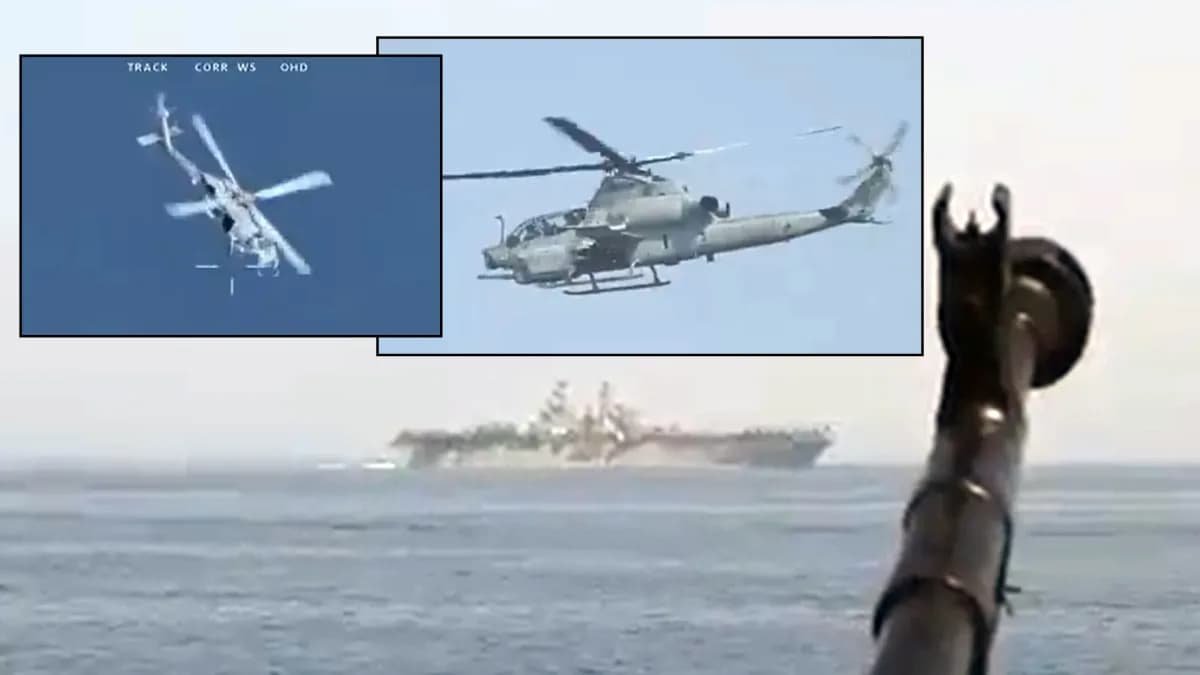
Iran launched multiple cruise missiles, drones, and small boats against U.S.-flagged vessels transiting the Strait under American protection. U.S. military helicopters sank six Iranian fast-attack craft and intercepted the drone and missile threats. Cooper said “each and every” threat was defeated — no U.S. vessels were struck. The South Korean-operated vessel that caught fire during the exchange will be towed to a nearby port for inspection and repairs. All 24 crew members, including six South Koreans, are safe.
Two U.S.-flagged merchant ships completed the transit on Day One. Cooper called this a success. Independent maritime analysts were considerably less enthusiastic. Two vessels through a Strait that once handled 21 million barrels of oil per day is not a reopening — it is a demonstration. Scaling the operation to the hundreds of stranded vessels waiting in the Gulf of Oman would require a level of sustained naval commitment that the U.S. has not yet publicly committed to, and that Iran has made clear it will contest with force.
“We Have Not Even Begun Yet”
Iran’s parliament speaker Mohammad Bagher Qalibaf issued the most alarming statement from Tehran on Tuesday morning. Speaking to the Iranian parliament, Qalibaf said the United States and its allies had jeopardized secure shipping in the Strait — and then delivered a line that sent oil markets immediately higher.
“We have not even begun yet,” he said.
The statement is either a bluff designed to deter further U.S. escort operations or an accurate description of Iran’s military calculus — that the fast-attack boats, mines, and drones deployed so far represent the opening phase of a confrontation Iran is prepared to escalate significantly. U.S. military officials have not publicly addressed which interpretation they believe is correct. The consequences of being wrong about that distinction are severe.
The UAE’s Position — and Why It Matters
| UAE Military Response to Monday’s Attacks | Detail |
|---|---|
| Missiles and drones fired by Iran | 19 confirmed |
| UAE air defenses engaged | All 19 |
| Fujairah oil facility | Fire — 3 Indian nationals wounded |
| UAE tanker targeted by 2 Iranian drones | Confirmed — no injuries |
| UAE airspace restriction | Partial closure — in effect until May 11 |
| UAE statement | Reserves the right to respond |
| UAE position on ceasefire | Condemned attacks — called them targeting of civilian sites |
The UAE has now sustained more incoming fire from Iran than any other country since the war began. Monday’s attack — 15 missiles and 4 drones, with UAE air defenses engaging all of them — was the first direct Iranian attack on UAE territory in several weeks. The partial closure of UAE airspace until May 11 is a direct operational consequence, forcing aircraft to use restricted corridors and adding cost and delay to the Gulf region’s aviation network.
The UAE’s reservation of the right to respond introduces a new military variable. The UAE operates an advanced air force and has shown willingness in prior regional conflicts to take independent military action. Whether it exercises that right — and if so, how — will determine whether this conflict expands beyond the U.S.-Iran bilateral framework.
Hegseth at the Pentagon — What He Said and Didn’t Say
Hegseth and Joint Chiefs Chairman General Dan Caine held a Pentagon briefing Tuesday morning. The key lines were revealing precisely because of what they left unresolved.
Hegseth said the ceasefire is “not over” — but acknowledged Iran has attacked U.S. forces more than ten times since it took effect. He said Project Freedom is “temporary” and “separate and distinct” from ongoing military operations. He said the U.S. is “not looking for a fight” but must act against the “aggressor.” He said Trump will determine whether any specific Iranian action constitutes a ceasefire violation.
He did not say what happens if Iran attacks again Wednesday. He did not describe what conditions would lead the administration to declare the ceasefire terminated. He did not address the parliament speaker’s “we have not even begun yet” statement. The briefing was designed to project calm without providing clarity — a communications posture that works in a stable situation and fails rapidly when the situation continues deteriorating.
Friday’s ceasefire review — announced by Iran’s foreign ministry as the date when “the current situation will be reassessed” — is now the defining deadline for the entire conflict. Four days from now, Iran will decide whether to extend, renegotiate, or abandon the ceasefire framework. The military activity in the Strait between now and Friday will almost certainly determine that decision.