
ISLAMABAD / WASHINGTON, April 25, 2026 —
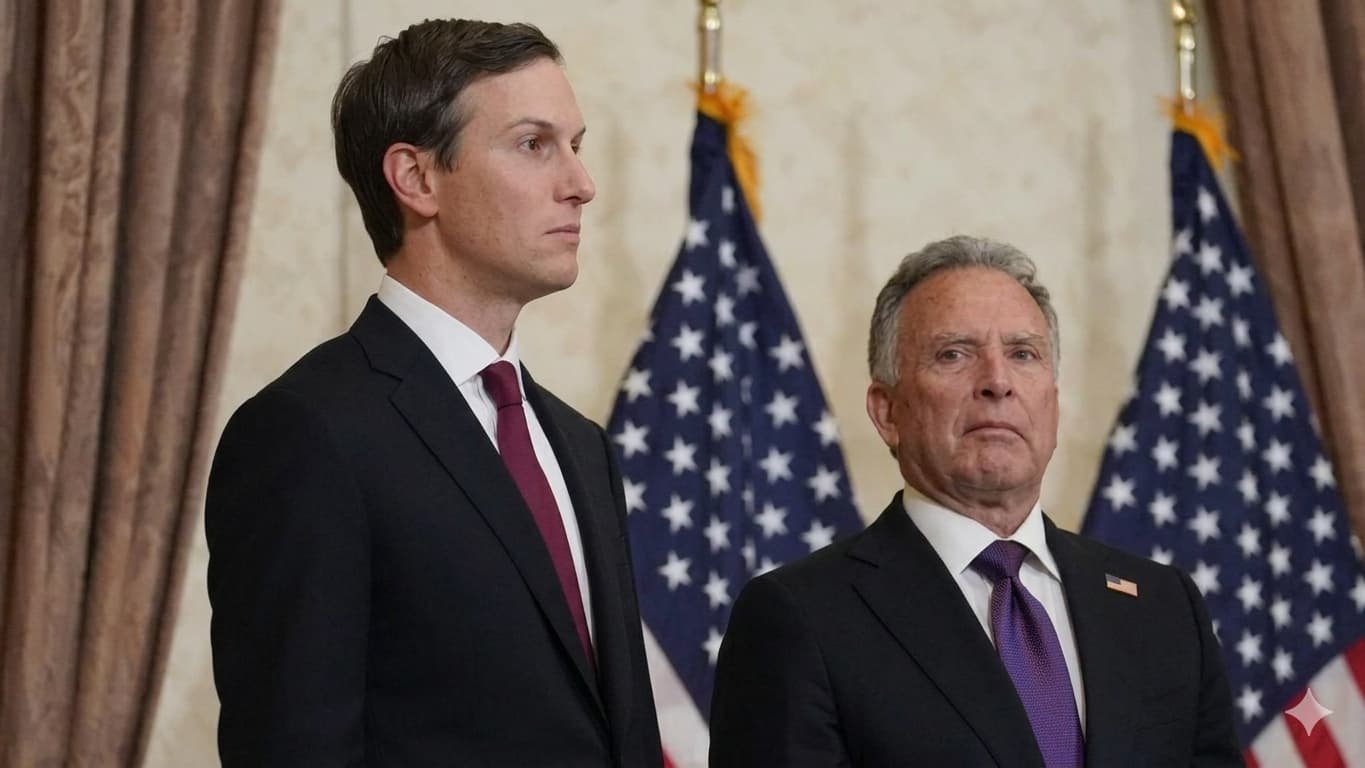
Steve Witkoff and Jared Kushner departed Saturday morning for Islamabad, Pakistan, where the White House says they will hold direct talks with Iranian negotiators — even as Iran’s Foreign Ministry posted publicly that no such meeting is planned and that Foreign Minister Abbas Araghchi is in Pakistan solely to meet with Pakistani officials.
The contradiction is not an accident. It is the defining feature of a diplomatic process in which both sides need to talk and neither side can afford to be seen as doing so on the other’s terms.
What the White House Said — and What Iran Said
White House press secretary Karoline Leavitt confirmed Friday evening that Witkoff and Kushner would depart Saturday for Pakistan. The Iranians, Leavitt said, had reached out and asked for the in-person conversation. President Trump was dispatching his two most trusted envoys to hear what Iran had to say, she added, expressing hope the visit would move the process toward a deal.
Iran’s Foreign Ministry spokesperson Esmaeil Baghaei posted almost simultaneously that no meeting between Iranian and American negotiators is planned. Araghchi’s presence in Pakistan, he wrote, is to consult with Pakistani officials in their capacity as mediators — not to sit across a table from the American delegation.
Pakistan has not contradicted either side. Prime Minister Shehbaz Sharif and Field Marshal Asim Munir have continued referring to the process as ongoing, framing their country’s role as a sustained diplomatic track rather than a series of discrete sessions. That framing allows both Iran and the United States to characterize whatever happens in Islamabad this weekend in whatever terms serve them politically.
Why Iran Cannot Be Seen Negotiating Under Duress
The internal politics driving Tehran’s public posture are straightforward. Iran is under a military blockade, has had commercial vessels seized by the United States Navy, is charging tolls on Strait of Hormuz shipping to generate revenue that offsets the blockade’s economic pressure, and is watching food prices in its allied territory of Gaza rise 85 percent since the war began.
Sitting down directly with American envoys in that context — and saying so publicly — risks looking like capitulation. Iran’s leadership has an internal audience as well as a foreign one. Supreme Leader Ayatollah Khamenei has given no public indication of where his red lines sit on a potential agreement, and Iranian hardliners have been vocal about their opposition to any deal that does not include a full lifting of the naval blockade as a precondition.
The result is a diplomatic format where both sides can claim whatever they need to claim, Pakistan absorbs the awkwardness, and the actual substance of any exchange remains entirely opaque until — or unless — a deal is announced.
What Has and Has Not Been Resolved Since Round One
| Issue | Status After Round One | Status Now |
|---|---|---|
| Strait of Hormuz reopening | Unresolved | Unresolved |
| US naval blockade | Active | Active — 33 ships redirected |
| Iran nuclear enrichment | Unresolved | Unresolved |
| Frozen Iranian assets | Unresolved | Unresolved |
| Iran toll collection on Hormuz | Not yet in place | Active — up to $20M/day |
| Lebanon ceasefire | Extended 3 weeks | Violated within 24 hours |
| Second round of talks | Unscheduled | Happening — or not — this weekend |
The American Journalist Still Held in Baghdad
One development that adds urgency to the diplomatic timeline is the situation of American journalist Shelley Kittleson, who was kidnapped in Baghdad last month by a pro-Iranian militia. Kittleson confirmed this week she was beaten, blindfolded, and zip-tied during the abduction. Her captivity gives Iran’s proxy networks a card that complicates any clean diplomatic resolution — and gives the American public a human face to attach to a conflict that has otherwise been dominated by oil prices and naval movements.
Trump said Friday he has all the time in the world and that Iran does not. The departure of Witkoff and Kushner for Islamabad on a Saturday morning suggests the administration is not quite as patient as that framing implies.