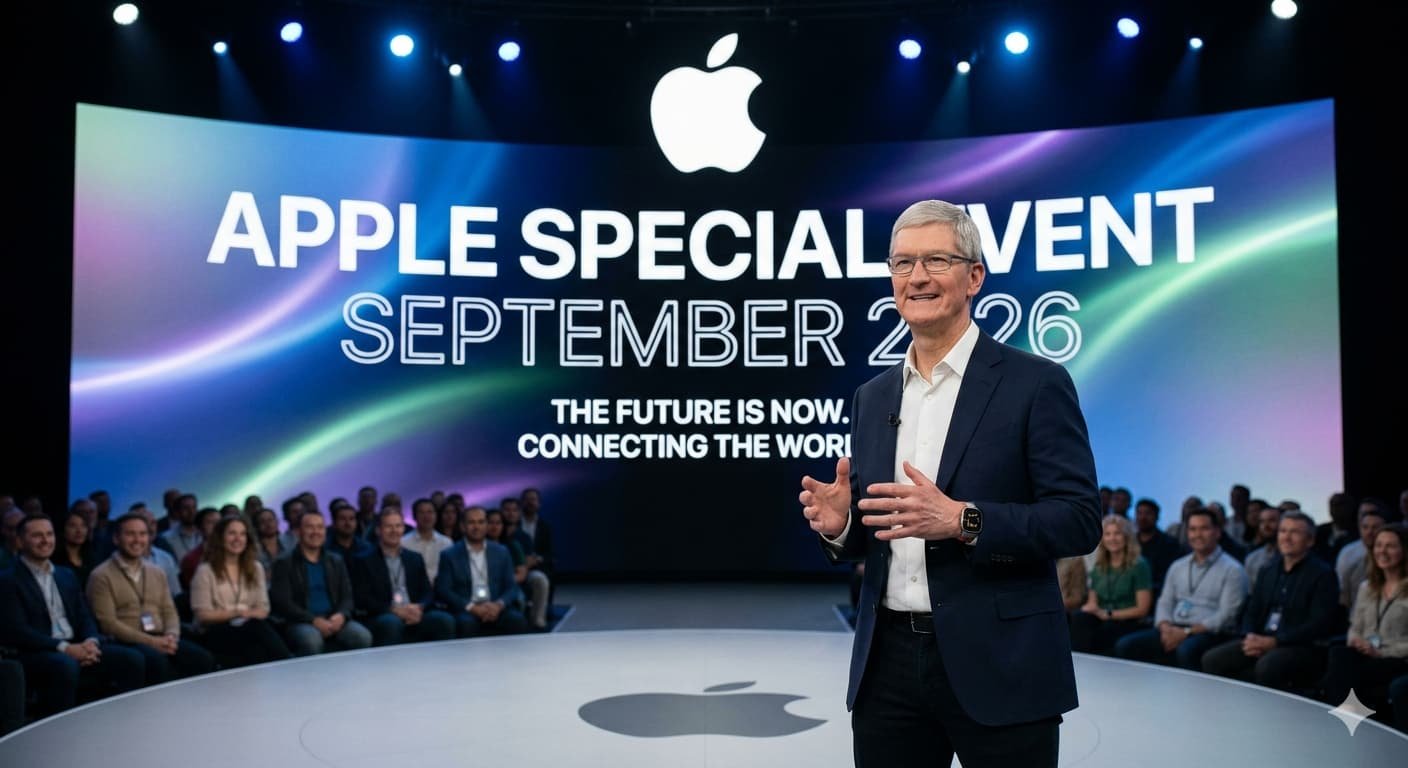

CUPERTINO, APRIL 22, 2026 —
Key Takeaways
- Tim Cook announced Monday he will step down as Apple CEO on August 31, 2026, ending a 15-year tenure that saw the company’s market capitalization grow from roughly $350 billion to more than $4 trillion — an appreciation of over 1,700% that made Apple the most valuable public company on earth for much of that period.
- His successor is John Ternus, 51, Apple’s senior vice president of Hardware Engineering, who joined the company in 2001 and has been the key engineering executive behind the iPhone, AirPods, Apple Watch, and every major hardware product line of the past decade. Ternus takes over September 1.
- Apple shares fell 2.5% Tuesday — a muted reaction that reflects both the long-anticipated nature of the succession and lingering Wall Street uncertainty about whether Ternus can deliver on the AI strategy that Cook was already midway through building when he decided to hand off the company.
The morning Apple announced that Tim Cook was stepping down, the company’s stock barely moved. That relative calm is itself a story — a measure of how thoroughly Cook transformed Apple from a company whose survival was inseparable from one man’s genius into an institution capable of absorbing a leadership transition without crisis. Whether Ternus can sustain that institutional strength while navigating the most consequential technology shift since the iPhone is the question that will define the next chapter of the world’s most closely watched company.
What Cook Actually Built
Cook took over from Steve Jobs in August 2011, six weeks before Jobs died of pancreatic cancer. The circumstances were about as difficult as any CEO succession in corporate history — inheriting a revered founder’s company while that founder was dying, in full public view, with the entire technology industry watching for signs of weakness.
Cook was not Jobs. He made no attempt to be. Where Jobs was a product visionary who imposed his aesthetic sensibility on everything Apple made, Cook was an operations genius — the architect of the supply chain that had already made Apple’s manufacturing the most efficient and profitable in the consumer electronics industry. He kept the design culture Jobs built intact, recruited exceptional creative and engineering talent, and applied his own discipline to the parts of the business Jobs had largely delegated.
The results speak without qualification. Under Cook, Apple launched the Apple Watch, AirPods, and Apple TV+. It built Apple Services — including the App Store, Apple Music, Apple Pay, and iCloud — into a business generating more than $100 billion annually, a revenue stream that has fundamentally changed how Wall Street values the company. It launched Apple Silicon, replacing Intel processors with custom chips that now power the world’s most efficient personal computers. It grew iPhone revenue from roughly $45 billion annually to more than $200 billion. And it guided Apple to a $4 trillion market capitalization — third in the world today behind Nvidia and Alphabet.
| Apple Under Tim Cook — Key Milestones | 2011 | 2026 |
|---|---|---|
| Market capitalization | ~$350 billion | ~$4 trillion |
| Annual revenue | ~$108 billion | ~$400+ billion |
| Services revenue | Minimal | $100+ billion/year |
| Share price appreciation | — | +1,700% |
| Employees (global) | ~60,000 | ~160,000 |
| Products launched | iPhone 4S era | Watch, AirPods, Silicon, Vision Pro |
The stumbles were real too. Apple Vision Pro — the mixed-reality headset Cook championed as the next great computing platform — launched at $3,499 and was largely ignored by consumers. Apple’s AI strategy lagged notably behind Google, Microsoft, and Meta in the early years of the large language model era, a gap that contributed to growing shareholder pressure and, industry observers believe, accelerated the timeline of Cook’s departure.
Who Is John Ternus
Ternus is 51, nearly the same age Cook was when he became CEO. He studied mechanical engineering at the University of Pennsylvania, graduated in 1997, briefly worked on virtual reality headsets at a small startup, and joined Apple’s product design team in 2001. He has spent his entire professional life, essentially, inside one company.
His fingerprints are on everything Apple has shipped over the past decade. He was instrumental in the development of iPad and AirPods. He oversaw the transition from Intel to Apple Silicon — the most technically complex platform shift in the company’s history since the move from PowerPC processors in 2005. He became Senior Vice President of Hardware Engineering in 2021 when his predecessor Dan Riccio stepped aside to lead the Vision Pro project.
Unlike Jobs, who was a marketer and product visionary, and unlike Cook, who was an operator and dealmaker, Ternus is an engineer. His instincts run toward hardware performance, product design, and manufacturing precision. That background positions him well for the hardware challenges ahead — the foldable iPhone widely expected to debut later this year, the next generation of Apple Silicon, and whatever the company is building in AI hardware — but raises legitimate questions about whether he has the external-facing skills to manage Apple’s relationships with regulators, government officials, and Wall Street at the scale Cook mastered.
Apple explicitly acknowledged this division of labor in its announcement: Cook, as executive chairman, will “assist with certain aspects of the company, including engaging with policymakers around the world.” The diplomacy stays with Cook. The product roadmap transfers to Ternus.
The Seven Challenges Waiting for Ternus on Day One
AI. Apple’s partnership with Google to integrate Gemini into Siri and Apple Intelligence represents a significant shift — and a significant dependency on a competitor. Building Apple’s own foundational AI capability, or acquiring it, is the most urgent strategic question Ternus inherits. OpenAI is expected to release hardware that competes with iPhone this year.
The post-iPhone question. The foldable iPhone addresses an incremental evolution of the existing product category. What comes after the iPhone as the primary computing device in a billion people’s pockets is the question every major tech company is racing to answer, and Apple has not yet shown its hand clearly.
Regulation. Global antitrust scrutiny of the App Store’s economics, Apple’s browser policies, and its payment systems has intensified across the US, EU, and Asia. Cook managed these relationships with exceptional diplomatic skill. Ternus has no public track record here.
Services growth. Apple TV+ has spent an estimated $25 to $30 billion on original content since 2019 with limited breakout success beyond The Morning Show and the F1 film. Deciding whether to go all-in on content like Netflix or redirect that capital is a decision Ternus will face early.
The Trump relationship. Cook built a direct personal relationship with Trump during his first term and maintained it carefully into the second. Ternus has no established relationship. In a regulatory and tariff environment where personal relationships between tech CEOs and the White House carry real commercial weight, rebuilding that connection is not optional.
Cook’s departure is not a crisis. It is a planned, orderly transition from one of the most successful CEOs in corporate history to a successor chosen through a years-long internal process. The measured market reaction — shares down 2.5%, not 10% — reflects that assessment. The harder question is whether Ternus can do what Cook never fully managed: make Apple a dominant force in AI before the window closes.