
WASHINGTON, APRIL 18, 2026 —
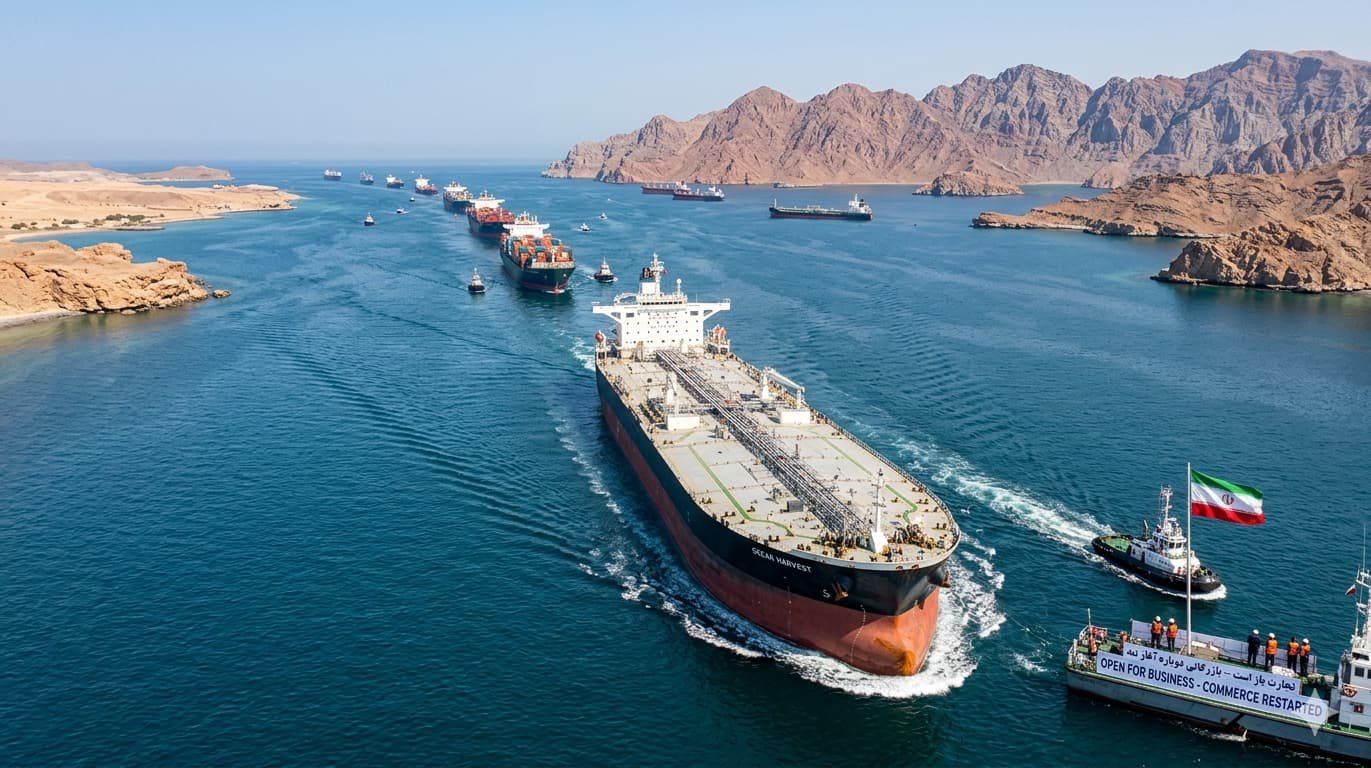
Iran declared the Strait of Hormuz “completely open” to commercial shipping Friday — the most significant development in the 49-day war between the United States, Israel, and Iran — as Pakistan’s foreign minister announced that a permanent peace agreement between Washington and Tehran is now more than 80% complete, with a second round of direct talks scheduled in Islamabad as early as this weekend.
The cascading diplomatic breakthroughs came hours after Israel and Lebanon’s 10-day ceasefire took effect Thursday evening, removing the single most contentious sticking point Iran had insisted on before agreeing to any deal with the United States. Oil prices collapsed on the Strait reopening news. Stocks surged to a third consecutive all-time record. The Strait of Hormuz — through which 20% of the world’s daily oil supply flows — had been effectively closed since the war began on February 28.
How Friday Unfolded
The Strait reopening was directly linked to the Lebanon ceasefire. Iran had signaled for weeks that it could not agree to reopen the waterway while Israeli strikes on Hezbollah in Lebanon continued. When Trump’s brokered 10-day Israel-Lebanon truce took effect at 5 p.m. Thursday, Iran moved within hours.
Iranian Foreign Minister Abbas Araghchi announced Friday that the Strait was open for all commercial vessels, effective immediately. Iranian state media confirmed commercial shipping could transit with coordination from Iran’s Armed Forces, and the Foreign Ministry stated that the Strait opening was Iran’s fulfillment of the obligations it agreed to under the original April 8 ceasefire framework.
Oil markets responded with extraordinary speed. U.S. crude collapsed 11.45% to $83.85 per barrel — its lowest level since March 10 and the second-largest single-day price drop since the war began. Brent crude fell more than 9% to $90.38. For a market that had seen oil spike as high as $119 per barrel at the war’s worst moment, the Strait reopening represents a genuine inflection point in the energy crisis that has squeezed American consumers for seven weeks.
The S&P 500 closed above 7,100 points for the first time in history Friday — its third consecutive record close. The Nasdaq posted its best week since May. The Dow surged more than 860 points, officially recovering all of its losses since the war began. All three major indexes closed higher for a third straight week.
Pakistan: Deal Is 80% Complete
The most striking statement of the day came not from Washington or Tehran but from Islamabad. Pakistan’s Foreign Minister Ishaq Dar, speaking at the Antalya Diplomacy Forum in Turkey, declared Friday that the U.S.-Iran peace agreement is “more than 80 percent” complete.
“What Pakistan wants to see is not the extension of the ceasefire, it’s the permanent end of the war,” Dar told the forum. “We have already crossed more than 80 percent of the work done. Both sides need to show flexibility.”
Those remarks represent the most concrete public assessment of the talks’ progress from any official directly involved in the mediation. Pakistan has served as the indispensable intermediary throughout the conflict — hosting the Islamabad talks last weekend, facilitating communication between Washington and Tehran, and deploying both its prime minister and army chief across the region this week in an extraordinary diplomatic blitz.
A second round of direct U.S.-Iran talks is set to take place in Islamabad as early as Monday, Iranian sources confirmed to CNN Friday. The Trump administration has not formally confirmed the date or location, but President Trump signaled in a rally in Phoenix Friday that a deal was imminent and would come “very quickly now that most of the points are already negotiated and agreed to.”
The Complication: The U.S. Blockade Remains
Despite Iran’s reopening of the Strait, the U.S. naval blockade of Iranian ports — distinct from the Strait itself — remained in full force Friday. Trump announced on Truth Social that the port blockade “ends as soon as the agreement gets signed.”
Iran’s Foreign Ministry warned that Tehran would “take the necessary measures” if the blockade continued. The U.S. position is that the Strait and the port blockade are separate instruments — the Strait carries international commercial traffic while the port blockade targets Iranian oil export revenue specifically. Iran sees the continued port blockade as a violation of the diplomatic momentum and a sign of bad faith.
The distinction matters enormously. Only a handful of commercial vessels actually transited the Strait on Friday, with shipping companies expressing caution about the stability of the reopening despite the formal announcement. The International Rescue Committee warned that even with the Strait declared open, disruption from weeks of closure would take “weeks if not months to clear” from supply chains. Shipping insurance costs remain elevated. Vessel operators want more than one day of reopening data before committing routes.
| War Status Snapshot — April 18, 2026 | |
|---|---|
| U.S.-Iran ceasefire expiry | April 21 |
| Strait of Hormuz status | Reopened to commercial vessels |
| U.S. port blockade | Continues until deal signed |
| Peace deal completion (Pakistan estimate) | 80%+ |
| Next round of talks | Islamabad, as early as Monday |
| Israel-Lebanon ceasefire | 10-day, took effect April 17 |
| Brent crude Friday | $90.38/barrel (was $119 at peak) |
| S&P 500 | 7,100+ (third straight record close) |
| Total war death toll | 5,000+ across Middle East |
What Trump Said in Phoenix
At a campaign-style rally in Phoenix Friday, Trump offered the most detailed description yet of what a peace agreement with Iran would look like from the American side. The deal, he said, would involve the United States taking control of Iran’s nuclear material — removing it from Iran’s territory — as a verifiable guarantee against nuclear weapons development.
Iranian officials quickly disputed that characterization, stating that Iran would not agree to foreign control of its nuclear program. But the public debate over the nuclear material question — whether it is removed, diluted, or placed under international monitoring — is the same core dispute that collapsed the Islamabad talks last Saturday. The fact that both sides are debating the shape of a nuclear resolution publicly, rather than refusing to engage, is itself evidence that the 80% estimate is not implausible.
The ceasefire expires in three days. The next 72 hours will determine whether the diplomatic momentum of this week — the Lebanon truce, the Strait reopening, the 80% declaration — converts into a permanent agreement, or whether the remaining 20% proves as stubborn as the first 80% was hard-won.