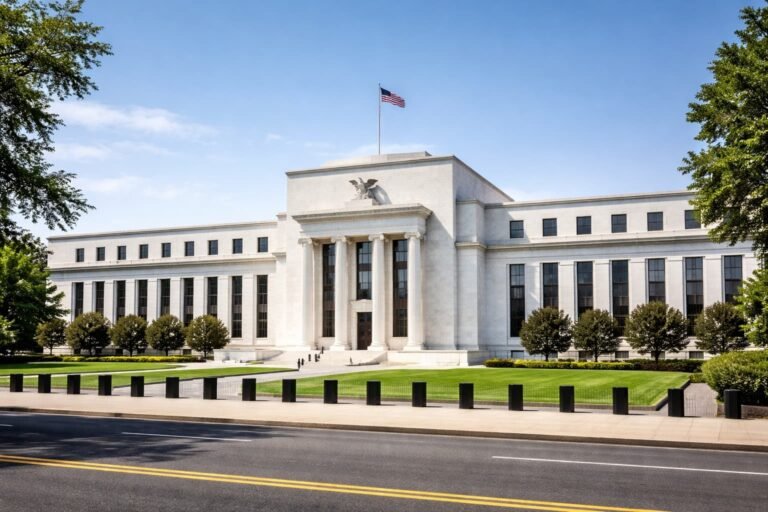

WASHINGTON, APRIL 15, 2026 —
Key Takeaways
- The biggest overhaul of the federal student loan system in decades takes effect July 1, 2026, eliminating the popular SAVE repayment plan, eliminating the Grad PLUS borrowing program, and reducing the repayment options available to new borrowers from roughly 12 plans down to just two.
- More than 12 million federal student loan borrowers are currently delinquent or in default — one in four of all borrowers — and the July restructuring will force 7.5 million people currently on the SAVE plan to choose a new repayment option within 90 days or be automatically enrolled in a plan they may not have selected.
- Loan forgiveness is now taxable as of January 1, 2026 — meaning borrowers who receive debt cancellation this year could face a surprise federal tax bill of thousands or tens of thousands of dollars they did not plan for.
America’s 43 million federal student loan borrowers are heading toward a July 1 deadline that most of them are not prepared for. The most sweeping restructuring of federal student loan policy in a generation — embedded inside the One Big Beautiful Bill Act signed into law July 4, 2025 — goes fully into effect in 11 weeks. And the combination of eliminations, new plans, new borrowing caps, and new tax consequences is so complex that even financial aid professionals describe it as one of the most confusing policy environments ever created for borrowers.
The consequences of not understanding what is changing — or of missing the deadlines involved — range from higher monthly payments than necessary to unexpected tax bills to automatic enrollment in the wrong repayment plan.
What the SAVE Plan Elimination Means for 7.5 Million Borrowers
The SAVE plan — the Biden administration’s income-driven repayment program that capped payments at 5% of discretionary income and offered fast-tracked forgiveness — is finished. A December 2025 settlement agreement formally ended years of legal challenges, and the Department of Education has already begun notifying the 7.5 million borrowers currently enrolled that they must exit the plan.
Starting July 1, those borrowers have a 90-day window to select a new repayment plan. Borrowers who do not actively choose a plan by their servicer-communicated deadline will be automatically enrolled into the new Tiered Standard Plan — a plan with fixed monthly payments stretched over 10 to 25 years depending on total debt. For a borrower accustomed to the SAVE plan’s income-driven structure, that automatic enrollment could mean a dramatically higher monthly payment than they are prepared to absorb.
Importantly, interest has already been accruing on SAVE plan accounts since August 1, 2025 — meaning borrowers who assumed their balance was frozen have been quietly watching it grow for months. A borrower with a $57,000 balance at 6.7% interest has accumulated over $2,500 in additional debt since that date, according to financial aid calculations reviewed by multiple news outlets.
The New Two-Plan System — Standard or RAP
For all federal loans disbursed on or after July 1, 2026, new borrowers will have exactly two repayment options.
The new Tiered Standard Plan offers fixed monthly payments with repayment terms of 10, 15, 20, or 25 years depending on total loan balance. Those who owe under $25,000 pay over 10 years. Those who owe between $25,000 and $49,999 pay over 15 years. Balances from $50,000 to $99,999 carry a 20-year term. And balances above $100,000 extend to 25 years.
The Repayment Assistance Plan, or RAP, is the new income-driven option. Payments under RAP are set at 1% to 10% of adjusted gross income, with a minimum monthly payment of $10 regardless of income. The key benefit of RAP is that unpaid interest is waived each month as long as the borrower makes their required payment — meaning balances cannot grow even if income is very low. Forgiveness is available after 30 years under RAP, which is longer than the 20 to 25 years borrowers could access under most prior income-driven plans.
| Old vs. New Student Loan Repayment Landscape | Before July 1, 2026 | After July 1, 2026 |
|---|---|---|
| Repayment plan options (new borrowers) | ~12 plans | 2 plans (Standard or RAP) |
| SAVE plan | Active | Eliminated |
| Grad PLUS borrowing | Up to full cost of attendance | Eliminated |
| Graduate student annual borrowing limit | Unlimited (Grad PLUS) | $20,500/year |
| Professional student annual limit | Unlimited (Grad PLUS) | $50,000/year |
| Parent PLUS annual limit | Up to cost of attendance | $20,000/year |
| RAP forgiveness window | N/A | 30 years |
| Loan forgiveness tax treatment | Tax-free (federal) | Taxable as ordinary income |
The Taxable Forgiveness Trap Most Borrowers Haven’t Heard Of
One of the least-discussed but most financially consequential changes took effect on January 1, 2026 — not July 1. The temporary federal tax exemption on student loan forgiveness, which had been in place since 2021, expired at the end of 2025 and was not renewed by Congress.
This means that any borrower who receives income-driven repayment forgiveness in 2026 will owe federal income taxes on the cancelled amount — treating it as ordinary income in the year it is discharged. For a borrower with $50,000 in cancelled debt and a gross income of $65,000, the tax liability from that cancellation alone could exceed $10,000 in additional federal taxes owed on their 2026 return.
Public Service Loan Forgiveness remains tax-free under federal law, as it was created by Congress and carries separate protections. But income-driven repayment forgiveness — the type earned after 20, 25, or now 30 years of qualifying payments — is fully taxable in 2026.
Borrowers who received forgiveness in 2025 and applied before December 31 may still qualify for tax-free treatment if their application was pending in the Education Department’s processing backlog. But those whose forgiveness is officially granted in 2026 or later owe taxes.
The Graduate Borrowing Cliff
The elimination of the Grad PLUS loan program effective July 1, 2026 is the change most likely to reshape which Americans can realistically attend certain graduate and professional programs going forward.
Previously, graduate students could borrow up to the full cost of attendance through Grad PLUS loans — covering tuition, fees, housing, and living costs at any accredited institution. That unlimited borrowing option ends completely for new borrowers after July 1.
Graduate students will be capped at $20,500 per year, with a lifetime maximum of $100,000. Professional students in law and medicine can borrow up to $50,000 per year with a $200,000 lifetime cap. The Department of Education has made specific program classifications — and notably, nursing, public health, and social work programs have been classified as graduate rather than professional, meaning those students face the lower $20,500 annual cap rather than the higher professional limit.
For nursing programs at expensive private universities, that gap could be $30,000 to $50,000 per year. The practical result is that lower- and middle-income borrowers who cannot bridge that gap through savings, scholarships, or family support may be unable to complete those programs at all.
What This Means For You
If you are currently on the SAVE plan: Do not wait for your servicer to contact you. Contact them now and ask to be enrolled in the Income-Based Repayment plan if you want an income-driven option, or evaluate whether RAP’s 1-10% income-based payment structure makes sense for your income level. Do this before July 1 to maintain control of your plan selection.
If you have Parent PLUS loans and believe you may qualify for Public Service Loan Forgiveness: You must consolidate into a Direct Consolidation Loan and enroll in an Income-Based Repayment plan before June 30, 2026 — just 11 weeks away. After that date, the consolidation pathway that enables PSLF eligibility for Parent PLUS loans closes.
If you are expecting loan forgiveness this year: Work with a tax professional immediately to understand your 2026 tax liability. The forgiven amount will be added to your gross income and taxed at your marginal rate.