
WASHINGTON, APRIL 14, 2026 —
The United States Navy began enforcing a full blockade of Iranian ports Monday morning, sending oil prices above $100 a barrel for the first time since last week’s brief spike — before markets partially recovered late in the session on signals that a new round of diplomacy may still be possible.
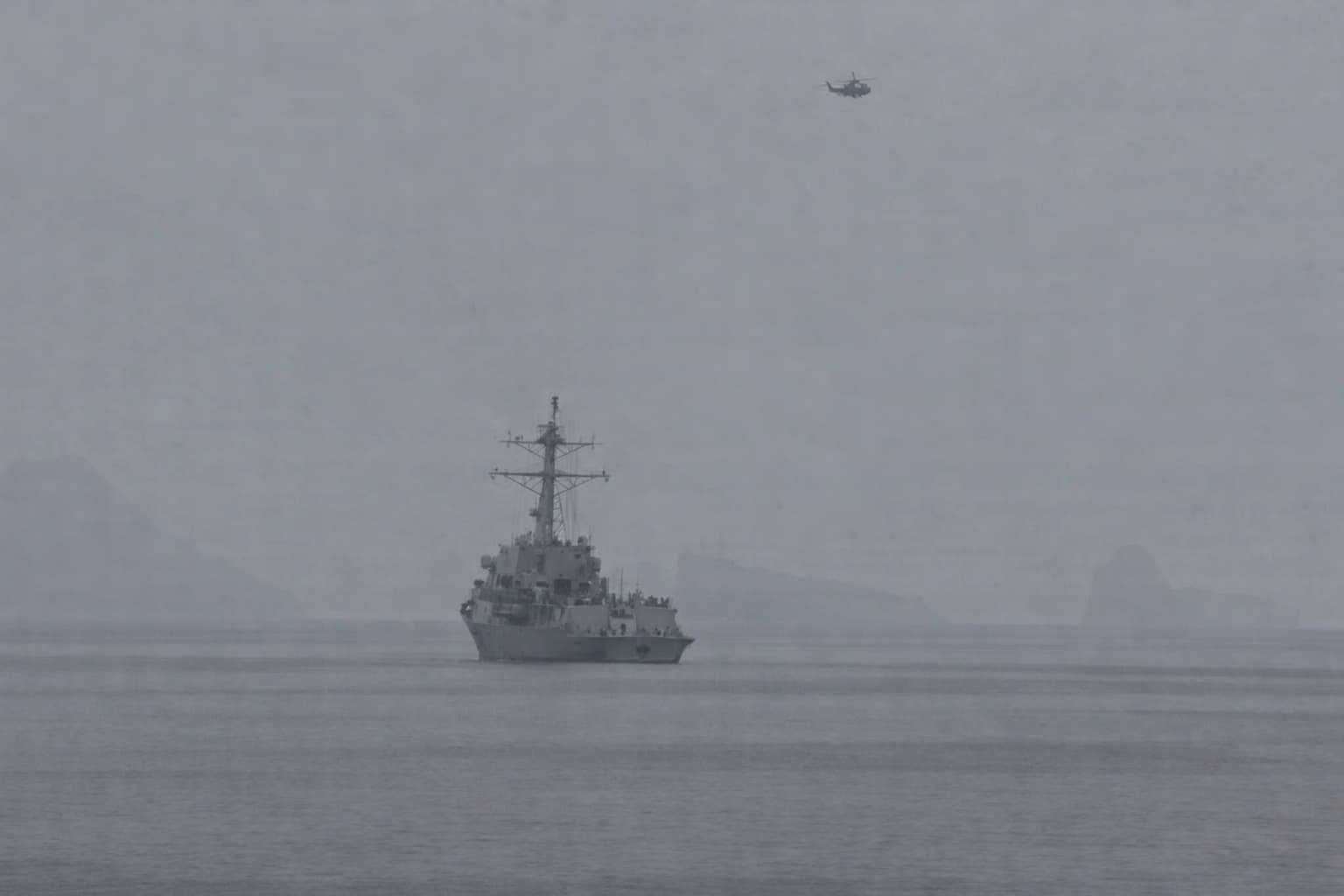
The blockade took effect at 10 a.m. Eastern Time Monday as U.S. Central Command confirmed its naval forces were interdicting all maritime traffic entering and exiting Iranian ports and coastal areas, including ports on the Arabian Gulf and Gulf of Oman. CENTCOM specified the action would not impede freedom of navigation for vessels transiting to non-Iranian ports — a slight narrowing from President Trump’s sweeping Sunday declaration that the Navy would block all ships from entering or leaving the Strait of Hormuz entirely.
Oil’s Volatile Monday — and What Drove the Recovery
Brent crude — the international benchmark — jumped as high as $103 a barrel when markets opened, a gain of more than 8% from Friday’s close. West Texas Intermediate climbed above $104 at its peak. Both figures represented the first time either benchmark had crossed the $100 threshold since a brief spike earlier in the conflict.
By end of session, prices had retreated sharply. Brent settled at approximately $98 a barrel and WTI at $97.82, after reports emerged that U.S. and Iranian officials are in active discussions about holding a new round of negotiations before the two-week ceasefire expires on April 22. The goal, according to people familiar with the matter, is to get both sides back to a table — potentially through Pakistan’s continued mediation — before the clock runs out.
American motorists felt the Monday surge immediately. The national average price of a gallon of regular unleaded gasoline rose to $4.12, according to AAA — up more than $1.20 per gallon since the war began on February 28. Iran’s parliamentary speaker taunted American consumers on social media Monday, writing that with the blockade, they would soon be “nostalgic for $4 to $5 gas.”
What the Blockade Actually Does — and What It Doesn’t
The distinction between Trump’s Sunday announcement and CENTCOM’s operational order matters enormously for global energy markets. Trump’s Truth Social post declared a blockade of all ships trying to enter or leave the Strait of Hormuz. CENTCOM’s clarification the following day specified that only vessels traveling to and from Iranian ports would be interdicted — meaning tankers carrying Gulf state oil from Saudi Arabia, the UAE, Kuwait, and Iraq through the Strait are not subject to blockade.
That clarification prevented what would have been an immediate and catastrophic escalation for global energy markets. Saudi Arabia and the UAE have alternative export routes that bypass the Strait — though with limited capacity — and the assurance that their tankers could transit freely prevented what analysts warned could have been an immediate price spike to $120 or above.
Iran itself exports approximately 1.85 million barrels of oil per day, nearly all of it to China. Cutting off that flow removes roughly 4% of global oil supply from markets already strained by the near-total shutdown of Strait of Hormuz traffic since late February.
| Energy Market Snapshot — April 14, 2026 | Figure |
|---|---|
| Brent crude settlement | ~$98/barrel |
| WTI crude settlement | ~$97.82/barrel |
| Brent gain since war began (Feb 28) | +40% |
| WTI gain since war began | +50%+ |
| US national gas price average | $4.12/gallon |
| Daily Strait of Hormuz ship transits (pre-war) | ~129 |
| Daily transits in April 2026 | ~10 |
Iran’s Response and the Military Risk
Iran’s military issued direct warnings Monday that any military vessels approaching the Strait of Hormuz would face severe consequences. The Islamic Revolutionary Guard Corps Navy stated it retained “smart control” of the Strait and warned that any interference would be treated as a ceasefire violation.
Trump responded on Truth Social by threatening to target what he called Iran’s “fast attack ships” — small, fast Iranian naval vessels known for harassing commercial shipping — warning they would be “immediately eliminated” if they came near the blockade.
The exchange raised concerns among security analysts about the risk of miscalculation. A single confrontation between U.S. and Iranian naval forces in the confined waters of the Strait could shatter the fragile ceasefire and trigger a resumption of full-scale air strikes.
Stocks ended Monday in positive territory, recovering from a weak open. The S&P 500 rose 1% to close at 6,886. The Dow Jones Industrial Average added 302 points. The Nasdaq gained 1.2%. Investors concluded the blockade — while dangerous — appeared designed more as a negotiating pressure tactic than a deliberate escalation toward renewed combat.
The Path Forward
The ceasefire formally expires April 22. That gives diplomats eight days to produce a framework agreement — or at minimum an extension — before the conflict risks entering its most dangerous phase. The core issues remain unchanged: Iran will not abandon uranium enrichment, and the United States will not accept anything less than a binding commitment against nuclear weapons development.
Pakistan, which has served as the primary mediator throughout the conflict, said Monday it would continue its facilitation role. The United Kingdom is working to build a broader international coalition to secure Strait passage and add diplomatic pressure on both sides. China — which depends on Iranian oil and has direct economic interests in seeing the Strait reopen — has so far remained on the sidelines but faces mounting pressure from its own industries as the energy disruption deepens.
For American households watching their gas bills climb and their grocery costs rise, the next eight days carry enormous weight. Every day the Strait remains effectively closed adds pressure to inflation, supply chains, and the Federal Reserve’s already complicated decision-making on interest rates.