
SAN DIEGO, APRIL 10, 2026 —
Ten days after launching from Kennedy Space Center on the most ambitious human spaceflight in half a century, the four astronauts of NASA’s Artemis II mission are hours from splashdown in the Pacific Ocean off the coast of San Diego — completing the first crewed lunar flyby since Apollo 17 in December 1972 and returning the first humans to travel beyond low Earth orbit in 53 years.
Splashdown is scheduled for 8:07 PM Eastern / 5:07 PM Pacific on Friday, April 10. Live coverage begins at 6:30 PM Eastern on NASA’s YouTube channel, ABC News Live, Disney+, Hulu, and Netflix. Recovery teams aboard the USS John P. Murtha are already positioned in the Pacific, with U.S. Navy helicopters ready to extract the crew from the water within minutes of splashdown.
The Last Hours — What Is Happening Right Now
The Artemis II crew — Commander Reid Wiseman, Pilot Victor Glover, Mission Specialist Christina Koch, and Canadian Space Agency astronaut Jeremy Hansen — spent their final full day in space on Thursday connecting by radio with the crew of the International Space Station in what NASA described as the first time a Moon crew and a station crew have spoken to each other simultaneously in the history of human spaceflight.
The crew is now approximately 80,000 miles from Earth and closing fast, traveling at over 4,500 miles per hour. Orion’s onboard systems — the life support, navigation, propulsion, and communication equipment that the entire Artemis program depends on — have performed almost without exception exactly as designed.
The most dangerous phase of the mission is still ahead: reentry.
Reentry — The Six-Minute Blackout
Returning from the Moon is fundamentally different from returning from the International Space Station. The Orion capsule will enter Earth’s atmosphere at approximately 25,000 miles per hour — more than 30 times the speed of sound — generating temperatures on the heat shield of up to 5,000 degrees Fahrenheit. For comparison, the surface of the sun is approximately 10,000 degrees.
As the plasma generated by this reentry engulfs the capsule, it will block all radio signals. Mission Control in Houston will go dark. The crew will be unreachable. This communications blackout lasts approximately six minutes — at which point either the capsule emerges safely or it does not.
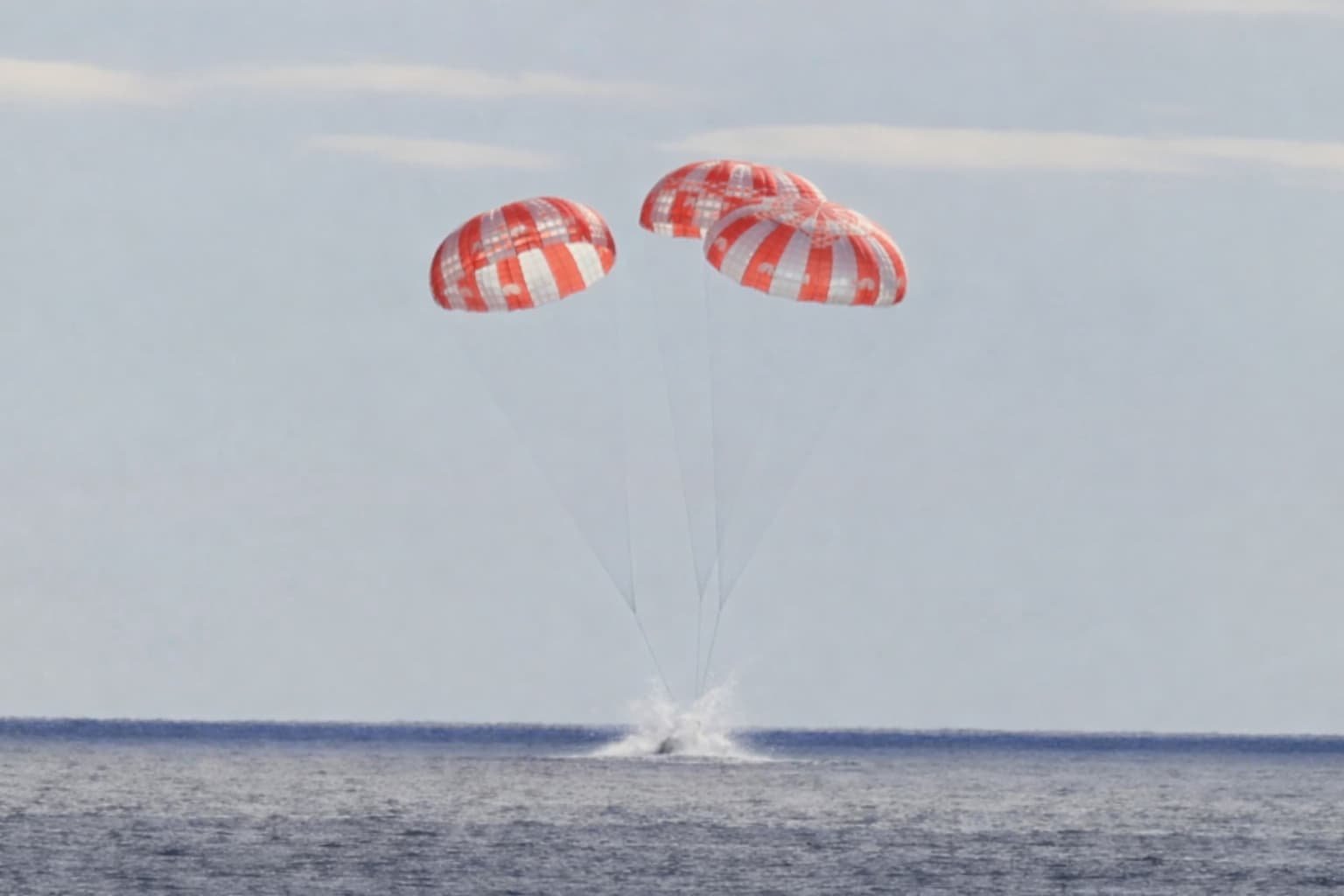
After emerging from blackout, Orion will still be traveling too fast for safe ocean landing. A sequence of parachutes deploys:
- At 22,000 feet — two drogue parachutes slow the capsule from ~300 mph
- At 6,000 feet — three main parachutes unfurl, slowing Orion to approximately 20 mph at splashdown
- Navy divers enter the water immediately, the crew is extracted by helicopter within minutes
Retired NASA astronaut Barry Wilmore described the challenge: “The speeds are much, much greater coming back from deep space. Everything’s different.”
What the Mission Accomplished
Artemis II was a test flight, not a science mission — its primary objective was to verify that the Orion spacecraft’s systems work reliably with humans aboard in the deep space radiation environment. By every public metric, it succeeded.
The crew:
- Left Earth orbit for the first time since Apollo 17 — December 1972
- Broke the human spaceflight distance record on April 6, reaching 252,760 miles from Earth — surpassing Apollo 13’s 56-year-old record by more than 4,000 miles
- Observed portions of the Moon’s far side with human eyes for the first time in history
- Witnessed a total solar eclipse from behind the Moon — an event no human being had ever seen from that vantage point
- Photographed 35 pre-selected geological features on the lunar surface to guide future landing missions
- Completed manual piloting tests, life support verifications, navigation checks, and proximity operations exercises that will directly inform Artemis III and IV
Victor Glover — the first Black astronaut assigned to a lunar mission — said from space that seeing Earth from this distance “brings home the beauty of creation” and the fact that humanity exists as one on “a whole bunch of nothing, this thing we call the universe.”
What Comes Next — The Road to the Moon
Artemis II was Step 2. Here is what follows:
Artemis III (2027): Four astronauts travel to lunar orbit and practice docking with the SpaceX-built Human Landing System. No surface landing.
Artemis IV (2028): Two astronauts land near the lunar south pole — humanity’s first return to the Moon’s surface since December 1972. The south pole is the target because its permanently shadowed craters are believed to contain water ice — the key resource for a permanent lunar base and eventual Mars missions.
Tonight’s splashdown is the last major milestone before that 2028 moon landing. If the heat shield holds, if the parachutes deploy, if the crew surfaces safely off San Diego — the Moon landing is two years away.
Artemis II — Mission at a Glance
| Milestone | Date / Detail |
|---|---|
| Launch | April 1 — Kennedy Space Center |
| Translunar injection burn | April 2 — Left Earth orbit |
| Distance record broken | April 6 — 252,760 miles |
| Lunar flyby | April 6 — 4,070 miles from surface |
| Far side observation | April 6 — First in human history |
| Total solar eclipse from Moon | April 6 — Never seen before by humans |
| Mission duration | 10 days |
| Splashdown | April 10 — 8:07 PM ET off San Diego |
| Next mission (Artemis III) | 2027 |
| First Moon landing (Artemis IV) | 2028 |