
HOUSTON, APRIL 3, 2026 —
Key Takeaways
- The Artemis II crew completed the translunar injection burn successfully on Thursday evening — the engine firing that pushed the Orion capsule out of Earth orbit and onto a trajectory toward the Moon, the first time humans have left Earth orbit since Apollo 17 in December 1972
- The four astronauts — Reid Wiseman, Victor Glover, Christina Koch, and Jeremy Hansen — are now approximately 100,000 miles from Earth and traveling at roughly 2,000 miles per hour toward the lunar flyby scheduled for April 6
- On April 6, the crew will come within 6,000 miles of the lunar surface, breaking the human spaceflight distance record of 248,655 miles set by Apollo 13 in 1970 — and becoming the first humans to see portions of the far side of the Moon up close
They are on their way. As of Thursday morning, the four astronauts of NASA’s Artemis II mission have left Earth orbit and are coasting through deep space toward the Moon — a sentence that has not been true about any human being since December 1972.
The translunar injection burn — the critical engine firing that breaks a spacecraft free from Earth’s gravitational pull and sends it on a trajectory toward the Moon — was completed successfully Thursday evening. The burn lasted approximately six minutes, accelerating the Orion capsule by roughly 900 miles per hour on top of its orbital velocity. When it was done, the crew was no longer in orbit around Earth. They were heading somewhere else entirely.
For the first time in 53 years, humans are in transit to the Moon.
What the Crew Has Been Doing Since Launch
The mission is now in its second full day. Here is what has happened since liftoff and what comes next.
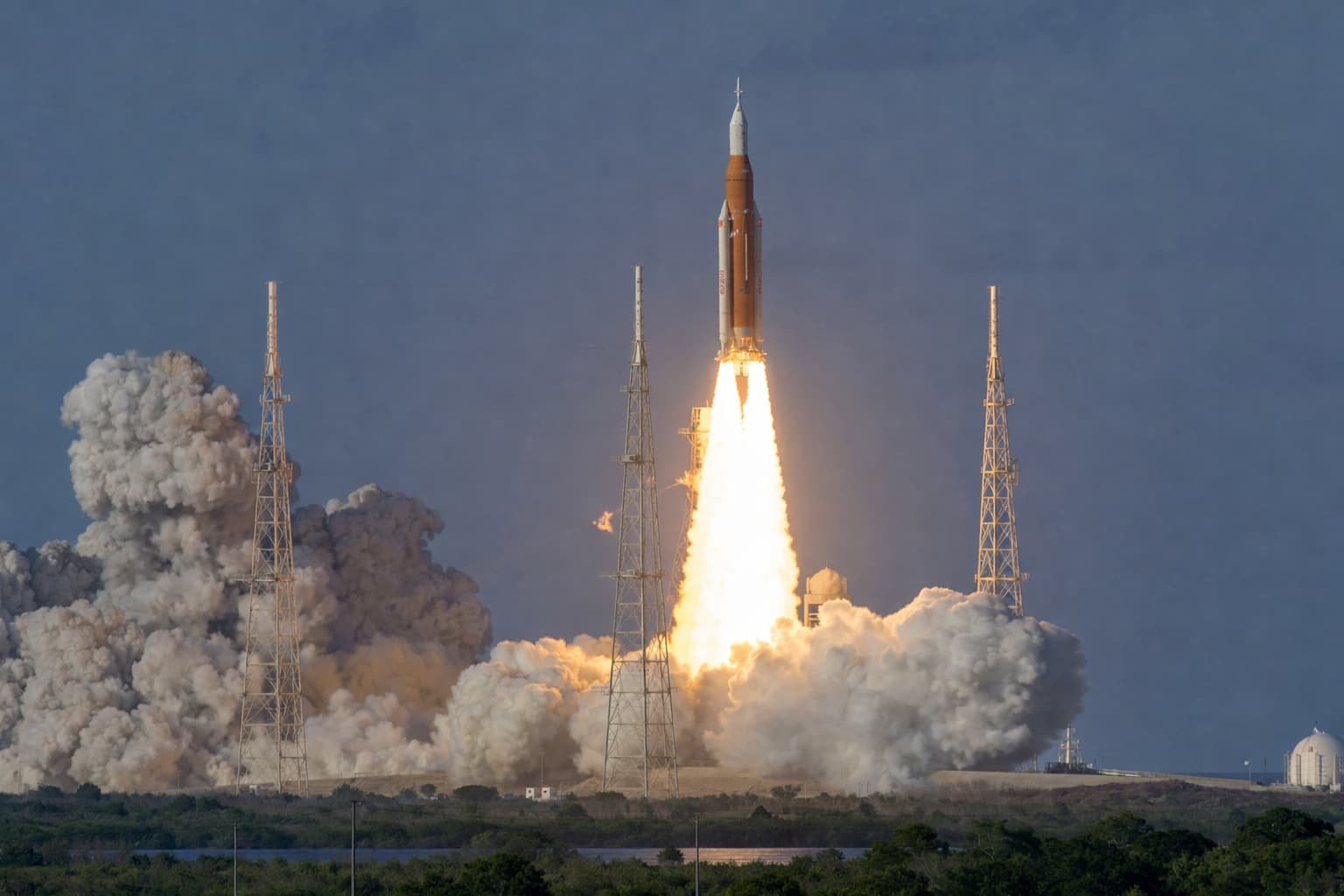
Wednesday, April 1 — Launch day. The Space Launch System lifted off from Kennedy Space Center’s Launch Complex 39B at 6:35 PM ET. The rocket performed flawlessly. Pilot Victor Glover completed a manual test drive of the Orion capsule approximately one hour after launch — the first time a human has manually piloted a spacecraft this far from Earth in the modern era. The crew then slept in shifts to prepare for the demands of the mission ahead.
Thursday, April 2 — Day 2. The crew performed a perigee raise burn to adjust Orion’s orbital path around Earth in preparation for the translunar injection. The four astronauts gave their first in-mission interview from space — describing toilet operations in zero gravity, the view of Earth from the capsule windows, and the surprisingly manageable transition to weightlessness. Commander Wiseman described the sight of Earth receding as “unlike anything you can prepare for.”
Thursday evening, the translunar injection burn sent Orion on its path to the Moon. Earth is now behind them. The Moon is ahead.
Artemis II Mission Timeline — Where They Are and What’s Next
| Date | Event |
|---|---|
| April 1 — 6:35 PM ET | Launch from Kennedy Space Center |
| April 2 — Morning | Perigee raise burn — orbital adjustment |
| April 2 — Evening | Translunar injection burn — left Earth orbit |
| April 3 — Now | Coasting through deep space — ~100,000 miles from Earth |
| April 6 | Lunar flyby — within 6,000 miles of Moon surface |
| April 6 | Record broken — 252,000 miles from Earth |
| April 6–9 | Free-return trajectory back toward Earth |
| April 10 | Pacific Ocean splashdown near San Diego |
Why the April 6 Flyby Is the Mission’s Most Important Moment
The lunar flyby on April 6 is the technical and emotional heart of Artemis II. The crew will swing around the Moon using lunar gravity to bend their trajectory back toward Earth — a free-return path similar to Apollo 13’s in 1970 — but they will come far closer to the surface than Apollo 13 did.
At 6,000 miles from the lunar surface, the Moon will appear roughly the size of a basketball held at arm’s length from the crew’s perspective inside Orion. They will become the first humans in history to visually observe portions of the Moon’s far side — the side that permanently faces away from Earth and has never been seen in person by a human being.
The crew will spend most of April 6 photographing and recording the lunar surface, making observations, and performing scientific measurements. Among the payloads aboard Orion is AVATAR — a tissue-simulating device designed to measure how deep-space radiation affects human organs, data that is essential for planning future longer missions to the Moon and Mars.
When the crew reaches their maximum distance from Earth — approximately 252,000 miles on April 6 — they will break the human spaceflight distance record set by the crew of Apollo 13 in 1970, who reached 248,655 miles during their emergency free-return trajectory after an oxygen tank explosion crippled their spacecraft.
That record has stood for 56 years. It will fall on Monday.
What This Mission Is Actually Testing
Artemis II is not a science mission. It is a test flight — and that distinction matters enormously. The primary objective is to verify that Orion’s life support systems — oxygen generation, carbon dioxide scrubbing, water recovery, thermal control — work reliably with humans aboard in the deep space radiation environment beyond Earth’s protective magnetic field.
The crew will also test communications and navigation systems, the manual piloting interface, and the emergency procedures that future crews would need if something goes wrong far from Earth. Every system that works on Artemis II is a system that can be trusted when Artemis III attempts a Moon landing in 2028.
Canadian Prime Minister Mark Carney marked the mission this week by noting that Canada had become “only the second nation on Earth to send an astronaut on a lunar mission” — mission specialist Jeremy Hansen being the first non-American in history to travel beyond low Earth orbit.
The world is watching. The crew is halfway there. Monday is the milestone.