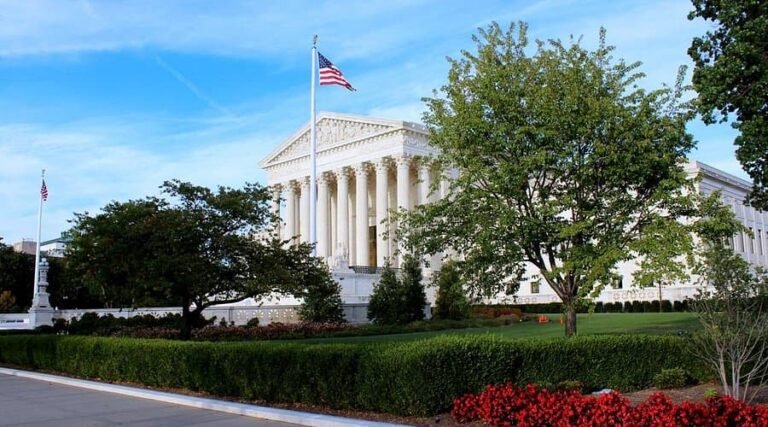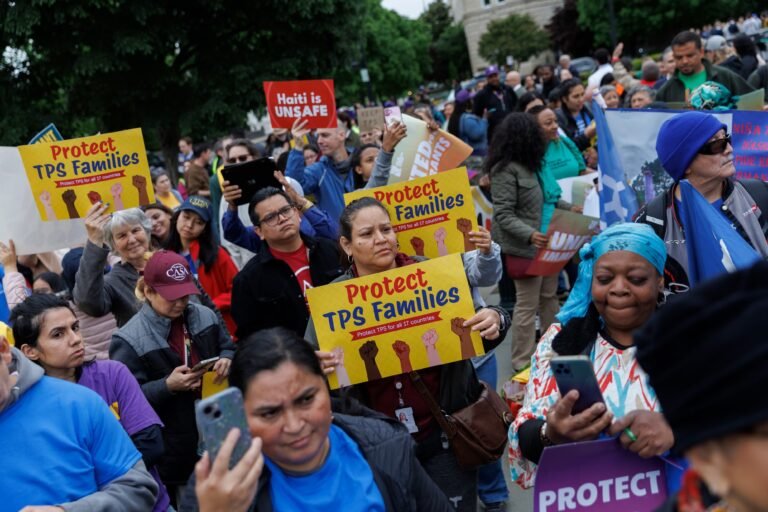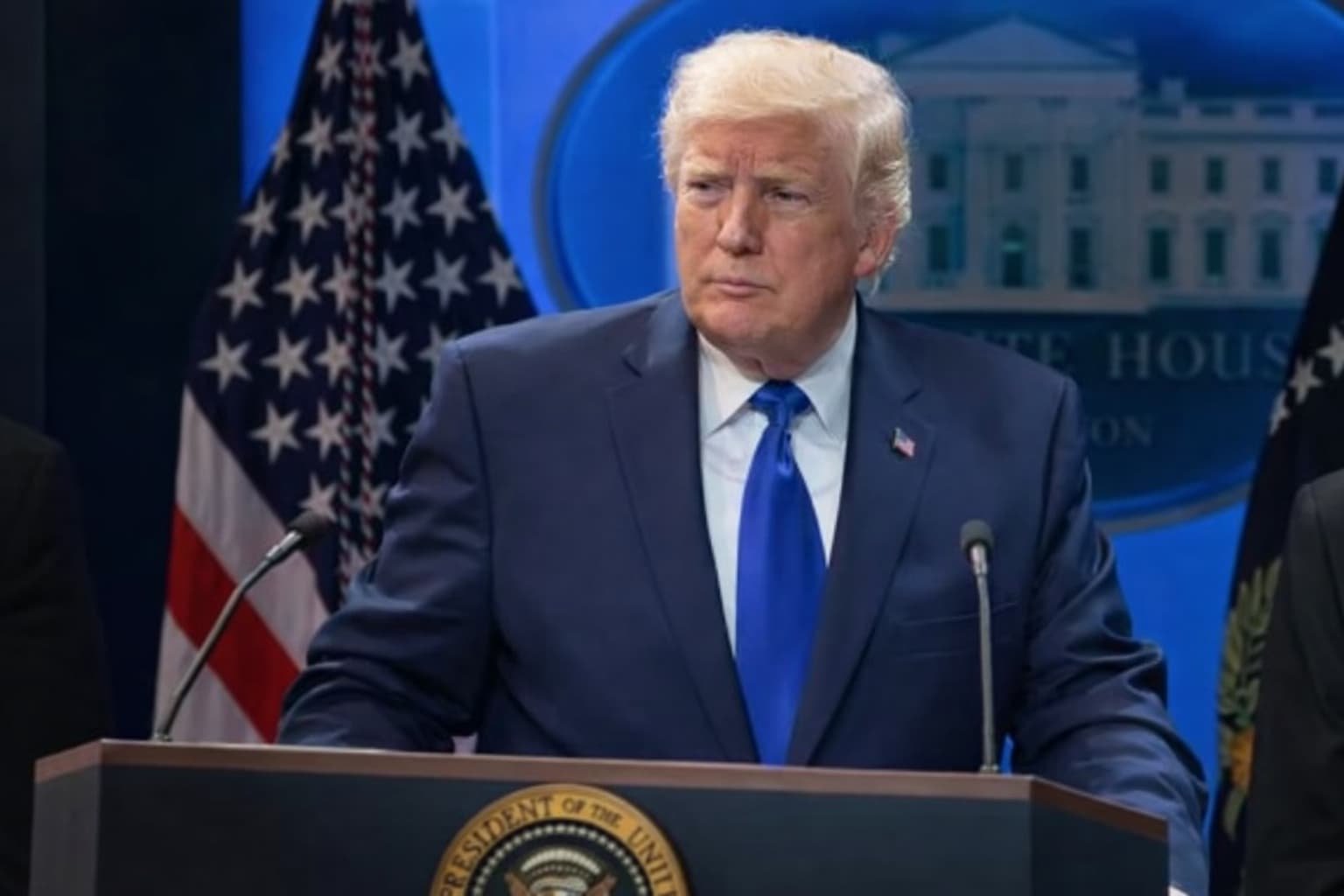

WASHINGTON, APRIL 2, 2026 — In a historic hearing that saw President Trump become the first sitting president ever to attend Supreme Court oral arguments, a clear majority of justices — including conservatives he personally appointed — expressed deep skepticism Wednesday about his executive order attempting to end automatic birthright citizenship for children of undocumented immigrants and temporary visa holders born on American soil.
The arguments in Trump v. Barbara lasted more than two hours. When they concluded, legal analysts across the political spectrum were largely in agreement: Trump faces an uphill battle in a case that could redefine who qualifies as an American — and the conservative supermajority he helped build appears unlikely to hand him this particular victory.
What Happened in the Courtroom
Trump arrived at the Supreme Court roughly ten minutes before arguments began, sat through approximately 75 minutes of the hearing, and left shortly after the government’s solicitor general concluded his presentation. It was an unprecedented moment — no sitting president in American history had previously attended oral arguments at the Supreme Court.
The hearing was not kind to his administration’s position.
Chief Justice John Roberts set the tone immediately, describing the government’s central arguments as “very quirky” and “idiosyncratic.” When Solicitor General D. John Sauer argued that the 14th Amendment’s citizenship clause should be interpreted through the narrow historical exceptions of children born to diplomats or invading forces, Roberts pressed him on how those “limited categories” could be stretched to cover the entire class of undocumented immigrants in America today. “It’s the same Constitution,” Roberts said at one point — a rebuke of the administration’s argument that modern immigration realities had changed what the amendment means.
Justice Amy Coney Barrett — a Trump appointee — challenged the practical enforceability of the order: “How would it work? How would you adjudicate these cases? You’re not going to know at the time of birth whether they have the intent to stay or not.”
Justice Neil Gorsuch — another Trump appointee — pointed out that Trump’s executive order focuses on parents, but the 14th Amendment focuses on the child. He asked how hospitals would even determine parentage at birth.
Justice Ketanji Brown Jackson delivered the most pointed line of the day, asking whether the government intended to bring pregnant women in for depositions to verify their immigration status before a child could receive citizenship.
The liberal justices were uniformly skeptical. Justice Elena Kagan accused the administration of relying on “pretty obscure sources” and “technical, esoteric” interpretations. She told Sauer that the constitutional text “does not support you.”
What Is at Stake — The 14th Amendment and 250,000 Babies Per Year
Birthright Citizenship — Key Facts
| Issue | Detail |
|---|---|
| Constitutional basis | 14th Amendment — ratified 1868 |
| Key precedent | United States v. Wong Kim Ark (1898) |
| Babies affected annually | ~250,000 born to noncitizen parents |
| Trump’s executive order date | First day of second term |
| Order’s status | Blocked by lower courts — never taken effect |
| Trump’s claim | Only 30+ countries offer birthright citizenship |
| Actual count | More than 30 countries offer it |
| Decision expected | End of June 2026 |
Trump signed the executive order on his first day back in office — seeking to deny citizenship to children born in the United States unless at least one parent is a citizen or lawful permanent resident. Federal courts at every level blocked it immediately, calling it “blatantly unconstitutional.” The Supreme Court agreed to hear the case, and Wednesday’s arguments were the final step before a ruling expected by the end of June.
Iran Called the Case Trump’s ‘Biggest Legal Battle at Home’
The political stakes cannot be overstated. If the Supreme Court strikes down the order, it would mark the second major Trump policy to fall before his own conservative Court — following the Court’s earlier decision to strike down his emergency global tariffs. If the Court somehow upholds it, more than 250,000 children born in the United States each year would no longer automatically receive citizenship — a change to American identity with no precedent in more than 150 years of constitutional history.
After leaving the courtroom, Trump posted on Truth Social: “We are the only Country in the World STUPID enough to allow ‘Birthright’ Citizenship!” The claim is false — more than 30 other countries extend citizenship by birth. A ruling is expected before the end of June.