
CAPE CANAVERAL, MARCH 28, 2026 —
What You Need To Know
- NASA confirmed the Artemis II launch countdown begins Sunday, March 30 — setting up a launch attempt on April 1 at 6:24 PM Eastern Time from Kennedy Space Center’s historic Launch Complex 39B
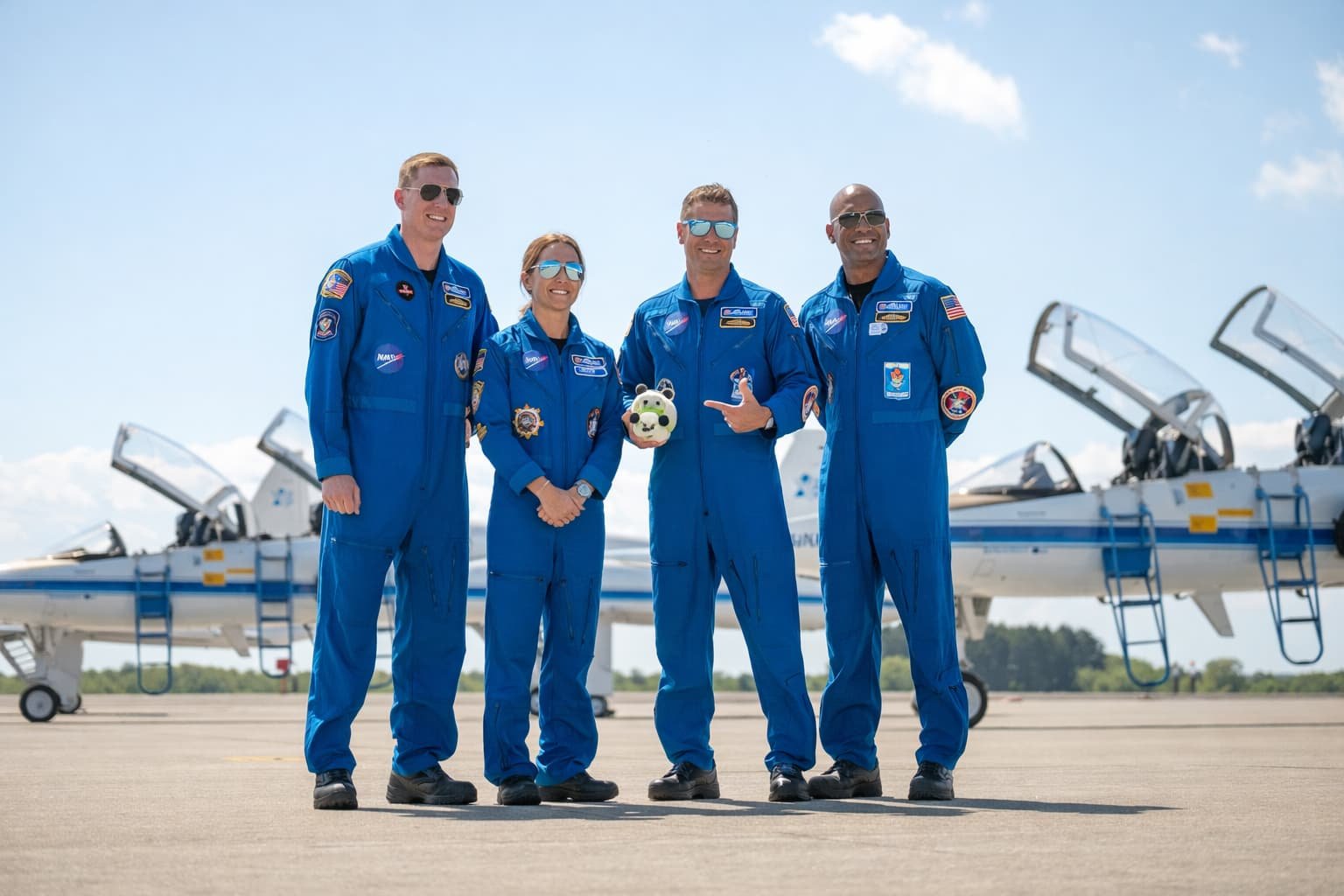
- The four-person crew — Commander Reid Wiseman, pilot Victor Glover, mission specialist Christina Koch, and Canadian astronaut Jeremy Hansen — arrived at Kennedy Space Center Friday after two weeks in quarantine in Houston
- If the April 1 launch proceeds as planned, Victor Glover will become the first person of color and Christina Koch the first woman to travel beyond low Earth orbit in the history of human spaceflight
The Space Launch System rocket that will carry four humans to the vicinity of the Moon for the first time since 1972 is rolling to its launchpad this weekend. The countdown clock starts Sunday. And on Wednesday evening, April 1 — a date NASA has spent weeks insisting is not a joke — the most powerful rocket in American history will attempt to leave Earth with people on board.
The Artemis II crew arrived at Florida’s Kennedy Space Center Friday afternoon, completing a two-week quarantine in Houston designed to protect them from illness in the final days before launch. Commander Reid Wiseman of Maryland, pilot Victor Glover of California, mission specialist Christina Koch of North Carolina, and Canadian Space Agency astronaut Jeremy Hansen stepped off their transport at the Shuttle Landing Facility to applause from NASA staff. Each wore the orange flight suits that have defined American human spaceflight since the shuttle era. Each looked, by every account, exactly like someone about to do something extraordinary.
The Mission — What Actually Happens
Artemis II is a test flight — the first crewed test of the Space Launch System rocket, the Orion spacecraft, and the deep-space life support systems that will eventually land humans on the Moon in 2028. The crew will not land on the Moon on this mission. They will fly a free-return trajectory — a carefully calculated path that takes them around the Moon’s far side, coming within approximately 8,900 kilometers of the lunar surface, before Orion’s engine fires to send them back toward Earth and a Pacific Ocean splashdown 10 days after launch.
Every system that will eventually put boots on the Moon depends on what Wiseman, Glover, Koch, and Hansen experience on this flight. The heat shield performance at lunar return velocities. The life support systems at deep-space distances. The communication systems when the Moon is between the crew and Earth. The psychological reality of four people traveling further from home than any human beings since Eugene Cernan stepped off the lunar surface in December 1972.
The Records That Will Be Set on April 1
If Artemis II launches as planned and completes its mission, four historical records fall simultaneously:
| Record | Who | What |
|---|---|---|
| Furthest human from Earth since 1972 | All four crew | ~400,000 km from Earth |
| First person of color in deep space | Victor Glover | Beyond low Earth orbit |
| First woman in deep space | Christina Koch | Beyond low Earth orbit |
| First non-American in deep space | Jeremy Hansen | Beyond low Earth orbit |
Three of those four records involve people who have been waiting their entire careers for a door that the Apollo program — which flew 24 people to the Moon between 1968 and 1972, all of them white American men — never opened for them. On April 1, 2026, that door opens.
What Happened to Get Here
The road to Sunday’s rollout has been defined by patience and persistence that tested both. NASA originally targeted February 2026 for launch. A hydrogen leak during a wet dress rehearsal on February 2 pushed that date back. A helium flow problem in the rocket’s upper stage pushed it back again. Engineers traced both problems, fixed them, and cleared the rocket through a rigorous Flight Readiness Review last week that returned a unanimous “go” from all teams.
The specific problem that delayed launch the longest — a blocked seal in a cable connecting the rocket to ground systems — cost two months of launch windows. The engineers who found it and fixed it will not have their names on the mission patch. They are the reason the mission exists.
Why This Moment Matters Beyond Space
Artemis II arrives at a moment when America’s attention is split across a Middle East war, a stock market correction, airport chaos, and the largest day of protests in the country’s history. It is easy, in that environment, to miss what is about to happen.
On Wednesday evening, four human beings will climb into a spacecraft, seal the hatch behind them, and travel to the Moon. Not metaphorically. Not virtually. Not as characters in a film. Physically. In a real rocket. Farther from Earth than any person has traveled in more than half a century.
The universe remains indifferent to American politics. The Moon does not care about the Iran war. And on April 1, 2026, humanity is going back — for the first time since the last man to walk on the Moon climbed a ladder, looked back, and said goodbye.