
Photo by Zulfugar Karimov on Unsplash
The U.S. economy added just 29,000 nonfarm payroll jobs in September 2026, a number far below what forecasters expected and one that lands squarely in the middle of a tense midterm election season. The Bureau of Labor Statistics reported the figure, which also came with steep downward revisions to prior months, painting a picture of a labor market losing momentum just as voters prepare to head to the polls.
Economists surveyed by Dow Jones and The Wall Street Journal had forecast a gain of 84,000 jobs for September. The actual result came in at roughly a third of that projection, underscoring how much the labor market has cooled in recent months. The unemployment rate also ticked up, rising to 4.2% in September from 4.1% in August, according to the Bureau of Labor Statistics.
Revisions Deepen the Picture
The September shortfall was not an isolated data point. The Bureau of Labor Statistics revised July payrolls down to a loss of 10,000 jobs, reversing a previously reported gain of 21,000. August was also revised lower, to 133,000 from an initial estimate of 162,000. Together, the revisions wiped a combined 60,000 jobs off the prior two months’ employment count, suggesting the slowdown began earlier than initially understood.
Not every indicator pointed downward, however. Initial jobless claims actually ticked lower by 1,000, falling to 197,000 in the week ended September 26, below economists’ expectations of 200,000 claims, according to Labor Department data cited in market reporting. That modest improvement offered a small counterpoint to an otherwise discouraging batch of numbers.
Markets Rally, White House Downplays Concern
Wall Street’s reaction to the weak data was, perhaps counterintuitively, positive. Stocks jumped at the market open following the cooler-than-expected job growth, as traders priced in a high probability that the Federal Reserve would hold interest rates steady at its October meeting. Weak hiring numbers often raise expectations that the central bank will ease or pause rate hikes, a dynamic investors appeared to welcome even as it reflected underlying economic softness.
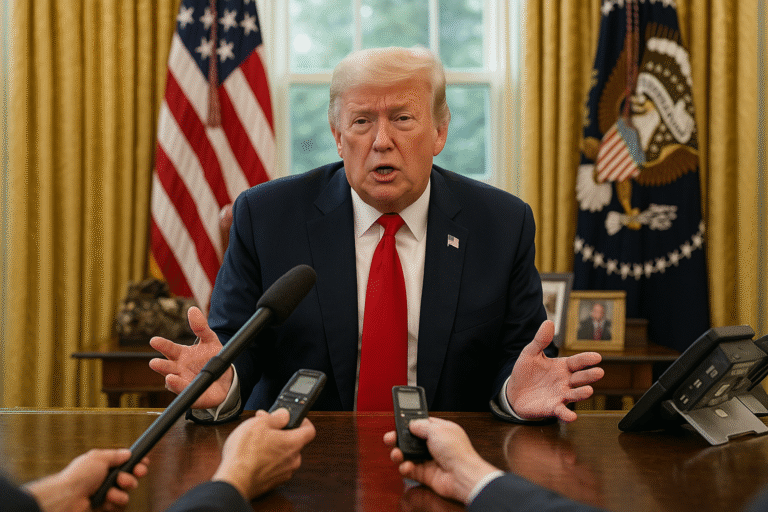
Inside the administration, the tone was notably unbothered. Kevin Hassett, Trump’s top economic advisor, said he was “not even a little bit” disappointed in Friday’s jobs data. The comment stood in contrast to the broader anxiety building around the economy as campaign season intensifies.
With just one month until election day, President Trump is hitting the campaign trail with control of Congress on the line. Republicans face growing economic headwinds from rising prices and the weak jobs report, a combination that could complicate the party’s messaging in races up and down the ballot. A soft labor market paired with persistent inflation pressure has historically been a difficult backdrop for incumbent parties, and this cycle appears to be no exception.
OPEC+ Keeps Oil Taps at Current Levels
Adding another layer to the economic backdrop, OPEC+ agreed to keep oil production targets steady for November at a meeting held Sunday, October 4, 2026. The decision was made by seven core OPEC+ members: Saudi Arabia, Russia, Iraq, Kuwait, Algeria, Kazakhstan and Oman. Holding output steady means no fresh supply is being added to global markets heading into the final stretch before U.S. elections, a factor that could influence gasoline prices and, by extension, voter sentiment on the economy.
The decision reflects ongoing supply disruptions tied to geopolitical tension. Gulf OPEC+ producers have been pumping well below their output targets due to continuing export disruptions from the U.S.-Israeli war on Iran, with exports fluctuating at 60% to 80% of normal levels in recent months. Despite those constraints, the seven core OPEC+ members still managed to pump 25 million barrels per day in August, an increase of 630,000 bpd from July.
This marks the second consecutive month the OPEC+ alliance has paused quota increases after completing the unwinding of 1.65 million barrels per day of voluntary cuts first agreed in 2023. The pause suggests the group is opting for caution rather than aggressively pushing more supply into a market still working through the effects of regional conflict. The group’s next meeting of the seven countries is scheduled for November 1, just two days before the midterm elections, meaning any further decision on output will land squarely in the final days of campaigning.
A Consequential Month Ahead
Taken together, the jobs data and the OPEC+ decision set the stage for a consequential month in both economic and political terms. Slower hiring, rising unemployment, and steady oil output all feed into a broader narrative about affordability and economic stability that voters will weigh heavily at the ballot box.
Separately, Trump named national intelligence director Jay Clayton to lead a new federal AI task force, a move that signals continued White House attention to emerging technology policy even as more immediate economic concerns dominate headlines. How these threads intersect in the coming weeks, from monetary policy decisions to energy prices to campaign messaging, will likely shape the final phase of the midterm contest.