
Photo by LSE Library on Unsplash
The Trump administration finalized its rollback of U.S. fuel economy standards on Monday, September 28, 2026, capping a day that also brought fallout from an $810 million funding clawback and fresh details on a tariff-cutting deal with China, all unfolding as Washington barrels toward a September 30 government shutdown deadline.
Fuel Standards Loosened
The new rules will allow automakers to meet a 2031 fleet average of about 34.9 miles per gallon instead of the 50.4 miles per gallon projected under Biden-era standards, according to government transportation officials. The Department of Transportation said the reduced standards will save Americans $138 billion over the next five years and cut the average cost of a new car by $1,300. Transportation accounted for about 28% of U.S. greenhouse-gas emissions in 2022, the most recent figure cited by environmental officials, a number likely to fuel debate over the rollback’s climate implications even as the administration frames the move as consumer relief. Supporters of the change argue that loosening efficiency requirements will lower vehicle prices and give manufacturers more flexibility in what models they build, while critics are expected to point to the emissions figure as evidence that the rollback undercuts progress on reducing transportation’s outsized contribution to greenhouse gases.
$810 Million Clawback Draws Fire
Separately, the White House announced Friday plans to claw back $810 million in congressionally appropriated funding through a so-called pocket rescission, a maneuver that has drawn sharp criticism from lawmakers. The request, sent by the White House and the Office of Management and Budget to House Speaker Mike Johnson, would block $567 million appropriated for Health and Human Services programs serving refugees, asylees and other non-citizens, along with $28 million for HHS research. Over half of the total cuts would land on HHS’s Office of Refugee Resettlement, according to the request.
The Government Accountability Office, an independent nonpartisan watchdog agency, has said the pocket rescission move is illegal. Timing makes the maneuver especially consequential: with the end of the fiscal year less than a week away when the announcement was made, the funds will go unspent and Congress cannot respond in time to reverse the decision. That timing has become a flashpoint in itself, since a pocket rescission effectively lets the executive branch cancel spending Congress already approved simply by running out the clock before lawmakers can act. Democrats and some appropriators are likely to cite the GAO’s illegality finding as they weigh their response, though the practical effect — money going unspent regardless of legal disputes that follow — has already been set in motion.
Tariff Details Emerge With China
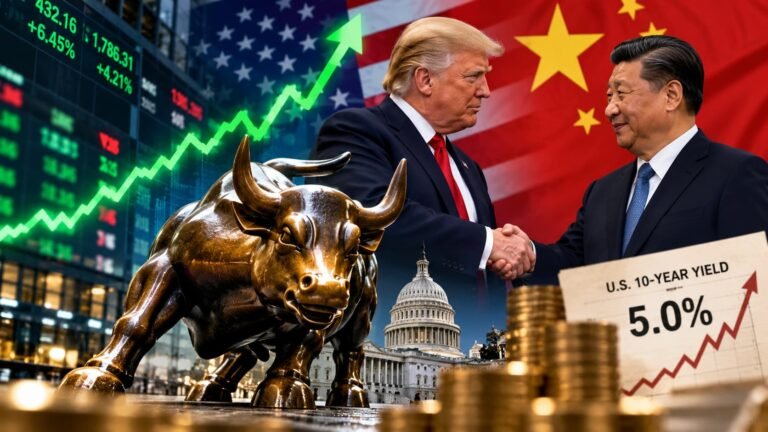
On the trade front, the United States and China detailed a plan to cut tariffs on about $30 billion of imports from each country, a step toward fulfilling a key outcome of the summit between President Donald Trump and Chinese President Xi Jinping. The proposed tariff relief spans Chinese toys, kitchenware and other household goods, as well as U.S. agricultural products, coal and medical equipment, according to details of the government’s tariff proposal.
The agreement builds on an earlier move by the two countries to extend a trade truce by two months past its original November 10 expiration, giving negotiators more time to work toward a broader trade deal, U.S. Treasury Secretary Scott Bessent said. Beyond tariffs, the two countries also agreed to set up a trade council and to hold a dialogue on the benefits and risks of artificial intelligence in November, according to reporting on the eight-point consensus reached at the Xi-Trump summit. The tariff detailing marks a tangible follow-through on summit promises that had previously existed mostly as broad commitments, giving businesses on both sides clearer guidance on which goods will see relief and when.
Shutdown Clock Keeps Ticking
All of this is playing out against the backdrop of a looming funding deadline. Current federal funding expires September 30, and at the time of earlier reporting Congress had less than a month to pass a spending bill or a temporary measure to keep the government running. The stakes are higher this time because of recent history: last year’s shutdown became the longest funding lapse in U.S. history, disrupting government operations, air travel and federal paychecks. That experience has made lawmakers in both parties eager to avoid a repeat, particularly with midterm elections on the horizon.
The convergence of these stories — a major regulatory rollback, a contested funding clawback that watchdogs call illegal, and a fragile but advancing trade truce with China — leaves Congress facing a compressed and volatile week. Lawmakers must decide how to respond to the pocket rescission even as they scramble to avoid a shutdown that could once again disrupt federal operations nationwide. Whether the tariff detailing with China holds through the AI dialogue and trade council talks planned for November remains an open question, one that will likely shape economic headlines well beyond the immediate shutdown deadline. For now, all three storylines are moving in parallel, each carrying its own set of consequences for consumers, federal agencies and international trade partners alike.