
WASHINGTON / ISLAMABAD, APRIL 22, 2026 —
Hours before the two-week US-Iran ceasefire was set to expire Tuesday, President Trump announced an open-ended extension — then Iran dismissed it, Vance canceled his flight to Pakistan, and the prospect of a second round of talks collapsed into deeper uncertainty.
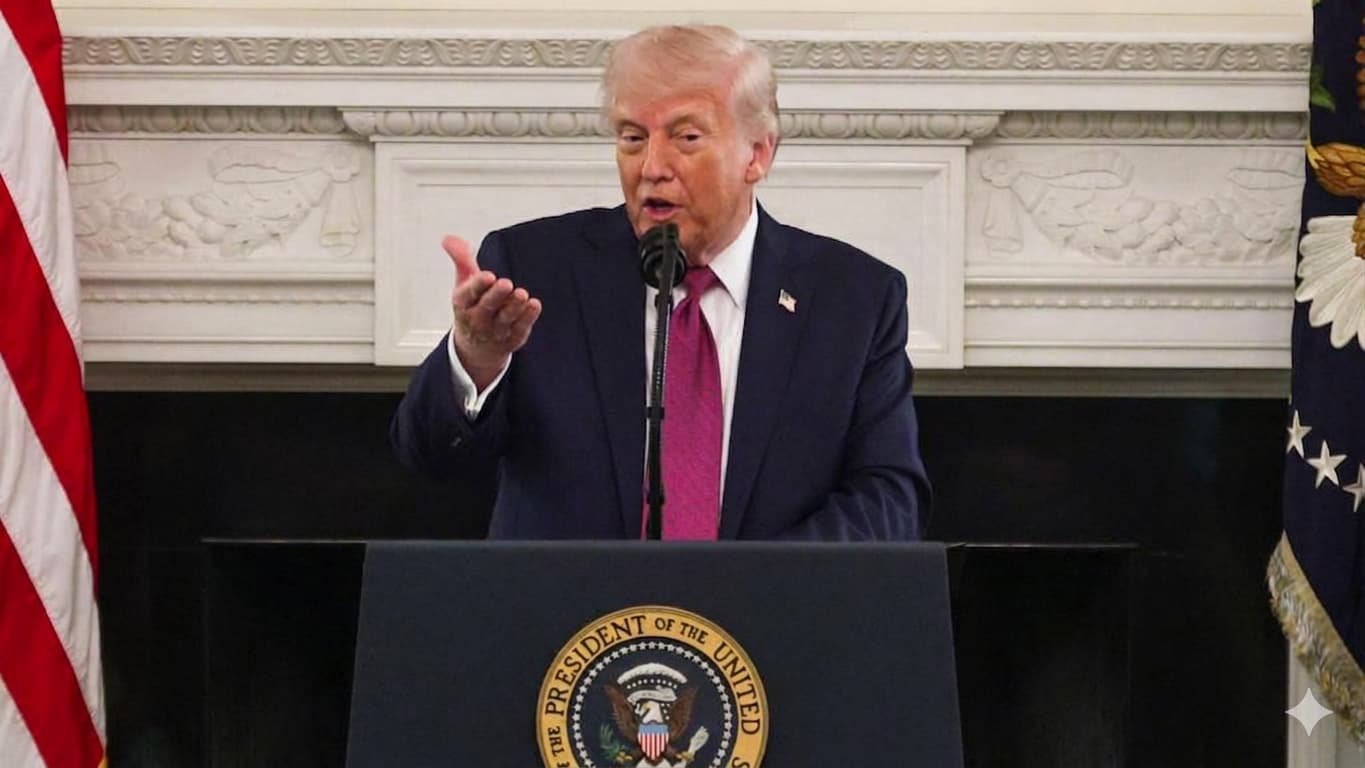
Trump posted on Truth Social that the US would hold off its planned military attack on Iran at the request of Pakistan’s Prime Minister Shehbaz Sharif and Field Marshal Asim Munir. The extension, he said, would remain in effect “until such time as their proposal is submitted, and discussions are concluded, one way or the other.” No deadline was given. The naval blockade of Iranian ports would continue throughout.
Iran’s response was immediate and dismissive. Senior adviser Mahdi Mohammadi wrote that the ceasefire extension “means nothing,” adding that “the losing side cannot dictate terms.” Iran’s Foreign Ministry said no final decision had been made on whether Tehran would send a delegation to Islamabad for a second round of talks, citing “contradictory messages” from Washington. By Tuesday evening, Iran had notified Pakistan it would not be sending a delegation on Wednesday.
Vance, who had been scheduled to lead the American negotiating team to Islamabad, remained in Washington. The White House said he was needed for “additional policy meetings” and that any further updates on in-person meetings would be announced separately.
Why Trump Extended — And What It Reveals
The extension was not the outcome anyone in Washington planned for Tuesday morning. As recently as Tuesday’s CNBC interview, Trump said he did not want to extend the ceasefire and that the US was “ready to go” militarily. “I expect to be bombing,” he said, “because I think that’s a better attitude to go in with.”
The reversal came after direct personal requests from Pakistan’s two most powerful officials — Sharif and Field Marshal Munir — who warned that allowing the ceasefire to expire without a replacement framework would collapse the mediation process Pakistan had built over six weeks. Trump granted the extension while pointedly noting his own concern that Iran’s government was “seriously fractured” and incapable of producing a unified proposal — a signal that he views the extension as time-limited patience rather than a strategic concession.
The open-ended nature of the extension creates a new problem the Trump administration has acknowledged privately. Without a hard deadline, Iran loses its primary incentive to return to the table. Advisers have warned Trump that Tehran could use an indefinite extension to stall indefinitely, rebuilding military capacity during the truce while negotiating without urgency.
Where Talks Actually Stand
The second round of Islamabad talks — which had been anticipated for days, with Pakistani security forces sealing off the city center and C-17 cargo planes on the tarmac — is now postponed indefinitely. Iran’s UN Ambassador said his country would return to the table “as soon as Washington ends the naval blockade.” Washington said the blockade continues regardless of the ceasefire extension.
The core sticking points remain unchanged from the April 11 marathon session that produced no agreement. Iran insists on its right to enrich uranium domestically as part of a civilian nuclear program. The US demands a complete halt to enrichment and removal of existing highly enriched uranium stockpiles. Iran’s Foreign Minister called the continued blockade of its ports “an act of war” and a ceasefire violation. The US accused Iran of ceasefire violations by firing on ships in the Strait of Hormuz.
Treasury Secretary Scott Bessent added pressure Tuesday, noting that Iran’s oil storage at Kharg Island — its primary export terminal — would reach capacity within days under the continued blockade. When storage is full, Iran’s oil production must slow or stop. That is the economic leverage the US is counting on to bring Tehran back to the table.
Iran’s Revolutionary Guard warned it would target oil facilities in neighboring countries that allow the US to launch attacks on Iran from their territory — a direct threat to Gulf states hosting American military bases.
What Comes Next
The ceasefire is extended with no end date. The blockade continues. Talks are suspended. Iran has not confirmed whether it will negotiate under these conditions. The war has killed more than 4,000 people. Oil markets, which had rallied on peace optimism, face renewed uncertainty.
Pakistan’s Prime Minister Sharif said he hopes “both sides will continue to observe the ceasefire and be able to conclude a comprehensive peace deal during the second round of talks.” The second round has no scheduled date.