
BEIRUT, June 20, 2026 —
The deal that ended the U.S.-Iran war days ago nearly came apart this past weekend over a different country entirely. Israeli airstrikes killed at least 47 people across Lebanon in a single day — the second deadliest day of the conflict since fighting flared in March — before Israel and Hezbollah agreed late Friday to renew their truce, pulling the broader peace framework with Iran back from the edge.
What Triggered the Worst Day of Fighting in Months
The strikes began as retaliation. The Israeli military said four of its soldiers were killed, including a senior commander, and another five injured, after Hezbollah struck an Israeli tank with an explosive device in southern Lebanon. Netanyahu said he instructed the military to strike Hezbollah “with force” following the deaths, calling the attack “a blatant violation of the ceasefire.
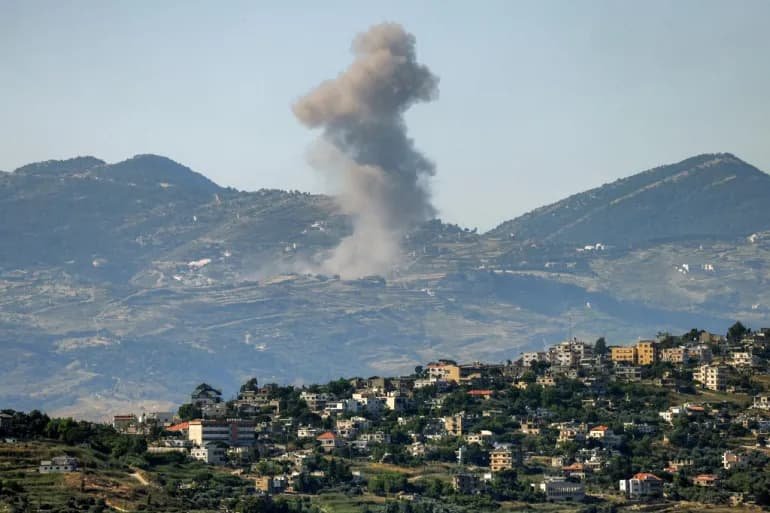
What followed was overwhelming. The Israeli military killed at least 47 people in strikes across southern Lebanon on Friday, according to the Lebanese health ministry — the second deadliest day since hostilities flared in March. The dead included at least seven women and two children, according to the health ministry, with 97 others wounded. Hours before a new ceasefire was to be signed, Israeli jets struck Lebanon’s capital Beirut directly, killing at least three people.
The Moment It Threatened to Take Down the Iran Deal
The intensified strikes came days after an interim U.S.-Iran agreement was signed, stipulating that all fighting would stop on every front, including in Lebanon. The scale of Friday’s bombardment immediately raised the question of whether Israel had just broken that commitment — and whether Tehran would treat it as grounds to walk away from the broader peace framework.
U.S. Vice President JD Vance canceled his planned trip to Switzerland, where additional negotiations with Iran had been scheduled for the weekend. Seeking to keep the diplomatic process intact, Washington told Tehran that Israel had agreed not to further escalate its attacks on Hezbollah, according to a source familiar with the discussions. Deep mistrust continues to hang over the broader ceasefire arrangement.
President Trump responded to the Beirut strike directly on social media: “This morning’s attack on Beirut should not have happened, particularly on a special day when we are so close to a Peace Deal with Iran.” His subsequent call with Israeli Prime Minister Netanyahu was, by most accounts, considerably less diplomatic than his public statement.
How the New Truce Came Together
Israel and Hezbollah agreed Friday to a renewed ceasefire even as the latest strikes brought the death toll in Lebanon to at least 47 — a deal that simultaneously threatened and ultimately helped preserve the broader Iran-U.S. agreement.
Israel’s Ambassador to the United States, Yechiel Leiter, said Israel was “firmly committed to an immediate ceasefire” and confirmed the military had halted offensive operations. But the picture on the ground remained murky even after the announcement. An official Hezbollah source said the group would abide by the ceasefire, but added that Israeli forces were still firing and attempting to move deeper into Lebanese territory.
Both Israel and Hezbollah said they would abide by the truce but each warned against violations from the other side — the same fragile structure that collapsed within hours the last time this ceasefire was attempted.
Trump’s Read on the Deal — and the Pressure Netanyahu Is Facing at Home
In a Friday phone interview, Trump told reporters the ceasefire in Lebanon was “a positive,” and described it as “a little icing on the cake” relative to the broader Iran agreement. He declined to say whether he had spoken with Netanyahu directly about the truce, though he confirmed speaking with Israeli officials and requesting they agree to the ceasefire.
That request runs directly against political pressure building inside Netanyahu’s own government. Netanyahu is under pressure to escalate further in Lebanon from hardliners in his coalition. Far-right Minister of National Security Itamar Ben Gvir said “all of Lebanon should burn” and called for direct attacks on Beirut.
That tension — a president publicly praising restraint while a key cabinet minister demands the opposite — is precisely what makes the truce as fragile as the one it replaced. Separately, U.S. envoy Steve Witkoff is traveling to Switzerland for technical talks aimed at getting the broader Iran negotiation process back on track, with Trump’s son-in-law Jared Kushner also expected to join. Negotiators face a 60-day deadline to reach a final, permanent deal.
The truce buys time. It does not resolve the underlying disagreement over whether Lebanon is covered by the Iran ceasefire at all — a dispute that has already broken the agreement once and, with Ben Gvir publicly calling for Beirut to burn, could break it again before the 60-day clock runs out.