
WASHINGTON, June 9, 2026 —
Key Takeaways:
- A federal judge struck down the Trump administration’s $100,000 fee on new H-1B skilled worker visa applications Monday, ruling the fee was imposed without proper statutory authority and constitutes an unlawful tax that Congress never authorized
- The administration had announced the H-1B fee in April as a mechanism to reduce foreign worker competition with American workers, projecting it would raise $1.2 billion annually and make H-1B sponsorship financially prohibitive for most tech companies, staffing firms, and mid-size businesses
- More than 580,000 H-1B workers are currently employed in the United States — concentrated in software engineering, data science, healthcare, and financial services — and the fee’s elimination reverses what the National Foundation for American Policy estimated would have reduced new H-1B approvals by 65% in the first year of implementation
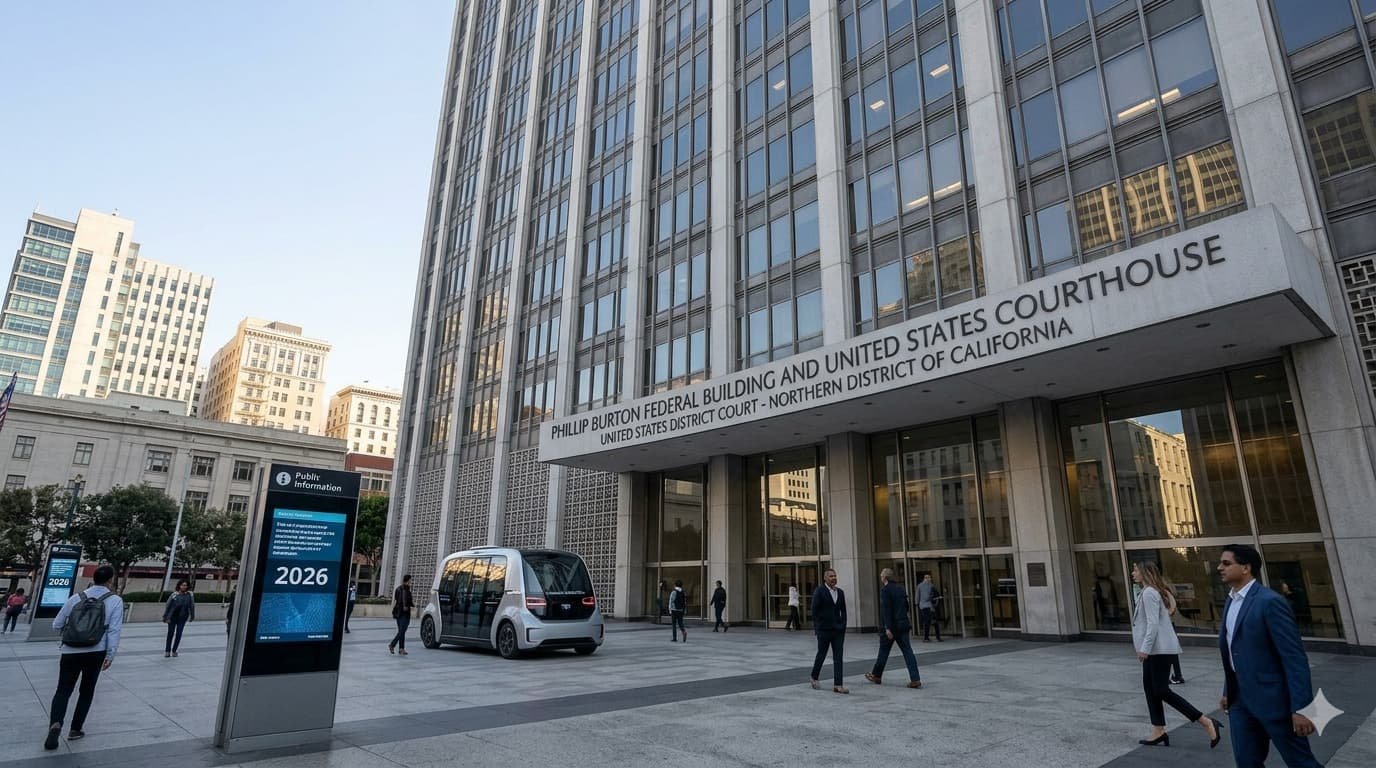
The $100,000 H-1B fee lasted 47 days. It was announced by the Department of Homeland Security in late April as part of the administration’s broader effort to prioritize American workers in the skilled visa pipeline. It was struck down Monday by a federal judge in the Northern District of California who ruled that the administration had imposed a de facto tax through regulatory action — a power that under the Constitution and the Administrative Procedure Act belongs to Congress, not to executive agencies acting unilaterally.
The ruling is the latest in a series of federal court decisions blocking administration immigration and regulatory actions as unlawful exercises of executive authority without adequate statutory basis. The $100,000 H-1B fee joins the $1.776 billion Anti-Weaponization Fund, the IEEPA tariffs, and multiple Schedule F civil service provisions as administration initiatives that have been fully or partially blocked by federal courts in the first 18 months of Trump’s second term.
What the $100,000 Fee Was Trying to Do — and Why the Tech Industry Called It Existential
The H-1B visa program allows US employers to hire foreign workers in specialty occupations requiring a bachelor’s degree or higher in a specific technical field. The program is capped at 85,000 new visas per year — 65,000 regular cap visas and 20,000 reserved for holders of advanced US degrees. In recent years, applications have vastly exceeded the cap, triggering a lottery that admits only about 25% to 30% of petitions filed.
The existing fees before the administration’s April announcement were approximately $730 to $4,800 per petition depending on employer size, the ACWIA training fee, and optional premium processing. The $100,000 addition would have increased the cost of sponsoring a single H-1B worker by 20 to 137 times, depending on the employer’s size.
For major technology companies — Google, Microsoft, Apple, Meta, Amazon — that collectively sponsor tens of thousands of H-1B workers annually, the fee represented a significant cost increase manageable within their capital structures. For mid-size software companies, healthcare systems, research universities, and staffing firms — which together account for more than half of annual H-1B sponsorships — the fee was functionally prohibitive. A mid-size hospital system that sponsors 40 H-1B-visa nurses and physician specialists per year would have faced $4 million in annual fees under the new structure, on top of existing petition costs.
The National Foundation for American Policy, a nonpartisan research organization that studies high-skilled immigration, projected that the $100,000 fee would reduce annual H-1B approvals by approximately 65% in its first year — from roughly 65,000 annual new approvals to approximately 23,000 — as thousands of smaller sponsors dropped out of the program entirely.
What the Judge Found — and What the Administration Will Argue on Appeal
The judge’s ruling focused on the Administrative Procedure Act’s requirement that agency rulemaking follow notice-and-comment procedures and stay within the authority granted by Congress, and on the constitutional principle that taxes may only be imposed by Congress through legislation. The $100,000 H-1B fee, the court found, functions as a tax — it is not a fee designed to recover the government’s cost of processing the visa, which would be permissible under existing authority, but rather a revenue-generating measure designed to discourage program participation and fund unrelated priorities.
DHS had projected the fee would raise $1.2 billion annually. That projection — a revenue target significantly exceeding processing costs — was central to the court’s analysis that the charge operates as a tax rather than a regulatory fee.
The administration has not yet filed a notice of appeal, but DHS spokeswoman Tricia McLaughlin said the department strongly disagrees with the ruling and is reviewing options. The administration has appealed every major court ruling blocking its immigration priorities throughout the second term. The Ninth Circuit, which covers the Northern District of California, has upheld several administration immigration policies and struck down others. A stay pending appeal — which would temporarily reinstate the fee while the case is litigated — has not been requested as of Tuesday morning.
The H-1B Fight in the Broader Context of Trump’s Tech Policy Tensions
The $100,000 H-1B fee was always one of the more politically complicated initiatives in the second Trump term, because it put the administration in direct conflict with the technology industry allies whose financial support and rhetorical endorsement have been central to Trump’s political coalition since 2024. Elon Musk — whose companies employ thousands of H-1B workers — publicly criticized the fee before it was struck down. Several other major tech executives who attended Trump’s Beijing summit in May and who have been visible supporters of administration priorities expressed private objections.
The fee’s elimination by court order resolves that tension without requiring the administration to reverse itself politically — it can characterize the ruling as judicial overreach while the tech industry quietly returns to its prior H-1B sponsorship patterns.
| H-1B Visa Fee — Timeline and Current Status | Detail |
|---|---|
| Fee announced | Late April 2026 |
| Fee amount | $100,000 per new H-1B petition |
| Prior existing fees | $730–$4,800 per petition |
| Stated purpose | Reduce foreign worker competition with Americans |
| Projected annual revenue | $1.2 billion |
| Court ruling | Monday June 8 — Northern District of California |
| Legal basis for strike-down | Unlawful tax; APA violation; no Congressional authority |
| H-1B workers currently in US | 580,000+ |
| NFAP projected reduction from fee | -65% in first year |
| Duration fee was in effect | 47 days |
| Administration response | DHS strongly disagrees — reviewing appeal options |
| Stay requested | Not yet as of Tuesday morning |
| Cap on new H-1B visas annually | 85,000 (65K regular + 20K advanced degree) |
What a 65% Reduction in H-1B Approvals Would Have Meant
The H-1B program is not a simple economic input. It is the pipeline through which American research universities retain a significant portion of their STEM graduate students, through which American hospitals fill specialist physician and nursing shortfalls in underserved communities, and through which the technology industry accesses engineering talent for which the domestic supply pipeline remains chronically insufficient.
The Bureau of Labor Statistics projects a shortage of approximately 1.2 million software developers, data scientists, and related technology workers in the United States through 2030. American universities graduate approximately 400,000 students annually in computer science and related fields. The gap between domestic talent supply and employer demand in the technology sector has been a feature of the American labor market for 25 years. H-1B workers fill a material portion of that gap.
A 65% reduction in annual H-1B approvals would not have solved that gap by producing more American workers — the domestic pipeline cannot be expanded in 12 or 24 months regardless of immigration policy. It would have left the gap partially unfilled, redirected H-1B sponsorships toward larger companies with the resources to absorb the $100,000 fee, and — in the healthcare sector specifically — left rural and underserved hospitals without the specialist physicians they recruit through the H-1B program precisely because the domestic physician workforce does not distribute itself to those communities in sufficient numbers.
The court ruling stops that from happening. The appeal will test whether any version of a large H-1B deterrence fee can survive judicial review. Until that question is answered, the program operates under its pre-April cost structure. The 580,000 workers currently in H-1B status, and the employers who sponsor them, go back to operating under a system that — whatever its limitations — has been the framework for high-skilled immigration in America for three decades.